
- Beschreibung
- Anfrage
8021 aluminum coil and 8011 aluminum coil belong to the same broad family of foil-oriented aluminum materials, but they are not simply interchangeable grades. Both are associated with thin-gauge rolling and packaging applications. The practical difference is how each grade is selected for a particular end use, especially when the aluminum layer must work with a specific laminating, Bildung, or sealing process.
Für Käufer, the important question is not whether 8021 is universally better than 8011. It is whether the selected material is compatible with the final packaging structure and downstream production conditions. A foil used in pharmaceutical packaging may have different requirements from one used for general flexible packaging or closure materials.
Das macht 8021 an application-driven purchasing choice. Bevor Sie ein Angebot anfordern, buyers should explain what the aluminum foil will be laminated with, how it will be formed, and what performance the finished package must deliver.
8021 Und 8011: Two Grades in the Same Foil-Oriented Family
Both grades belong to the 8xxx aluminum series, which includes alloys used in specialized rolled products and foil applications. Their commercial applications overlap, but their selection should be based on the actual requirements of the finished product rather than on the assumption that one grade can replace the other in every situation.
| Vergleich | 8021 | 8011 |
|---|---|---|
| Legierungsfamilie | 8xxx-Serie, associated with specialized foil and thin rolled products. | 8xxx-Serie, widely used in foil and packaging-related products. |
| Anwendungsfokus | Frequently selected for pharmaceutical and other demanding packaging foil applications. | Commonly used across a broad range of packaging, closure, and foil applications. |
| Selection consideration | Evaluate the required forming behavior, foil performance, and compatibility with the packaging structure. | Evaluate the required rolling quality, Oberflächenzustand, and downstream converting process. |
| Procurement approach | Choose according to the final application and its technical specification. | Choose according to the final application and its technical specification. |
The table describes typical market positioning, not a universal rule for every manufacturer’s product. Actual performance depends on the supplied condition, Produktionsweg, Oberflächenanforderungen, und anwendbare Produktspezifikation.
The key difference is downstream compatibility
8021 Und 8011 should be compared according to what happens after rolling. The laminate, Umformvorgang, sealing method, and final packaging requirements often determine which grade is more appropriate.
Warum 8021 Is Often Considered for Pharmaceutical Packaging
8021 is widely associated with pharmaceutical foil applications, particularly where the aluminum layer forms part of a protective packaging structure. The material may be combined with polymers, Beschichtungen, or other functional layers to create a finished package designed for a specific product and production process.
In pharmazeutischer Verpackung, the aluminum foil is not evaluated in isolation. Its performance is connected to the complete packaging system, including the barrier requirements, Umformvorgang, sealing process, and compatibility with the contents.
Cold-Formed Blister Packaging
One important application area for 8021 is cold-forming foil used in pharmaceutical blister packaging. The foil is combined with other packaging layers and formed into cavities that hold individual tablets or capsules.
Because the material undergoes significant forming during production, buyers need to consider its suitability for the intended cavity geometry and converting conditions. The finished laminate must also meet the packaging system’s barrier and integrity requirements.
Laminated Pharmaceutical Structures
Some packaging designs combine aluminum foil with polymer films or other layers. The aluminum provides a functional barrier component, while the other layers contribute sealing, Schutz, printability, oder mechanische Leistung.
For these structures, the selected foil must be compatible with the lamination process. Oberflächenzustand, bonding requirements, and the behavior of the complete laminate should be discussed before material approval.
Wo 8011 Fits in the Comparison
8011 has a broad presence in aluminum foil and packaging markets. It is used in applications such as flexible packaging, household foil, Verschlussmaterialien, and selected pharmaceutical packaging products, depending on the required specification and material condition.
Flexible Verpackung
For flexible packaging, aluminum foil may be laminated with paper, polymer films, or other materials. The final structure can be designed for product protection, Aussehen, and compatibility with packaging machinery.
Household and General-Purpose Foil
General-purpose foil applications require suitable rolling quality, handling characteristics, and consistent performance during converting. The exact material specification should reflect the intended use rather than relying only on the alloy number.
Closure and Container Materials
Aluminum foil and thin rolled products can be used in closure-related applications where stamping, Bildung, or sealing is involved. Buyers should provide the closure design and production method to help determine the appropriate material condition.
The Laminate Often Determines the Alloy Choice
When comparing two nearby foil grades, the downstream structure can be more important than a simple grade-to-grade ranking. Different packaging systems place different demands on the aluminum layer.
| Downstream Process | What the Buyer Should Explain | Warum es wichtig ist |
|---|---|---|
| Laminierung | Which polymer, Papier, Beschichtung, or other layer will be bonded to the foil? | The foil surface and bonding process must work together. |
| Cold forming | What cavity geometry and forming conditions will be used? | The foil and laminate must withstand the required deformation without unacceptable defects. |
| Heat sealing | What sealing layer, Temperaturbereich, and sealing arrangement are required? | The complete packaging structure must achieve the required seal performance. |
| Printing and coating | Will the foil be printed, beschichtet, or treated before conversion? | Surface condition and process compatibility can affect appearance and adhesion. |
| Final barrier performance | What protection is required against moisture, Licht, Sauerstoff, or other external factors? | Barrier performance must be evaluated for the finished packaging structure. |
This is particularly important in pharmaceutical packaging. A foil grade should not be approved based only on a supplier’s general description. The complete laminate and packaging process must be validated against the intended product requirements.
8021 vs. 8011: How to Make a Practical Purchasing Decision
There is no universal winner between these two grades. The correct choice depends on the final product, the converting equipment, and the technical specification agreed between the buyer and supplier.
- For cold-form pharmaceutical foil: Auswerten 8021 as a potential option and confirm its suitability for the complete laminate and forming process.
- For general packaging foil: 8011 may be a practical option when its supplied condition meets the converting requirements.
- For closure materials: Specify the forming operation, finished geometry, and required surface condition before comparing grades.
- For laminated products: Share the complete layer structure and bonding process with the material supplier.
- For regulated packaging: Confirm the applicable material and finished-package compliance requirements before production.
When the application is not yet fully defined, it is better to discuss the packaging process with the supplier before fixing the alloy designation. This reduces the risk of choosing a material that can be rolled successfully but does not perform as expected during downstream conversion.
What to Include in an 8021 Aluminum Coil Inquiry
A useful inquiry should describe the final application rather than simply request a grade and price. The following information helps suppliers evaluate the material more accurately:
| Information | Details to Provide |
|---|---|
| End application | Cold-form blister, flexible packaging, laminated foil, or another use. |
| Laminate structure | The materials and layers that will be bonded to the aluminum. |
| Spulenabmessungen | Dicke, Breite, Spuleninnendurchmesser, und erforderliches Spulengewicht. |
| Materialzustand | Required temper and relevant product specification. |
| Oberflächenanforderungen | Oberflächenbehandlung, beenden, Beschichtung, or bonding-related requirements. |
| Qualitätsdokumente | Materialprüfzeugnisse, Inspektionsprotokolle, and agreed compliance documents. |
Providing samples, Zeichnungen, laminate specifications, or details of the converting process can also help clarify the material requirements. Where the foil is intended for regulated packaging, the buyer should identify the applicable approval and testing requirements at the beginning of the project.
Beschaffung von Aluminiumspulen von Teda Ganghua
Teda Ganghua Metal unterstützt industrielle Einkäufer bei der Beschaffung von Aluminiummaterialien, Spezifikationsbestätigung, und maßgeschneiderte Liefervereinbarungen. Mit 20 Jahre Erfahrung als Stahlhändler in Tianjin TEDA, the company works with customers to clarify alloy requirements, Produktabmessungen, Oberflächenbedingungen, und Liefervereinbarungen.
Für Käufer zum Vergleich 8011 Und 8021, the intended downstream process is an important part of the inquiry. Teda Ganghua kann verfügbar besprechen Aluminiumblech- und Spulenprodukte according to the required application, Abmessungen, materieller Zustand, and supply form.
Processing arrangements such as cutting, Scheren, and customized sizing can be discussed for suitable materials. Material test certificates and inspection documentation can be coordinated according to the agreed order requirements. Customers are welcome to arrange inspection before shipment to verify material identification, Abmessungen, Verpackung, und andere vereinbarte Qualitätspunkte.
For foil and laminated packaging projects, buyers should provide the intended laminate structure and converting process before confirming the grade. This allows the material requirements to be reviewed in relation to the finished product rather than relying on a general alloy comparison.
Häufig gestellte Fragen
1. Was ist der Hauptunterschied zwischen 8021 Und 8011 Aluminiumspule?
Both are 8xxx series alloys used in foil-related applications, but their typical market positioning differs. 8021 is frequently associated with pharmaceutical and cold-form packaging foil, während 8011 has a broad range of packaging and general foil applications. The final choice should follow the actual product specification and converting requirements.
2. Ist 8021 Aluminiumspule, geeignet für pharmazeutische Verpackungen?
It is commonly used in pharmaceutical foil applications, including certain cold-form blister packaging structures. Suitability depends on the complete laminate, Umformprozess, barrier requirements, and applicable packaging standards.
3. Ist 8011 always a better choice for general packaging?
Nicht automatisch. 8011 is widely used in general packaging applications, but the correct selection depends on the required surface condition, formendes Verhalten, laminate structure, and product specification.
4. Kann 8021 Und 8011 be used in the same laminating process?
They may be considered for overlapping applications, but they should not be substituted without checking process compatibility. The foil’s material condition, Oberflächenanforderungen, Bonding-Prozess, and final packaging performance must be evaluated together.
5. What should I tell a supplier before ordering 8021 Aluminiumspule?
Geben Sie die beabsichtigte Anwendung an, laminate structure, forming or sealing process, erforderliche Abmessungen, materieller Zustand, Oberflächenanforderungen, Menge, und Dokumentationsbedarf. Explaining what the foil will be bonded to is especially useful when selecting between nearby alloy grades.
Verwandte Produkte
-
 Aluminiumspulen Lieferanten Professionelle Aluminiumprodukte
Aluminiumblechspule
Aluminiumblechspulen sind in einer Vielzahl von Qualitäten und Legierungssystemen erhältlich, jedes bietet spezifische Stärke, Korrosionsbeständigkeit, und Formbarkeitseigenschaften. Die Wahl der richtigen Sorte sorgt für Langlebigkeit,…
-
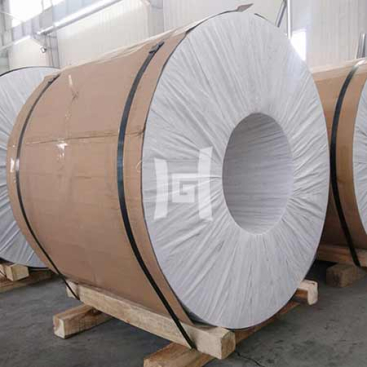 6Aluminiumspule der Serie xxx, Aluminiumspulen Lieferanten Professionelle Aluminiumprodukte
6061 Stuck Aluminiumspulen 6061 AMS4025 ASTM B209 6061 Aluminiumlegierungspule 300 mm
6061 Aluminiumspule ist bekannt für ihre hervorragenden mechanischen Eigenschaften, Schweißbarkeit, und Korrosionsbeständigkeit, Es ist eine beliebte Wahl für allgemeine Anwendungen. Es kommt in verschiedenen Klassen, einschließlich der…
-
 Aluminiumspulen Lieferanten Professionelle Aluminiumprodukte
Spulenmaterial aus weißem Aluminium
Weißes Aluminium-Coilmaterial erhält sein Aussehen hauptsächlich durch die natürliche Oxidschicht, Legierungszusammensetzung, und Oberflächenveredelungsverfahren. Zu den gängigen Noten gehört 1xxx, 3xxx, 5xxx, und 6xxx-Serie, jede…
-
 Aluminiumspulen Lieferanten Professionelle Aluminiumprodukte, Aluminiumblätter
36 Breiter Aluminiumspulenschaft
36 breites Aluminiumspulenmaterial (36 Zoll / 914 mm) ist eine der am häufigsten verwendeten industriellen Aluminium-Spulenbreiten. Es dient als flexibles Basismaterial für…
-
 Aluminiumspulen Lieferanten Professionelle Aluminiumprodukte
Aktienkurse für Aluminiumspulen
Die Lagerpreise für Aluminiumspulen werden durch eine Kombination von Materialkosten bestimmt, Spezifikationen, und Verarbeitungsanforderungen, Aber die Lieferfähigkeit ist ebenso wichtig. Mit fertigem Bestand an Aluminium und Edelstahl…
-
 1Aluminiumspule der Serie xxx, Aluminiumspulen Lieferanten Professionelle Aluminiumprodukte
1100 Aluminiumspule
Teda Aluminium ist auf die Forschung spezialisiert, Entwicklung, und Produktion von heißen Rollten 1100 Aluminiumspulen. Diese Spulen, aus industriellem reinem Aluminium, hohe Dehnung anbieten, Ausgezeichnete Zugfestigkeit, und hervorragend…
-
 Aluminiumspulen Lieferanten Professionelle Aluminiumprodukte
Schwarzer Aluminiumspulenschaft
Schwarzes Aluminium-Spulenmaterial erhält seine Farbe und Haltbarkeit durch Oberflächenvorbereitung, Coil-Coating, oder Eloxalverfahren. Kombiniert mit Präzisionsschneiden, Bildung, und Qualitätskontrolle, Diese Verarbeitungstechniken erzeugen…