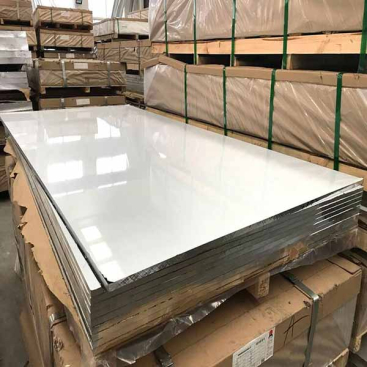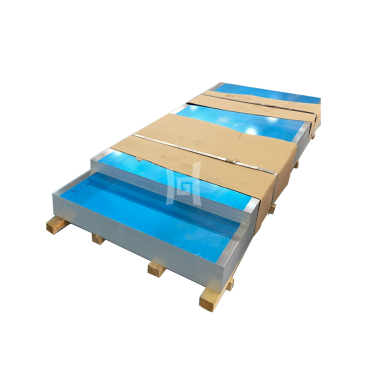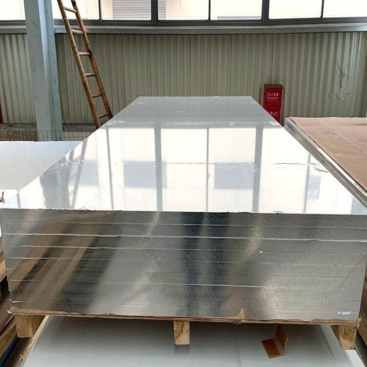
- Description
- Enquête
3000 series aluminum alloys are manganese-based materials developed to provide a practical balance of strength, Formulation, et résistance à la corrosion. Contrairement aux alliages d'aluminium traitables thermiquement, this series relies primarily on solid-solution strengthening, particules de deuxième phase, and work hardening to achieve its mechanical properties. Within the series, 3003, 3004, 3005, et 3105 serve different manufacturing and application requirements. Understanding their differences helps buyers select the appropriate aluminum sheet for general fabrication, conditionnement, heat exchange, et projets architecturaux.
1. How Manganese Strengthens 3xxx Aluminum Alloys
Manganese plays the central role in the performance of 3xxx aluminum alloys. When added to aluminum, manganese contributes to solid-solution strengthening and the formation of second-phase particles. These mechanisms improve strength while generally maintaining good corrosion resistance and useful forming characteristics.
One important characteristic of this alloy family is that it is non-heat-treatable. Unlike 2xxx, 6xxx, and 7xxx aluminum alloys, its strength cannot be significantly increased through conventional solution heat treatment and artificial aging. Plutôt, manufacturers use cold working, such as rolling and other deformation processes, to increase strength through strain hardening.
Manganese strengthens aluminum through solid-solution effects and second-phase formation, while cold working provides additional strength. This allows 3xxx alloys to combine moderate strength, bonne formulation, and useful corrosion resistance without relying on heat-treatment strengthening.
2. Four Important Grades and Their Application Positions
Although these alloys belong to the same manganese-based family, ils ne sont pas interchangeables dans toutes les applications. Differences in alloy design, exigences de formation, and intended service environments determine which grade is more appropriate.
| Note d'alliage | Main Position | Typical Application Directions |
|---|---|---|
| 3003 | General-purpose manganese alloy | General formed components, échangeurs de chaleur, ustensiles de cuisine, and interior building applications |
| 3004 | Magnesium-containing alloy with higher strength potential | Can bodies, composants d'éclairage, and formed products requiring greater strength |
| 3005 | Strength and corrosion resistance for building applications | Panneaux architecturaux, persiennes, and decorative building components |
| 3105 | Common architectural sheet and coil alloy | Panneaux de toiture, revêtement mural, signalisation, and curtain wall liners |
3. 3003 Feuille d'aluminium: The General-Purpose Choice
3003 is one of the widely used alloys in the manganese-based aluminum family. Sa combinaison de formabilité, résistance à la corrosion, and moderate strength makes it suitable for a broad range of industrial and commercial products.
Pour les fabricants, 3003 is a practical option when components require bending, formation, or drawing without demanding the higher strength associated with more specialized alloys. Typical applications include heat exchanger components, équipement de cuisine, general sheet metal fabrication, and interior architectural products.
Its versatility makes it a useful starting point for material selection. Cependant, the final temper and forming process should still be considered because cold-worked conditions can affect both strength and formability.
4. 3004 Feuille d'aluminium: When Higher Strength Is Required
3004 introduces magnesium as an additional alloying element alongside manganese. This alloy design provides higher strength potential than conventional 3003, making it suitable for applications where structural performance and forming characteristics must be considered together.
A well-known application direction is aluminum can body production. It is also used in lighting components and other formed products where the material needs to maintain its shape during manufacturing and service.
En comparant 3003 et 3004, buyers should focus on the actual strength requirements, profondeur de formage, and manufacturing process rather than selecting a grade based on alloy designation alone.
5. 3005 Feuille d'aluminium: Balancing Strength and Outdoor Performance
3005 is another manganese-based alloy developed for applications that require a combination of strength, Formulation, et résistance à la corrosion. Its application direction is particularly relevant to architectural products and building components exposed to outdoor conditions.
Common uses include architectural panels, persiennes, and decorative exterior elements. Pour ces produits, material selection involves more than the basic alloy designation. Traitement de surface, compatibilité des revêtements, drainage design, and the surrounding environment also influence long-term performance.
For outdoor building projects, buyers should evaluate the complete material and finishing system instead of assuming that the alloy grade alone determines weather resistance.
6. 3105 Feuille d'aluminium: A Common Choice for Roofing and Wall Cladding
3105 is frequently associated with architectural sheet applications, particularly roofing and wall systems. It offers a useful combination of formability, résistance à la corrosion, and strength for products manufactured into panels and building components.
Typical application directions include roofing sheets, revêtement mural, signalisation, and curtain wall liners. Its suitability for architectural production makes it important to consider surface appearance, exigences en matière de revêtement, opérations de formage, and exposure conditions during procurement.
When selecting 3105 for a building project, buyers should confirm whether the material will be painted, recouvert, courbé, roll-formed, or installed as a flat panel. These processing details help determine the appropriate supply condition.
7. Comment choisir entre 3003, 3004, 3005, et 3105
There is no single answer to which alloy is the best. The correct selection depends on the balance between strength, exigences de formation, et l'environnement de service prévu.
Avant de passer une commande, procurement teams should also confirm the required temper, méthode de formage, état de surface, compatibilité des revêtements, et norme matérielle applicable. These details are essential for matching the material to the actual production process.
8. What Buyers Should Confirm Before Purchasing
Choosing an alloy grade is only the first step. A reliable procurement specification should describe the product and its intended processing requirements clearly.
- Désignation de l'alliage: Confirm whether the project requires 3003, 3004, 3005, ou 3105.
- Caractère: Identify the required condition according to the forming and strength requirements.
- Dimensions: Confirm the required sheet thickness, largeur, et longueur.
- État des surfaces: Spécifier la finition du moulin, recouvert, peint, or other required surface treatments.
- Exigences de traitement: Clarify bending, estampillage, profilage, coupe, and other fabrication operations.
- Documentation: Request material test certificates and relevant inspection records.
9. 3000 Series Aluminum Sheet Supply from Teda Ganghua
Teda Ganghua Metal provides aluminum material sourcing and supply services for industrial fabrication, applications architecturales, and general manufacturing requirements. As a Tianjin TEDA-based steel and metal stockist with 20 années d'expérience en revendeur, l'entreprise soutient les acheteurs qui ont besoin d'aide dans le choix des matériaux, confirmation des spécifications, et coordination de l’approvisionnement orientée vers l’exportation.
For customers evaluating manganese-based aluminum materials, Teda Ganghua can assist with comparing different alloy grades, confirming temper and dimensional requirements, and coordinating suitable material documentation. Processing requirements such as cutting and other customized fabrication operations can also be discussed according to project needs.
Buyers looking for produits en tôle d'aluminium can contact Teda Ganghua with their target alloy, dimensions, caractère, exigences de surface, et l'application prévue. Third-party inspection arrangements and material test certificates can be discussed before shipment. Les clients sont invités à inspecter les matériaux avant la livraison.
Foire aux questions
1. What makes 3000 series aluminum different from other aluminum alloy families?
Its main alloying element is manganese. The alloy family uses solid-solution strengthening, second-phase formation, and work hardening to achieve useful strength while retaining good corrosion resistance and formability.
2. Can manganese-based aluminum alloys be strengthened by heat treatment?
They are generally classified as non-heat-treatable alloys. Their strength is primarily adjusted through cold working and the resulting strain-hardening effect rather than conventional solution heat treatment and aging.
3. Quelle est la principale différence entre 3003 et 3004?
3003 is a general-purpose manganese alloy, alors que 3004 contains magnesium in addition to manganese and offers higher strength potential. The choice depends on the required mechanical performance and forming process.
4. Which alloy is commonly used for aluminum roofing sheets?
3105 is commonly associated with roofing and wall cladding applications. Cependant, the final selection should also consider coating systems, exigences de formation, exposition environnementale, and project specifications.
5. Est 3005 suitable for outdoor architectural applications?
3005 is used in architectural panels, persiennes, and decorative building components. Its suitability depends on the service environment, protection des surfaces, installation design, and the required durability of the complete building system.
Produits associés
-
 1000 Feuille d'aluminium de série, Feuilles d'aluminium, Feuille d'aluminium pur
1060 Assiette en aluminium
1060 Alliage d'aluminium - Aperçu et applications
Teda Ganghua Metal Supplies 1060 alliage d'aluminium, une qualité de haute pureté avec une teneur en aluminium d'au moins 99.6%. Cet alliage offre une excellente soudabilité,… -
 5000 Feuille d'aluminium de série, Feuilles d'aluminium, Feuille d'aluminium de qualité marine
5059 Feuille d'aluminium
5059 La feuille d'aluminium est une forte résistance, alliage résistant à la corrosion principalement fait de magnésium. Il gagne en force par durcissement des contraintes plutôt qu'en traitement thermique et est couramment soudé à l'aide de MIG ou…
-
 2000 Feuille d'aluminium de série, Feuilles d'aluminium
2024 Feuille d'aluminium
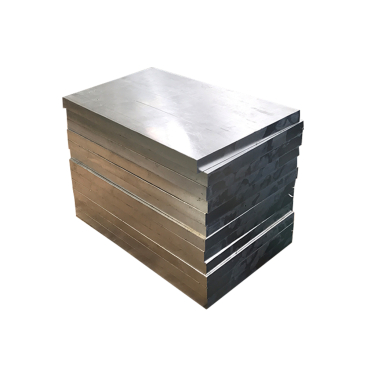
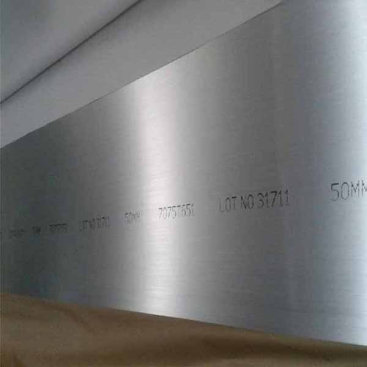
2024 La feuille d'aluminium offre une bonne résistance à la corrosion et se renforce à des températures inférieures à zéro mais s'affaiblit à 200–250 ° C. Il se forme bien lorsqu'il est recuit ou éteint et répond bien au traitement thermique,…
-
 3000 Feuille d'aluminium de série, Feuilles d'aluminium
3105 Feuille d'aluminium
Pourquoi choisir Teda Ganghua pour 3105 Feuille d'aluminium?
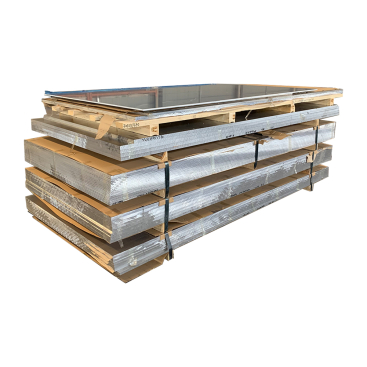
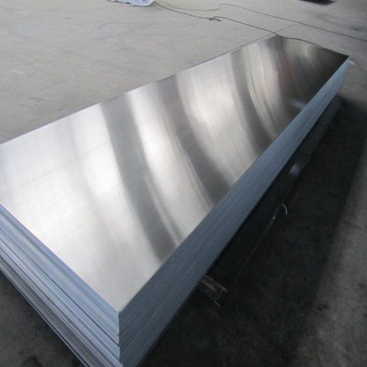
Avec plus 18 années d'expérience, Nous nous spécialisons dans la fabrication et la fourniture de la norme ASTM et EN 3105 plaques en aluminium à des prix compétitifs,…