- Description
- Enquête
3004 aluminum sheet is often considered when 3003 does not provide quite enough strength for the finished component. Both belong to the aluminum-manganese alloy family, mais 3004 also uses magnesium as an alloying addition. This gives it higher strength than 3003, while slightly reducing its forming flexibility. The difference is important in applications such as can bodies, composants d'éclairage, and formed parts that need a stronger material condition without moving to a completely different material category.
What Changes When Moving from 3003 à 3004?
The practical distinction between these two alloys is not simply that one is a newer or better version of the other. 3004 is intended for applications where additional strength is useful. The trade-off is a somewhat narrower forming window, particularly when the component requires demanding drawing operations.
| Comparaison | 3004 compared with 3003 | Purchasing implication |
|---|---|---|
| Force | Higher strength in comparable product conditions. | Worth considering when the component needs additional strength. |
| Formabilité | Generally somewhat lower, with a narrower window for demanding drawing operations. | Check the forming process and component geometry before substitution. |
| Résistance à la corrosion | Remains good for many common service environments. | Can suit applications where corrosion resistance remains an important requirement. |
| Applications typiques | Can bodies, composants d'éclairage, and formed parts requiring additional strength. | Select according to the finished part’s strength and forming requirements. |
Force: The Main Reason to Choose 3004
The addition of magnesium helps give 3004 une résistance supérieure à celle 3003. This can be useful when a component needs to maintain its shape or withstand greater service loads while retaining the advantages of an aluminum sheet product.
For can bodies, composants d'éclairage, and other formed products, the material must satisfy both manufacturing and service requirements. If the design needs more strength than 3003 can provide, 3004 may be a more appropriate starting point. The actual selection should still account for temper, épaisseur, géométrie, and the properties required in the finished part.
Formabilité: The Window Becomes Narrower
Higher strength does not come without a trade-off. Par rapport à 3003, 3004 generally offers somewhat less forming flexibility. This does not mean it cannot be formed, but demanding deep drawing operations may require more careful process design and verification.
For parts with complex shapes, tight transitions, or multiple forming stages, buyers should provide drawings and production details before choosing the alloy. Outillage, lubrification, géométrie vierge, caractère, and forming sequence all influence the final result. A process already proven for 3003 should not automatically be assumed to work unchanged with 3004.
Si 3003 already meets the strength and service requirements while allowing reliable production, switching to 3004 may add material cost without delivering a meaningful benefit. The decision should be based on a real performance requirement, not simply on choosing the stronger designation.
Résistance à la corrosion: Strength Does Not Remove the Need for Environment Review
3004 retains good corrosion resistance for many common applications. This makes it a practical option where buyers need a combination of strength, Formulation, and resistance to ordinary service environments.
Cependant, no alloy should be treated as universally corrosion-proof. Exposure to moisture, produits chimiques, salts, dissimilar metals, and operating conditions can affect service performance. Buyers should identify the actual environment and any surface or protection requirements before finalizing the material specification.
Où 3004 Aluminum Sheet Makes Practical Sense
Can bodies: Considérer 3004 where the product design requires a useful balance of strength and forming performance.
Composants d'éclairage: Suitable for evaluating when formed parts need additional strength while retaining aluminum’s processing advantages.
Strength-oriented formed parts: Worth considering when 3003 does not provide sufficient strength for the intended design.
Less demanding forming applications: Compare both alloys against actual production trials and finished-part requirements before choosing.
The central rule is simple: 3004 is prepared for applications that need some additional strength. Si 3003 already satisfies the design, fabrication, et les exigences de service, changing to 3004 may not provide enough extra value to justify the switch.
Comment spécifier 3004 Feuille d'aluminium
A complete purchase inquiry should identify the alloy designation, caractère, épaisseur, largeur, longueur, tolérances dimensionnelles, état de surface, et norme de produit applicable. Buyers should also explain whether the sheet will be drawn, courbé, couper, or processed through several forming stages. These details help suppliers assess whether the selected material is suitable for the intended component.
En comparant 3003 et 3004, do not evaluate strength in isolation. Consider the forming route, finished-part stiffness, environnement de service, and inspection requirements together. If the design is being changed from one alloy to another, production trials and approval of the revised specification can help reduce manufacturing risk.
Teda Ganghua: Supporting Aluminum Material Selection
Teda Ganghua Metal soutient l'achat de tôles d'aluminium avec une expérience de stockiste basée à Tianjin TEDA. Avec 20 années d'expérience en revendeur, la société travaille avec les acheteurs pour confirmer l'alliage, caractère, dimensions, exigences de surface, et modalités de livraison. Buyers comparing 3003 et 3004 can share their application and forming details to help clarify the material requirements before an order is confirmed.
Des certificats d'essai de matériaux peuvent être fournis le cas échéant, et l'inspection par un tiers peut être coordonnée selon les exigences de la commande convenues. Cutting and other agreed processing services can also be discussed based on project needs. Les clients sont invités à inspecter les matériaux avant la livraison.
Pour les spécifications associées et disponibles produits en tôle d'aluminium, contactez Teda Ganghua avec l'alliage requis, caractère, dimensions, et les détails de la candidature. A clear inquiry makes it easier to review whether 3003 ou 3004 is the more suitable choice.
Foire aux questions
1. Est 3004 aluminum sheet stronger than 3003?
En général, Oui. 3004 a une force plus élevée que 3003 in comparable product conditions. The actual properties depend on the temper and product specification.
2. Est 3004 as easy to form as 3003?
Not generally. 3004 usually has somewhat lower formability, so demanding drawing operations need careful evaluation of the material condition, outillage, et processus de formage.
3. Fait 3004 aluminum sheet have good corrosion resistance?
It retains good corrosion resistance for many common applications. Suitability should still be checked against the actual service environment and exposure conditions.
4. What are common applications of 3004 feuille d'aluminium?
Typical applications include can bodies, composants d'éclairage, and formed parts where additional strength is needed.
5. Dois-je choisir 3004 au lieu de 3003?
Choisir 3004 when the design needs additional strength and its forming requirements remain achievable. Si 3003 already meets the required performance and production needs, changing alloys may not offer a meaningful advantage.
Produits associés
-
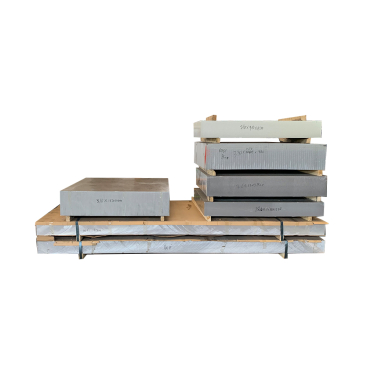
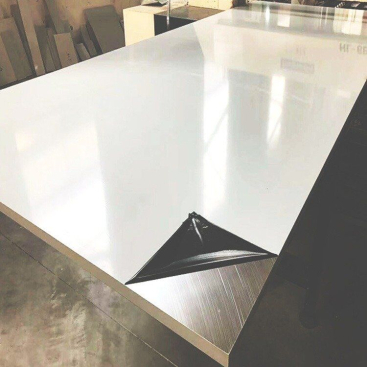 3000 Feuille d'aluminium de série, Feuilles d'aluminium
3Feuille d'aluminium A21
Pourquoi choisir l'aluminium Teda Ganghua 3A21?
Teda Ganghua fournit une feuille et une assiette en aluminium 3A21 de haute qualité en différentes tailles et températures (Ô, T3, T4, T6, H111, H112, H116). Notre 3A21 à chaud… -
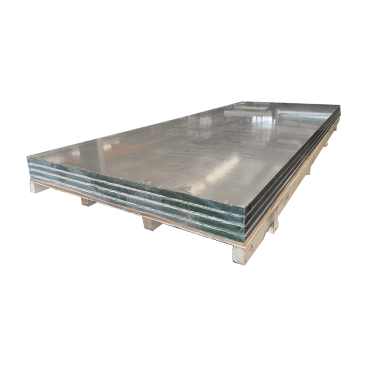
 1000 Feuille d'aluminium de série, Feuilles d'aluminium, Feuille d'aluminium pur
1050 Feuille d'aluminium
Caractéristiques
Léger
Résistance à la corrosion
Conductivité thermique
Conductivité électrique
Malléabilité et formabilité -
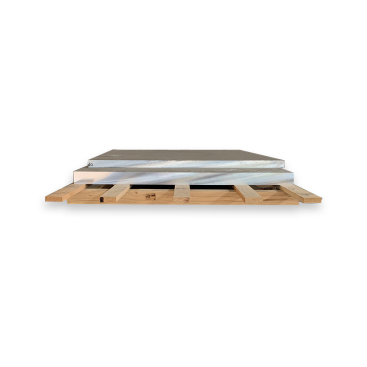
 Feuilles d'aluminium, 2000 Feuille d'aluminium de série
2219 Feuilles d'alliage d'aluminium
Alliage d'aluminium 2219 est un renforcement du cuivre, Alliage d'âge stimulable connu pour sa force structurelle élevée et sa pertinence pour les applications à haute température. Il prend en charge divers processus de travail des métaux comme l'usinage, formation, et la chaleur…
-
 2000 Feuille d'aluminium de série, Feuilles d'aluminium
2024 Feuille d'aluminium
2024 La feuille d'aluminium offre une bonne résistance à la corrosion et se renforce à des températures inférieures à zéro mais s'affaiblit à 200–250 ° C. Il se forme bien lorsqu'il est recuit ou éteint et répond bien au traitement thermique,…