- 描述
- 询问
The 5xxx aluminum alloy series is built around magnesium as its principal alloying element. 然而, not all alloys in this family offer the same balance of strength, 形成性, 和耐腐蚀性. The amount of magnesium influences how the material behaves during forming, 制造, and long-term service. Understanding this relationship is essential when selecting aluminum coil for industrial, 建筑, 运输, 和海洋应用.
Rather than treating every grade as an independent product, buyers should understand the 5xxx family as a performance ladder. Moving toward higher magnesium levels generally increases strength, while forming flexibility becomes more limited and certain service-related risks require closer attention.
Why Magnesium Defines the 5xxx Aluminum Series
The 5xxx family is an aluminum-magnesium alloy system. 与可热处理铝系列不同, its strength is primarily developed through solid-solution strengthening and strain hardening. This makes magnesium an important factor in determining the basic performance characteristics of different grades.
As magnesium increases, the material generally becomes stronger. 同时, forming operations may require greater attention to material condition, bending geometry, and processing parameters. For higher-magnesium alloys, prolonged exposure to certain elevated-temperature service conditions can also increase the risk of sensitization and subsequent intergranular corrosion or stress-corrosion cracking.
The fundamental selection principle
Moving toward higher strength generally means giving up some forming flexibility. The correct grade is the position on the magnesium ladder that best matches the manufacturing process and final service environment.
The Magnesium Gradient: Three Performance Levels
The following table provides a qualitative comparison of the three broad performance positions within the alloy family. These categories describe general material tendencies rather than fixed boundaries between individual grades.
| 镁含量 | 主要优点 | Main Trade-Offs |
|---|---|---|
| 低的 | 良好的成型性和耐腐蚀性 | 较低的强度 |
| 中等的 | 平衡的强度和成型性 | Requires matching the temper to the intended fabrication process |
| 高的 | Higher strength and good corrosion resistance in suitable environments | Reduced forming flexibility and increased sensitization concerns under certain service conditions |
Corrosion resistance should not be interpreted as identical across all grades and environments. 表面状况, 合金成分, fabrication history, 温度, and exposure conditions all influence actual service performance.
Low Magnesium: When Formability Comes First
At the lower end of the magnesium gradient, the material is generally selected when forming flexibility and corrosion resistance are more important than achieving higher strength.
This position is suitable for products that require bending, 冲压, shaping, or decorative processing. Manufacturers can benefit from the relatively favorable forming characteristics, particularly when the finished component contains multiple bends or complex shapes.
典型的选择考虑因素
- Decorative sheet products requiring surface consistency.
- Components involving repeated bending or forming operations.
- Appliance panels and general fabrication products.
- Applications where moderate strength is sufficient.
When choosing this position, buyers should pay attention to the required temper, 厚度, 弯曲半径, 和表面状况. A suitable alloy can still produce poor forming results if the supplied temper does not match the manufacturing process.
Medium Magnesium: Balancing Strength and Formability
The middle of the magnesium gradient represents a practical balance between mechanical performance and fabrication flexibility. These materials are often considered when a component needs more strength than a low-magnesium option but still requires conventional forming and manufacturing operations.
For manufacturers producing enclosures, 车辆组件, general industrial panels, 和装配式结构, this balance can reduce the need to compromise excessively between strength and workability.
What Buyers Should Evaluate
- Whether the material can meet the required forming geometry.
- Whether the selected temper provides the required strength and flexibility.
- Whether welding or other joining operations are necessary.
- Whether the finished product will operate in a corrosive environment.
The medium position should not be regarded as a universal solution. Different grades within the same general range can have different processing characteristics, so the exact alloy and temper must be verified before purchasing.
High Magnesium: When Strength Becomes the Priority
At the higher end of the magnesium gradient, the material generally offers greater strength and is commonly considered for demanding structural and transportation applications. 海洋结构物, 焊接组件, heavy-duty equipment, and industrial components are among the application areas where higher-strength aluminum-magnesium alloys may be appropriate.
然而, increased strength does not mean that every manufacturing requirement becomes easier. Higher-strength materials may require more careful control of forming operations, 工装, 弯曲半径, and fabrication sequence.
The Sensitization Factor
One important consideration for higher-magnesium alloys is sensitization. Under certain temperature and exposure conditions, magnesium-rich phases may precipitate along grain boundaries. This can increase susceptibility to intergranular corrosion and stress-corrosion cracking.
The risk depends on the actual alloy, 物质条件, 热历史, 施加应力, 及服务环境. It is therefore important to evaluate operating temperature and long-term exposure rather than selecting a material based on strength alone.
Important engineering consideration
For higher-magnesium materials, prolonged elevated-temperature exposure should be reviewed during material selection. The applicable service limitations and sensitization requirements must be checked against the exact alloy and relevant technical specifications.
How to Select the Right Position on the 5xxx Ladder
The best selection process begins with the finished product rather than the alloy designation. Buyers should identify the manufacturing requirements and service conditions before deciding how much strength is actually necessary.
| 项目需求 | 首选方向 | Key Question |
|---|---|---|
| 复杂成型 | Lower magnesium position | Can the material achieve the required bend geometry? |
| 一般工业制造 | Middle magnesium position | Is the balance between strength and forming sufficient? |
| 重型结构 | Higher magnesium position | Does the strength meet the design requirement? |
| 船舶应用 | Grade selected for the marine environment | Are corrosion, 焊接, and service conditions addressed? |
| 高温服务 | Application-specific alloy selection | Has sensitization risk been evaluated? |
Why Temper and Processing Matter Alongside Magnesium
Magnesium content explains the broad direction of the material properties, but it does not determine the complete performance of a finished product. The temper and processing history also play important roles.
Many alloys in this family are strengthened through cold working. 最后, two products made from the same alloy can behave differently when supplied in different tempers. A harder temper may provide greater strength but can reduce the available forming flexibility.
Buyers should consider the following factors together:
- 合金牌号: Confirm the exact registered grade rather than relying only on the series number.
- 脾气: Select the material condition according to the required forming and mechanical performance.
- 厚度和宽度: Match dimensions to the production equipment and finished component.
- Fabrication route: Consider bending, 冲压, 焊接, 切割, and other operations.
- Service environment: Review marine exposure, 温度, 压力, and expected operating life.
Sourcing 5xxx Aluminum Coil from Teda Ganghua
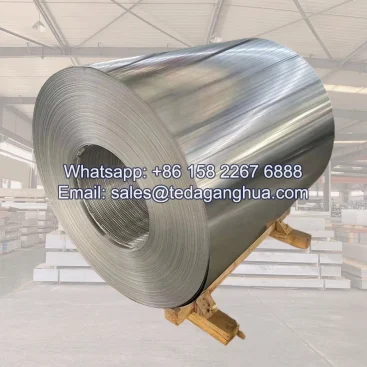
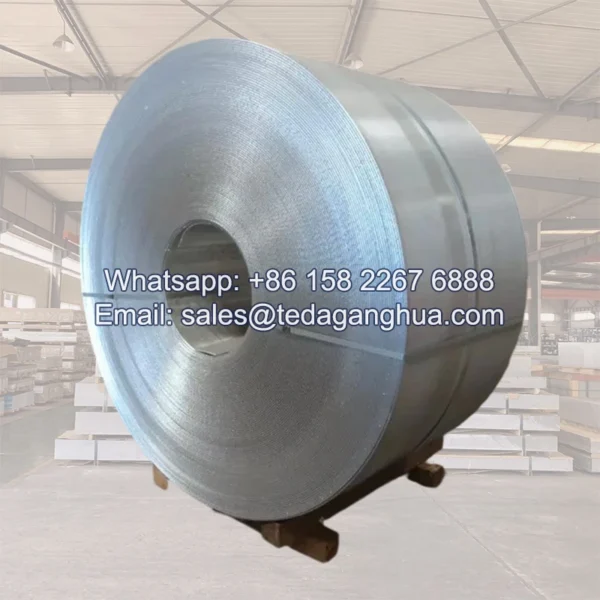
泰达港华金属为工业制造供应铝材, 运输, 建造, 和海洋相关应用. As a Tianjin-based steel and aluminum stockist with 20 多年经验, 该公司为需要材料选择帮助的买家提供支持, dimensional confirmation, and customized processing arrangements.
When sourcing this alloy family, Teda Ganghua can assist with discussing the required grade, 脾气, 厚度, 宽度, 表面状况, 和预期应用. Available processing requirements can include cutting, 剪切, and other customized fabrication services according to project specifications.
用于工业采购, material identification and quality documentation are also important. Material test certificates and inspection arrangements can be discussed according to the order requirements. Customers are welcome to arrange inspections before shipment to verify the supplied materials.
探索泰达港华 铝板及卷材产品 for different manufacturing and fabrication requirements.
提交查询时, provide the intended application, exact alloy, 脾气, 方面, required quantity, 和制作工艺. For marine or elevated-temperature projects, include the expected service environment so that the material selection can be evaluated more appropriately.
常见问题解答
1. What makes magnesium important in the 5xxx aluminum series?
Magnesium is the principal alloying element and contributes to solid-solution strengthening. Its level influences the general balance between strength, 形成性, and processing requirements across the series.
2. Does higher magnesium always mean better aluminum?
不. Higher magnesium generally increases strength, but it can reduce forming flexibility and introduce additional sensitization concerns under certain service conditions. The best choice depends on the final application.
3. Is the 5xxx series suitable for marine applications?
Many grades offer excellent resistance to atmospheric and seawater corrosion. 然而, the exact alloy, 脾气, 焊接程序, 暴露条件, and maintenance requirements should be evaluated for each marine project.
4. Why should buyers consider temper when purchasing aluminum coil?
Temper reflects the material’s processing and strengthening condition. It affects strength, 硬度, 和形成行为, meaning that the same alloy can perform differently in different tempers.
5. What is sensitization in high-magnesium aluminum alloys?
Sensitization refers to the development of microstructural conditions, commonly involving grain-boundary precipitation, that can increase susceptibility to intergranular corrosion and stress-corrosion cracking. It is an important consideration for certain higher-magnesium alloys exposed to prolonged elevated temperatures.
相关产品
-
-
 铝线圈供应商专业铝制产品, 铝板
5052 H34
5052 H34铝合金是一种中高强度状态的铝合金 5052 Al-Mg系列, 提供力量之间的完美平衡, 耐腐蚀性能, 和表现性.
与脾气比较温和的人相比, H34提供:…
-
-
-
-
-