Aluminum Tank Sensitization β Phase Formation and Corrosion Risk
Aluminum tanks can remain visually intact for years while their internal microstructure gradually becomes more susceptible to corrosion. One of the most easily overlooked mechanisms is sensitization in aluminum-magnesium alloys, particularly the precipitation of magnesium-rich β phase along grain boundaries. In 5xxx series alloys such as 5083, prolonged exposure to certain elevated temperatures can promote this process. If the sensitized material later encounters a corrosive environment while under tensile stress, intergranular corrosion and stress corrosion cracking may develop.
For tank manufacturers, pressure-vessel designers, marine equipment builders, and aluminum sheet buyers, understanding β-phase sensitization is essential. The risk is not determined by temperature alone. Magnesium content, exposure duration, alloy temper, welding history, residual stress, and the operating environment all influence whether sensitization becomes a practical service problem.
1. What Is β-Phase Sensitization in Aluminum Tanks?
In aluminum-magnesium alloys, sensitization refers to a metallurgical condition in which magnesium-rich precipitates form preferentially along grain boundaries during prolonged exposure to certain temperatures. The commonly discussed β phase is magnesium-rich Al3Mg2, also written as Mg2Al3.
This phase is different from the magnesium dissolved in the aluminum matrix. When β phase develops along grain boundaries, it can create local electrochemical differences between the precipitates and the surrounding aluminum. Under suitable corrosive conditions, these differences may encourage preferential attack along grain boundaries.
The sensitization mechanism in one sentence
Prolonged thermal exposure can promote β-phase precipitation at grain boundaries; in a corrosive environment, a sufficiently sensitized alloy may become more vulnerable to intergranular corrosion and stress corrosion cracking.
It is important to distinguish sensitization from immediate corrosion. β-phase precipitation does not automatically mean that a tank will leak or fail. It changes the material’s susceptibility. Actual damage depends on the corrosion environment, stress condition, sensitization level, and service history.
1.1 Why Is β Phase Called a Hidden Risk?
Unlike external corrosion, which may produce visible discoloration, pitting, or material loss, sensitization begins at the microstructural level. A tank can retain an apparently acceptable surface while its grain boundaries become more susceptible to corrosion.
This makes the mechanism difficult to identify through ordinary visual inspection alone. A surface may look clean, yet the material may have experienced a long period of thermal exposure that changed its resistance to intergranular attack.
For this reason, tank integrity assessments should consider the complete operating history rather than relying only on external appearance or the original material certificate.
2. How β Phase Forms Along Aluminum Grain Boundaries
To understand sensitization, it helps to examine the relationship between magnesium content, temperature, and diffusion. Magnesium is added to 5xxx series aluminum to increase strength through solid-solution strengthening and work hardening. In higher-magnesium alloys, prolonged exposure to suitable temperatures can allow magnesium atoms to diffuse and form magnesium-rich precipitates.
2.1 The Four Stages of Sensitization
- Magnesium remains in the aluminum matrix: In the original alloy condition, magnesium contributes to strength while much of it remains in solid solution.
- Thermal exposure enables diffusion: When the material remains within a suitable temperature range for sufficient time, magnesium atoms can migrate toward energetically favorable grain-boundary regions.
- β-phase precipitation develops: Magnesium-rich Al3Mg2 precipitates may form along grain boundaries. Their distribution and continuity influence the degree of sensitization.
- Corrosion susceptibility increases: In an appropriate electrolyte, electrochemical differences can promote preferential grain-boundary attack. Under tensile stress, cracking may become possible.
The extent of sensitization depends on both temperature and time. A short exposure at a given temperature is not equivalent to continuous operation at that temperature for several years.
2.2 Why Grain Boundaries Matter
Grain boundaries are interfaces between neighboring aluminum crystals. They have different atomic arrangements from the interior of the grains and can provide favorable locations for precipitation and diffusion.
When β phase forms along these boundaries, the local electrochemical behavior can differ from that of the aluminum matrix. If the precipitates are sufficiently continuous and the environment supports corrosion, attack may follow the grain-boundary network.
This is why sensitization is closely associated with intergranular corrosion. The concern is not simply that the alloy contains magnesium, but that magnesium-rich precipitates develop in a microstructure and environment that allow preferential grain-boundary degradation.
3. Why 5083 Aluminum Tanks Require Particular Attention
5083 is a widely used 5xxx series aluminum alloy because it combines good strength, weldability, and corrosion resistance in many marine and structural applications. Its magnesium content is typically higher than 4%, making sensitization assessment particularly important when the material is exposed to elevated temperatures for extended periods.
The typical magnesium composition range for 5083 is approximately 4.0–4.9%, subject to the governing product specification and edition. This relatively high magnesium content contributes to strength, but it also places the alloy within the group of materials for which long-term thermal exposure deserves attention.
| Alloy | Typical Mg Content | Sensitization Consideration | Common Application Direction |
|---|---|---|---|
| 5083 | 4.0–4.9% | Long-term elevated-temperature exposure requires careful evaluation | Marine structures, cryogenic equipment, pressure vessels, tanks |
| 5454 | 2.4–3.0% | Generally lower high-Mg sensitization concern | Vehicle tanks, pressure vessels, elevated-temperature service where approved |
| 5754 | 2.6–3.6% | Composition and service history should be assessed | Automotive panels, tanks, welded structures |
These are typical composition ranges, not substitutes for the exact chemical limits in the relevant product standard. The lower magnesium content of 5454 generally reduces the specific sensitization concern associated with high-magnesium 5xxx alloys, but it does not make 5454 immune to thermal degradation or corrosion.
3.1 Why a Tank Can Be More Vulnerable Than a Flat Sheet
A flat sheet used in a low-temperature structural application may experience a relatively stable environment. A tank, however, can face a combination of thermal cycles, liquid contact, weld residual stress, internal pressure, and localized corrosion conditions.
For example, a tank may carry warm liquid during operation, cool during shutdown, and remain exposed to moisture or corrosive deposits. If the material has already become sensitized, the combination of electrolyte exposure and tensile stress may create conditions favorable to grain-boundary cracking.
Tank design should therefore consider the actual service environment rather than assuming that the original alloy designation guarantees long-term resistance under every operating condition.
4. Temperature and Time: When Does Sensitization Become a Concern?
There is no single temperature at which every 5083 tank becomes sensitized. The process is time-dependent and influenced by the alloy’s composition, temper, prior processing, and microstructure.
Technical guidance on high-magnesium 5xxx aluminum alloys commonly discusses prolonged exposure in an approximate range of 65°C to 200°C as a potential sensitization concern. The rate of precipitation generally increases as temperature rises within relevant conditions, although the relationship is not a simple linear one. The exact response must be established for the specific material and exposure history.
| Exposure Condition | Engineering Consideration |
|---|---|
| Normal ambient temperature | Sensitization from service temperature is generally less of a concern, but material history still matters. |
| Prolonged exposure around 65–75°C | A conservative screening range for high-magnesium 5xxx alloys; review duration and service environment. |
| Long-term exposure around 100–150°C | Requires more detailed evaluation of sensitization kinetics, strength retention, and corrosion risk. |
| Short-duration high-temperature excursion | Assess peak temperature, exposure time, thermal gradients, and cumulative cycles. |
| Repeated heating and cooling | Evaluate cumulative thermal history, residual stress, and possible changes in material properties. |
The temperature ranges above are screening guidance, not universal allowable operating limits. A brief excursion above a reference temperature does not automatically mean that a component is sensitized. Conversely, a component operating below a quoted threshold should not be assumed to have zero risk if it has experienced other thermal or manufacturing conditions.
4.1 Why 65°C Is Often Mentioned
Approximately 65°C (150°F) is frequently used as a conservative reference when discussing prolonged exposure of high-magnesium 5xxx alloys. It is intended to trigger closer engineering review rather than define an immediate failure point.
At lower temperatures, the process may develop slowly. At higher temperatures, diffusion and precipitation can proceed more rapidly under suitable conditions. The actual time required to reach a significant sensitization level depends on composition, microstructure, and prior processing.
4.2 Temperature Is Not the Only Variable
Two tanks made from the same alloy can have different sensitization histories if their manufacturing and operating conditions differ. Important variables include:
- Actual magnesium content within the specified composition range.
- Initial temper and amount of cold work.
- Time spent at each temperature during manufacture and service.
- Welding heat input and local thermal cycles.
- Residual stress and applied tensile stress.
- Corrosive liquid, chloride concentration, moisture, and deposits.
- Previous repairs, heating, or other thermal treatments.
5. How Sensitized Aluminum Develops Intergranular Corrosion and Cracking
Sensitization changes the microstructure, but a corrosive environment is usually needed for the condition to develop into corrosion damage. The mechanism is especially important when a tank contains or contacts an electrolyte capable of supporting localized electrochemical attack.
5.1 Intergranular Corrosion
Intergranular corrosion is preferential corrosion along grain boundaries. In sensitized aluminum-magnesium alloys, β-phase precipitation can make grain-boundary regions more electrochemically active than the surrounding matrix under certain conditions.
Corrosion may therefore progress along the grain-boundary network rather than attacking the entire surface uniformly. Depending on the material condition and exposure, the resulting damage can reduce local integrity without producing obvious widespread surface corrosion.
5.2 Stress Corrosion Cracking
Stress corrosion cracking requires the interaction of three main conditions:
Three conditions associated with SCC
- Susceptible material: The alloy has a microstructure or sensitization condition that makes cracking possible.
- Corrosive environment: The material contacts a medium that supports environmentally assisted cracking.
- Tensile stress: Applied loads or residual stresses provide the mechanical driving force for crack development.
Removing or reducing one of these conditions can reduce risk, although the appropriate control strategy depends on the tank design and operating conditions. For example, reducing tensile stress alone may not eliminate corrosion, and changing the liquid environment may not restore a previously sensitized microstructure.
5.3 Why Welded Tank Areas Deserve Attention
Welded tank structures can contain local variations in microstructure, residual stress, and thermal history. The heat-affected zone may experience a different thermal cycle from the parent plate, while welding and restraint can contribute to residual tensile stress.
These factors do not mean that every weld in a 5083 tank is sensitized or defective. They do mean that weld locations, heat-affected zones, attachments, and highly stressed areas should be included in the inspection and engineering assessment where prolonged elevated-temperature service is expected.
6. 5083 vs 5454: Which Alloy Is More Appropriate for Warm-Service Tanks?
When a tank is expected to operate at elevated temperatures for extended periods, 5454 is often considered because its magnesium content is lower than that of 5083. This can reduce the specific sensitization concern associated with high-magnesium alloys.
However, 5454 should not be selected automatically. The final decision must account for mechanical properties, pressure-vessel requirements, fabrication, corrosion conditions, and code-approved material data.
| Selection Factor | 5083 | 5454 |
|---|---|---|
| Magnesium content | 4.0–4.9% | 2.4–3.0% |
| Sensitization screening | More attention required for prolonged elevated-temperature exposure | Generally lower high-Mg sensitization concern |
| Strength positioning | Generally higher strength potential | Generally moderate strength |
| Marine applications | Widely used in suitable marine structures | Used in selected tank and structural applications |
| Elevated-temperature tank applications | Requires specific sensitization and design review | May be a suitable candidate, subject to code and strength verification |
The main purchasing lesson is that a lower magnesium content can reduce one particular metallurgical risk, but it does not independently establish the maximum allowable operating temperature. The designer must still verify allowable stress, strength retention, corrosion resistance, welding qualification, and the governing construction code.
7. How to Detect and Evaluate β-Phase Sensitization
Ordinary visual inspection cannot reliably determine whether an aluminum tank has developed sensitization. A proper assessment may require a combination of service-history review, material identification, metallurgical testing, corrosion evaluation, and structural inspection.
7.1 Review the Thermal History First
Before selecting a test method, collect the information that can indicate whether sensitization is plausible:
- Original alloy and temper documentation.
- Mill Test Certificate and chemical composition.
- Manufacturing and welding records.
- Operating temperature history and duration.
- Previous repairs and thermal exposure.
- Internal liquid composition and corrosion conditions.
This information helps determine whether the material needs further sensitization testing and where testing should be concentrated.
7.2 ASTM G67 Nitric Acid Mass Loss Test
ASTM G67 describes a nitric acid mass loss test, commonly known as the NAMLT method, for evaluating susceptibility to intergranular corrosion in certain 5xxx series aluminum alloys. The test measures mass loss after controlled exposure to nitric acid and can be used as an indicator of sensitization.
The test result is commonly expressed as mass loss per unit area. Higher mass loss can indicate greater susceptibility under the test conditions. Acceptance criteria and interpretation must be selected according to the applicable specification, product requirements, and material condition.
ASTM G67 is a laboratory test on prepared specimens. It is not a direct measurement of the remaining service life of a complete tank, and a test result should not be interpreted without considering the alloy, temper, sampling location, and relevant acceptance criteria.
7.3 ASTM G66 and Other Corrosion Evaluation Methods
ASTM G66, commonly associated with the ASSET test, evaluates exfoliation corrosion susceptibility in certain aluminum alloys. It addresses a different corrosion response from the nitric acid mass loss test. The two methods should not be treated as interchangeable.
Depending on the project, additional evaluation may include metallographic examination, corrosion testing, ultrasonic inspection, liquid penetrant testing, or other appropriate non-destructive examination methods. The selection should be made by qualified materials and inspection personnel based on the damage mechanism being investigated.
| Evaluation Method | Main Purpose | Important Limitation |
|---|---|---|
| ASTM G67 / NAMLT | Evaluates susceptibility to intergranular corrosion in applicable 5xxx alloys | Requires a prepared laboratory specimen; not a direct tank-life prediction |
| ASTM G66 / ASSET | Evaluates exfoliation corrosion susceptibility in applicable alloys | Does not replace a sensitization-specific assessment |
| Metallography | Examines microstructure and grain-boundary features | Requires suitable sampling and expert interpretation |
| Ultrasonic testing | Can identify certain internal discontinuities and measure remaining thickness | Does not directly measure β-phase precipitation |
| Liquid penetrant testing | Detects surface-breaking discontinuities | Cannot identify hidden grain-boundary sensitization by itself |
For an in-service tank, the inspection plan should be developed by qualified engineers. A test that identifies sensitization susceptibility does not necessarily establish the presence, depth, or severity of cracking in the actual component.
8. How to Reduce Sensitization Risk in Aluminum Tank Design
The most effective approach is to address sensitization before the tank enters service. Once a material has developed a sensitized microstructure, ordinary cleaning or surface treatment cannot simply reverse the condition.
8.1 Select the Alloy Based on the Complete Service Profile
If a tank will experience prolonged elevated-temperature exposure, compare 5083 with lower-magnesium alternatives such as 5454. The selection must consider both sensitization susceptibility and the mechanical properties required by the design code.
Do not choose an alloy based only on room-temperature tensile strength or a supplier’s general statement that a grade is suitable for tanks. Specify the operating conditions and verify the applicable material properties.
8.2 Control Thermal Exposure During Manufacturing
Manufacturing processes can introduce thermal cycles that affect the final material condition. Welding procedures, local heating, repair work, and any post-fabrication thermal treatment should be reviewed to avoid unnecessary exposure that could increase sensitization risk.
Welding procedure qualification should address the selected alloy, thickness, filler metal, heat input, joint design, and applicable fabrication code. Where long-term elevated-temperature service is expected, the engineering review should include the potential effect of the thermal cycle on the material.
8.3 Minimize Unnecessary Tensile Stress
Stress corrosion cracking requires tensile stress as one of its contributing conditions. Appropriate design, fabrication, support arrangements, and control of welding distortion can help avoid unnecessary stress concentrations. However, stress reduction should be treated as one part of a broader corrosion-control strategy, not a substitute for suitable material selection.
8.4 Control the Corrosive Environment
Where practical, reduce exposure to aggressive electrolytes, uncontrolled moisture, and corrosive deposits. Tank cleaning, drainage, coating systems, and process-fluid control should be selected according to the actual chemical environment and the compatibility of the aluminum alloy.
8.5 Establish a Service Inspection Plan
For tanks with elevated-temperature exposure or a history of sensitization concern, establish inspection intervals based on risk, operating history, and applicable regulations. Inspection should focus on high-stress areas, welds, heat-affected zones, liquid interfaces, and locations where corrosion conditions may be more severe.
9. Procurement Checklist: What to Specify When Buying Aluminum Tank Plate
Material purchasing has a direct influence on tank reliability. A complete order should define more than the alloy and thickness. The following checklist can help procurement teams communicate requirements to aluminum sheet and plate suppliers.
| Specification Item | Information to Confirm |
|---|---|
| Alloy | 5083, 5454, or another approved alloy |
| Temper | Specified temper and mechanical-property requirements |
| Product form | Sheet or plate, with exact thickness and dimensions |
| Material standard | Applicable ASTM, EN, or other project specification |
| Chemical composition | Mill Test Certificate with actual heat analysis |
| Mechanical properties | Tensile strength, yield strength, elongation, and applicable design values |
| Thermal service conditions | Continuous temperature, peak temperature, duration, and thermal cycles |
| Corrosion requirements | Service medium, chloride exposure, and required corrosion testing |
| Sensitization evaluation | Whether ASTM G67 or another evaluation method is required |
| Inspection documents | MTC, test reports, inspection records, and traceability requirements |
ASTM G67 testing should not be added automatically to every aluminum order. It is most relevant when the alloy, service temperature, exposure duration, and project specification justify a sensitization assessment. Buyers should define the test method, sampling plan, acceptance criteria, and responsibility for testing before placing the order.
10. Teda Ganghua: Aluminum Sheet Supply for Tank and Industrial Applications
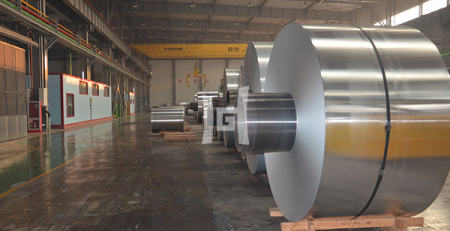
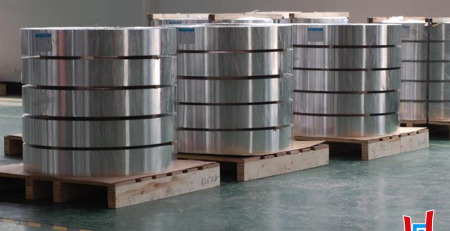
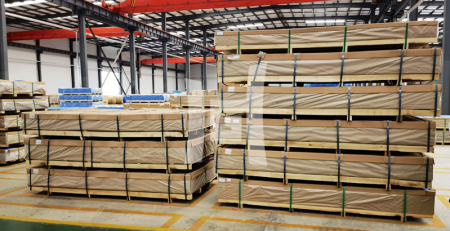
For tank manufacturers, pressure-vessel fabricators, marine equipment builders, and industrial procurement teams, selecting aluminum plate requires consistent material specifications and reliable documentation. Alloy composition, temper, dimensional tolerance, surface condition, and mechanical properties should be matched to the intended service environment.
Teda Ganghua has been engaged in metal export business since 2006 and supports international buyers sourcing aluminum sheets and plates for industrial manufacturing. When requesting a quotation for 5083, 5454, or other aluminum alloys, buyers can provide the required grade, temper, thickness, width, length, quantity, applicable standard, and intended application.
For projects involving warm-service tanks or pressure-containing equipment, it is particularly useful to provide the continuous operating temperature, maximum temperature, exposure duration, corrosive medium, and welding requirements. These details help clarify the material documentation and inspection requirements that should be discussed before order confirmation.
Explore Teda Ganghua’s aluminum sheet products to discuss available specifications, customized dimensions, processing requirements, and material certificates. Final material approval should remain subject to the project design code and qualified engineering review.
11. Frequently Asked Questions
Q1. What is the β phase in 5083 aluminum?
A: The β phase is a magnesium-rich precipitate commonly identified as Al3Mg2 or Mg2Al3. During prolonged exposure to suitable elevated temperatures, it can form along grain boundaries in high-magnesium aluminum alloys such as 5083.
Q2. Why is β-phase precipitation a problem for aluminum tanks?
A: Grain-boundary β-phase precipitation can increase susceptibility to intergranular corrosion in suitable corrosive environments. If tensile stress is also present, sensitized material may become more vulnerable to stress corrosion cracking. This can affect long-term tank integrity even when the external surface initially appears normal.
Q3. At what temperature does 5083 aluminum become sensitized?
A: There is no single temperature that applies to every 5083 product. Prolonged exposure in an approximate range of 65–200°C is commonly discussed as a potential concern, but the actual sensitization rate depends on time, composition, temper, microstructure, and processing history. The range should be used for screening rather than as a universal failure threshold.
Q4. Does β-phase sensitization mean that the tank will crack?
A: No. Sensitization increases susceptibility; it does not guarantee cracking. Stress corrosion cracking generally requires susceptible material, a suitable corrosive environment, and tensile stress. The actual risk must be evaluated using the tank’s operating and inspection history.
Q5. Is 5454 less susceptible to sensitization than 5083?
A: Generally, yes, because 5454 has a lower magnesium content, typically around 2.4–3.0%, compared with approximately 4.0–4.9% for 5083. This reduces the specific sensitization concern associated with high-magnesium 5xxx alloys. It does not eliminate the need to verify strength, corrosion resistance, and design-code suitability.
Q6. How can sensitization in 5083 aluminum be tested?
A: ASTM G67, also known as the nitric acid mass loss test or NAMLT, is commonly used to evaluate susceptibility to intergranular corrosion in applicable 5xxx alloys. Testing requires suitable specimens and interpretation against the relevant specification and acceptance criteria.
Q7. Can ultrasonic testing detect β-phase sensitization?
A: Conventional ultrasonic testing does not directly measure β-phase precipitation. It can help identify certain discontinuities or measure remaining wall thickness, while sensitization assessment generally requires an appropriate laboratory corrosion test or metallurgical examination.
Q8. Does welding make 5083 aluminum more vulnerable to cracking?
A: Welding can introduce local thermal cycles, residual stresses, and changes in the heat-affected zone. These factors should be considered in the overall assessment, especially when the tank operates at elevated temperatures and contacts a corrosive medium. Proper welding procedures and engineering review are essential.
Q9. Can sensitization be reversed by cleaning or surface treatment?
A: Ordinary cleaning, pickling, or surface treatment does not reverse grain-boundary β-phase precipitation throughout the material. Any proposed heat treatment or repair strategy must be assessed by qualified materials engineers and must comply with the applicable design and fabrication requirements.
Q10. Should every 5083 aluminum tank undergo ASTM G67 testing?
A: Not necessarily. Testing requirements depend on the service temperature, exposure duration, alloy condition, corrosion environment, and governing project specification. Where prolonged elevated-temperature exposure is expected, a sensitization assessment may be appropriate. The sampling plan and acceptance criteria should be defined before testing.
12. Technical Notes and References
- β phase in sensitized 5xxx aluminum-magnesium alloys is commonly identified as Al3Mg2, also expressed as Mg2Al3. It is a magnesium-rich phase that can precipitate preferentially along grain boundaries under suitable thermal exposure conditions.
- Typical magnesium content for 5083 is approximately 4.0–4.9%, while 5454 is approximately 2.4–3.0%. Exact limits depend on the applicable alloy specification and product form.
- ASTM G67 provides a nitric acid mass loss test for evaluating susceptibility to intergranular corrosion in applicable 5xxx aluminum alloys. It is a laboratory test and does not independently determine the remaining service life of a tank.
- ASTM G66 evaluates exfoliation corrosion susceptibility in applicable aluminum alloys. It should not be treated as interchangeable with ASTM G67.
- Temperature ranges discussed in this article are general engineering screening references. Actual sensitization kinetics depend on material composition, temper, microstructure, processing history, thermal exposure, and environment.
- Material selection for pressure vessels and tanks must comply with the applicable construction code, design temperature, allowable stress, welding requirements, and inspection provisions.
Key takeaway: β-phase sensitization is a hidden metallurgical risk in high-magnesium 5xxx aluminum alloys. Prolonged elevated-temperature exposure can promote Al3Mg2 precipitation along grain boundaries, increasing susceptibility to intergranular corrosion and, under suitable stress and environmental conditions, stress corrosion cracking. For aluminum tanks, reliable prevention begins with appropriate alloy selection, thermal-history control, corrosion assessment, and inspection planning—not simply choosing a material based on its room-temperature strength.