- Beschreibung
- Anfrage
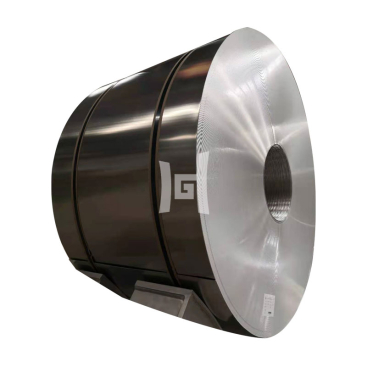
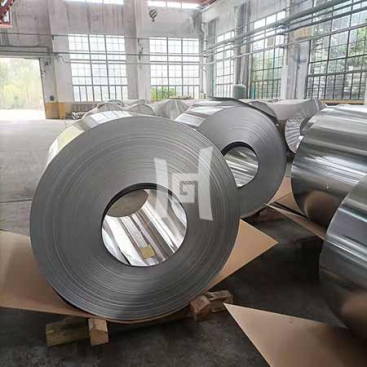
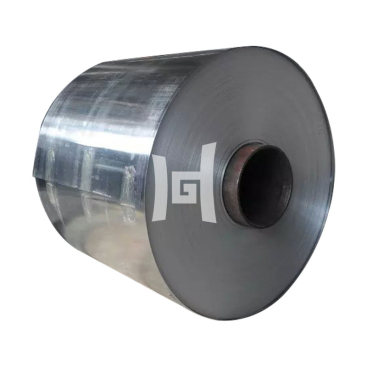
7075 aluminum coil is an uncommon product request for a familiar high-strength aluminum alloy. 7075 is widely recognized in aerospace and other demanding structural applications because of its excellent strength potential. Jedoch, the same characteristics that make it attractive for highly loaded components also create limitations in corrosion performance, Schweißen, Bildung, and product availability.
Unlike general-purpose aluminum alloys selected for easy fabrication, 7075 requires a more deliberate balance between strength, Korrosionsbeständigkeit, und Verarbeitungsanforderungen. Its different heat-treatment conditions provide different combinations of properties, so choosing the alloy designation alone is not enough.
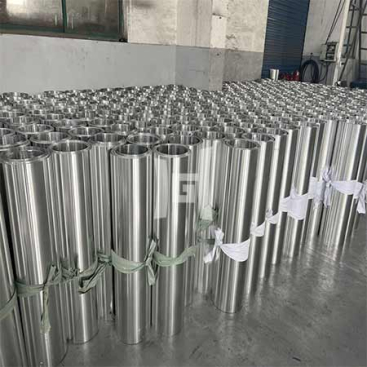
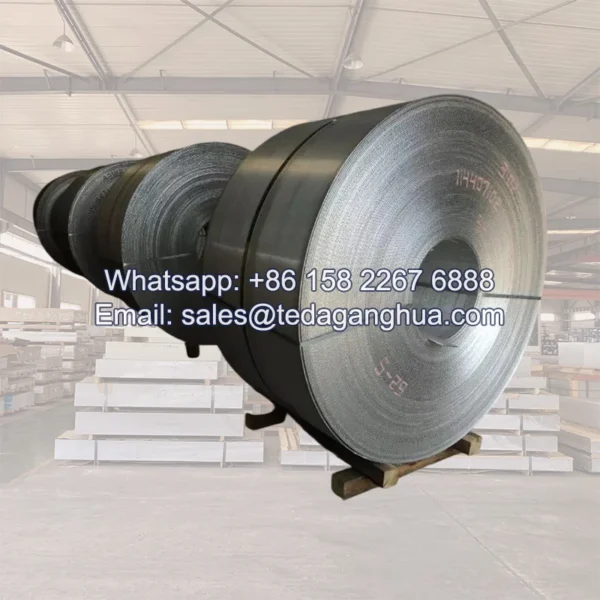
There is also an important product-form issue. 7075 is commonly supplied as plate, Blatt, extruded products, and forgings depending on the specification and manufacturer. Genuine continuous coil is extremely uncommon. Many buyers searching for 7075 coil are actually looking for thin sheet material.
The Three Defining Characteristics of 7075
Understanding this alloy requires looking beyond its high-strength reputation. Its application suitability depends on what the design prioritizes and what fabrication processes will be used.
| Key Factor | Was es bedeutet | Überlegungen zum Kauf |
|---|---|---|
| Strength positioning | One of the highest-strength options among commonly used aluminum alloys. | Suitable when structural strength and weight reduction are major design priorities. |
| Processing trade-offs | Relatively limited corrosion resistance, poor conventional weldability, and a narrower forming window. | Consider joining, Schutz, Bearbeitung, and forming requirements before selecting the grade. |
| Heat-treatment condition | Different conditions provide different balances between strength, Korrosionsverhalten, and stress-related performance. | Specify the required condition according to the design and applicable material specification. |
Warum 7075 Is Known for High Strength
7075 belongs to the 7xxx aluminum alloy series, which uses zinc as a major alloying element. Its strength potential is developed through controlled heat treatment and precipitation hardening. This makes it suitable for components where high structural performance is required without the weight of many conventional engineering materials.
In aerospace structures, material selection often involves balancing strength, Gewicht, Ermüdungsleistung, Korrosionsverhalten, und Fertigungsanforderungen. 7075 is used where its combination of properties fits the engineering design, rather than simply because it is the strongest available option.
Its high-strength positioning is particularly valuable in machined structural components, Flugzeugbeschläge, and other applications where the design can take advantage of a strong aluminum material and manage its processing limitations.
The central material-selection principle
7075 is a typical example of choosing strength at the expense of some corrosion resistance, Schweißbarkeit, and forming flexibility. Its suitability must be judged against the complete component design.
The Trade-Off: Strength Does Not Come Without Limits
1. Corrosion Resistance Requires Attention
Compared with several widely used aluminum alloys designed for general fabrication and corrosion resistance, 7075 requires more careful consideration of its service environment. Its corrosion behavior can be affected by material condition, Belichtung, Oberflächenschutz, and design details.
For applications exposed to moisture, salts, oder aggressive Umgebungen, buyers should review the required corrosion protection and inspection provisions. Oberflächenbehandlung, Schutzbeschichtungen, design practices, and maintenance may all form part of the material selection.
2. Conventional Welding Is Not Its Main Strength
7075 is generally considered difficult to weld using conventional fusion-welding processes. Welding can introduce cracking risks and changes in the properties of the heat-affected region. Aus diesem Grund, it is not a typical choice for welded aluminum pipework or structures that depend on extensive fusion welding.
Where a design requires joining, engineers may evaluate mechanical fastening or other suitable joining methods. The selected method must be compatible with the component design, Servicebedingungen, und anwendbare technische Anforderungen.
3. Forming Flexibility Is Limited
High-strength conditions can leave less room for bending and forming than softer aluminum materials. A process that works well for a general-purpose sheet may cause cracking or dimensional problems when applied to a high-strength 7075 product.
Buyers planning stamping, Tiefziehen, or tight-radius bending should confirm the material condition and manufacturing sequence before ordering. In einigen Fällen, forming may need to take place at a different stage of the heat-treatment process, subject to qualified process control.
Heat-Treatment Condition: The Balance Behind the Grade
One reason 7075 requires careful specification is that the alloy can be supplied in different heat-treatment conditions. These conditions are not merely catalogue labels. They represent different processing histories and property combinations.
Some conditions prioritize high strength, while others are selected to improve resistance to stress-corrosion-related problems or support particular fabrication requirements. The correct choice depends on the design, Materialstärke, Serviceumgebung, und anwendbarer Norm.
| Überlegungen zur Auswahl | What to Evaluate | Warum es wichtig ist |
|---|---|---|
| Strength requirement | The design loads and required material performance. | The selected condition must meet the structural design basis. |
| Korrosionseinwirkung | Feuchtigkeit, Meeresatmosphäre, Chemikalien, and other service conditions. | A high-strength condition may not be the best choice when corrosion-related performance is critical. |
| Fabrication route | Bearbeitung, Bildung, Beitritt, und Oberflächenschutz. | The manufacturing sequence must be compatible with the supplied material condition. |
| Inspection and certification | Anwendbare Spezifikation, Rückverfolgbarkeit, und Prüfanforderungen. | Documentation must support the intended application and acceptance criteria. |
There is no universally best condition for every 7075 Anwendung. A buyer should provide the engineering specification rather than asking for the highest-strength option by default. The correct condition is the one that satisfies the complete performance and manufacturing requirements.
Warum 7075 Is Used in Aerospace Structures, Not Welded Pipelines
Aerospace structural components often use machined parts, mechanical fasteners, and carefully controlled assembly methods. These approaches can make use of 7075’s high-strength characteristics while managing its limitations in conventional welding and corrosion protection.
Welded pipelines and similar fabrication systems have different priorities. They generally require reliable joining, suitable corrosion performance, and practical fabrication across long lengths and multiple connections. An alloy with difficult fusion-welding behavior is therefore not a natural choice for these applications.
Das bedeutet nicht, dass 7075 has no possible joining solutions. It means that conventional welded pipework is not its typical application, and any specialized joining method must be validated for the intended service.
7075 Platte, Blatt, and Coil: Confirm the Actual Product Form
Although the alloy is well known, its product forms are not equally common. Plate and other established forms are more familiar in high-strength structural supply. Sheet is also available under suitable specifications, while continuous coil is exceptionally rare.
| Produktform | Typical Supply Context | Buyer Reminder |
|---|---|---|
| Platte | A familiar form for machined structural and aerospace components. | Bestätigen Sie die Dicke, Zustand, Spezifikation, und Inspektionsanforderungen. |
| Blatt | Available for certain thin flat-material applications, subject to specification and supplier capability. | Dicke angeben, Breite, Länge, Zustand, and intended forming operations. |
| Spule | An exceptionally uncommon product form that requires specialized confirmation. | Verify that the offer is genuine continuous coil rather than cut or leveled sheet. |
When an inquiry says “7075 coil,” the actual requirement may be thin sheet supplied in flat pieces. This is a common distinction worth resolving before discussing production, Verpackung, und Lieferung.
Questions to Ask Before Ordering
Because product form and heat-treatment condition are both important, a complete inquiry should include more than the alloy designation.
- Actual product form: Is the requirement continuous coil, slit strip, Blatt, oder Teller?
- Materialzustand: Which condition is specified by the drawing or engineering standard?
- Abmessungen: What thickness, Breite, and length are required?
- Herstellung: Will the material be machined, gebogen, gebildet, mechanically joined, oder geschweißt?
- Service environment: Will the component face moisture, Salzexposition, or other corrosion risks?
- Dokumentation: Are material test certificates, Aufzeichnungen zur Rückverfolgbarkeit, or third-party inspection required?
For aerospace or other safety-critical applications, the supplied product must comply with the project specification and approval requirements. A generic commercial description is not a substitute for material qualification.
Aluminum Material Sourcing from Teda Ganghua
Teda Ganghua Metal unterstützt industrielle Einkäufer bei der Beschaffung von Aluminiummaterialien, Spezifikationsbestätigung, und maßgeschneiderte Liefervereinbarungen. Mit 20 Jahre Erfahrung als Stahlhändler in Tianjin TEDA, the company helps customers clarify alloy, Produktform, Abmessungen, and documentation requirements before quotation.
For buyers evaluating high-strength aluminum materials, it is important to distinguish between plate, Blatt, and genuine coil. Teda Ganghua kann verfügbar besprechen Aluminiumblech- und Plattenprodukte according to project requirements, including dimensional confirmation and suitable cutting arrangements.
Material test certificates and inspection documentation can be discussed according to the order specification. Kunden können gerne vor dem Versand eine Inspektion vereinbaren, um die Materialidentifizierung zu überprüfen, Abmessungen, and agreed quality requirements. For specialized aerospace applications, buyers should provide the applicable standard and approval requirements so that the supply scope can be evaluated accurately.
Wenn Sie ein Angebot anfordern, specify whether you need flat sheet or continuous coil. If the application requires a particular heat-treatment condition, include it in the inquiry rather than relying on the alloy designation alone.
Häufig gestellte Fragen
1. Ist 7075 aluminum coil commonly available?
NEIN. Continuous coil is exceptionally uncommon for this alloy. Plate and other established product forms are more typical. Buyers should verify the actual delivery form with the supplier.
2. Warum ist 7075 considered a high-strength aluminum alloy?
It belongs to the 7xxx series and develops high strength through controlled heat treatment and precipitation hardening. It is widely used in demanding structural applications where its properties fit the design requirements.
3. Ist 7075 suitable for welding?
It is generally considered unsuitable for conventional fusion welding because of cracking risks and changes in properties around the welded region. Mechanical fastening or other qualified joining approaches may be considered depending on the application.
4. Does every 7075 heat-treatment condition provide the same corrosion performance?
NEIN. Different conditions can provide different balances of strength and corrosion-related performance. The correct selection depends on the service environment, Designanforderungen, und anwendbare Spezifikation.
5. If I search for 7075 Spule, should I request sheet instead?
If you need flat pieces rather than continuous wound material, sheet may be the more accurate product description. Confirm the actual delivery form, Abmessungen, materieller Zustand, and manufacturing route with the supplier before ordering.
Verwandte Produkte
-
 Aluminiumspulen Lieferanten Professionelle Aluminiumprodukte
36 Breiter Aluminiumspulenschaft
36-Zoll breites Aluminiumspulenmaterial bietet vielseitige Breite, Dicke, und Legierungsoptionen, Dadurch eignet es sich für Architekturpaneele, Dach, Abstellgleis, Transport, und dekorative Anwendungen. Durch Auswahl der richtigen Note…
-
 Aluminiumspulen Lieferanten Professionelle Aluminiumprodukte, Aluminiumblätter
5052 H34
5052 Die H34-Aluminiumlegierung hat eine mittlere bis hohe Festigkeit 5052 Al-Mg-Serie, bietet eine hervorragende Balance zwischen Stärke, Korrosionsbeständigkeit, und Formbarkeit.
Im Vergleich zu sanfteren Gemütern, H34 bietet:…
-
 1Aluminiumspule der Serie xxx, Aluminiumspulen Lieferanten Professionelle Aluminiumprodukte
1060 Aluminiumspule
1060 Aluminium wird als industrielles Aluminium eingestuft, mit einem Aluminiumgehalt von 99.60%. Es kann nicht durch Wärmebehandlung gestärkt werden. Während seine Scherfestigkeit ähnlich ist wie 1050 Aluminium,…
-
 Aluminiumspulen Lieferanten Professionelle Aluminiumprodukte
Lackierte Aluminiumspule
Lackierte Aluminiumspulen vereinen das Leichtgewicht, korrosionsbeständig, und formbare Eigenschaften von Aluminium mit dekorativen und schützenden Farbbeschichtungen. Aufgrund dieser Eigenschaften eignen sie sich hervorragend für den Bau, Transport, Geräteherstellung,…
-
 3Aluminiumspule der Serie xxx, Aluminiumspulen Lieferanten Professionelle Aluminiumprodukte
3004 Aluminiumspule
3004 Aluminiumspule ist eine Premium-Aluminium-Mangan-Legierung aus der 3xxx-Serie, höhere Stärke bieten als 3003 Legierung und gleichzeitig ausgezeichnete Formbarkeits- und Korrosionsbeständigkeit beibehalten. Es ist speziell entwickelt…
-
 Aluminiumspulen Lieferanten Professionelle Aluminiumprodukte
Schwarzer Aluminiumspulenschaft
Schwarzes Aluminium-Spulenmaterial erhält seine Farbe und Haltbarkeit durch Oberflächenvorbereitung, Coil-Coating, oder Eloxalverfahren. Kombiniert mit Präzisionsschneiden, Bildung, und Qualitätskontrolle, Diese Verarbeitungstechniken erzeugen…