5083 対 5454 アルミニウムタンクローリープレートの重量と温度のガイド
Aluminum alloy plates can reduce the tare weight of tank trucks and transport equipment, but lightweight construction does not automatically mean safer operation. The real engineering challenge is to select the correct alloy and temper, calculate the required wall thickness, control welding quality, and verify performance under actual operating conditions. For many welded tank applications, 5083 そして 5454 aluminum alloys are important candidates, but their different magnesium contents and mechanical properties make them suitable for different service conditions.
Two figures help explain the weight advantage. At equal thickness, aluminum plate can be approximately 66% lighter than carbon steel plate. In a simplified equal-yield-strength comparison between 5083-H32 and Q345-class structural steel, the calculated weight reduction is approximately 46%. Neither figure represents a guaranteed reduction for a complete tank, because stiffness, 座屈, 倦怠感, weld strength, minimum fabrication thickness, and regulatory requirements also influence the final design.
The material selection decision must also consider temperature. 5083 offers higher strength in common work-hardened tempers, その間 5454 is often considered for elevated-temperature applications. しかし, 65°C should be treated as an important sensitization screening reference for 5083, not as a universal pass-or-fail temperature. Actual suitability depends on exposure time, 微細構造, ストレス, 環境, and the applicable tank design requirements.
1. Aluminum Tank Trucks: Four Engineering Judgments Before Material Selection
Before replacing a steel tank with an aluminum design, procurement managers and tank manufacturers should distinguish the benefits of lower material density from the structural and operational requirements of the complete vehicle.
| Engineering Question | 主な考慮事項 |
|---|---|
| How much weight can be saved? | 約 66% at equal plate thickness and around 46% in one simplified equal-yield-strength example |
| Should the tank use 5083 または 5454? | Consider maximum sustained metal temperature, 露出時間, ストレス, 腐食環境, そして必要な強度 |
| Does lower tare weight improve vehicle safety? | It can improve payload efficiency and vehicle dynamics, but the result depends on load distribution, center of gravity, suspension, braking, and vehicle configuration |
| What are the main design risks? | Fire exposure, 倦怠感, welded-joint strength, 腐食, and structural stability require specific verification |
The central principle is that an aluminum tank is primarily a lighter tank, not automatically a safer tank. Its weight advantage can create operational benefits, but those benefits must be supported by appropriate structural design, 製作手順, 検査, 規制遵守と. [5083 対 5454 Aluminum Alloy Temperature Limits and Magnesium Content]
2. 5083 対 5454: Why Magnesium Content Matters
両方 5083 そして 5454 belong to the 5xxx aluminum-magnesium alloy family. They are non-heat-treatable alloys whose strength is obtained mainly through solid-solution strengthening and work hardening. Their different magnesium contents contribute to differences in strength and elevated-temperature behavior. [アルミニウムタンクの敏感化 β 相の形成と腐食のリスク]
| 財産 | 5083 アルミニウム | 5454 アルミニウム |
|---|---|---|
| 合金族 | Al-Mg-Mn | Al-Mg-Mn |
| Magnesium content | 約4.0~4.9% | 2.4–3.0% |
| Typical strength positioning | Higher strength in commonly used work-hardened tempers | Generally lower strength than comparable 5083 気性が荒い |
| Elevated-temperature consideration | Long-term exposure can increase sensitization concerns | Often considered for elevated-temperature tank applications |
| 一般的な塗布方向 | Welded tanks, 海洋構造物, 輸送機器 | Selected heated tanks and transport equipment |
2.1 なぜ 5083 Requires Attention Above Approximately 65°C
One important long-term consideration for high-magnesium 5xxx alloys is sensitization. Under certain time-temperature conditions, magnesium-rich beta phase can precipitate along grain boundaries. This phase is commonly described as Al3Mg2 or Mg2Al3.
When grain-boundary precipitation becomes sufficiently continuous, the alloy can become more susceptible to intergranular corrosion. If tensile stress and a suitable corrosive environment are also present, stress corrosion cracking may become a concern.
The issue is not simply that the material becomes softer. Sensitization changes the corrosion behavior of the microstructure and can create a delayed degradation risk that may not be obvious from the external appearance of a newly manufactured tank.
Approximately 65°C is often used as a conservative screening reference when discussing long-term sensitization concerns in 5083. It is not a universal temperature boundary at which every 5083 product immediately becomes sensitized. The actual response depends on:
- Actual metal temperature rather than only the cargo’s nominal temperature.
- Total exposure time and the number of heating cycles.
- 合金組成, 気性, 事前処理, と微細構造.
- Applied tensile stress and residual welding stress.
- Corrosive species, 水分, 洗浄剤, およびサービス条件.
このため, a tank that carries heated cargo should not be approved merely because its normal operating temperature is slightly below or above a single reference value. The complete service profile must be evaluated.
2.2 なぜ 5454 Is Considered for Heated Tank Applications
5454 contains less magnesium than 5083 and is commonly considered for selected elevated-temperature applications. Its lower magnesium content generally reduces the specific sensitization concern associated with high-magnesium 5xxx alloys.
5454 is therefore worth evaluating for heated tanks, insulated tanks, and equipment transporting hot materials such as asphalt. Technical references may discuss service temperatures approaching approximately 200°C for certain 5454 アプリケーション, but this figure must not be interpreted as a universal allowable design temperature.
Actual acceptance depends on the product specification, 気性, sustained metal temperature, 機械的特性の要件, 腐食環境, 製造の詳細, and the applicable construction and transport regulations. A material supplier’s general temperature statement cannot replace engineering approval.
2.3 The Strength Trade-Off Between 5083 そして 5454
The lower magnesium content of 5454 is accompanied by a strength trade-off in commonly compared tempers. The following figures are representative values for preliminary comparison. Exact guaranteed properties depend on the governing product standard, 厚さの範囲, そして素材の状態.
| 機械的性質 | 5083-○ | 5083-H32 | 5454-○ | 5454-H32 | 5454-H34 |
|---|---|---|---|---|---|
| 抗張力 (MPA) | 275–350 | 305–385 | 215–285 | 250–305 | 270–325 |
| Minimum yield strength (MPA) | 125 | 215 | 85 | 180 | 200 |
| Representative minimum elongation | 16% | Check applicable specification | 16–18% | Check applicable specification | Check applicable specification |
In this illustrative comparison, 5454-H32 has a minimum yield strength of 180 MPA, compared with 215 MPa for 5083-H32. This is a difference of approximately 16%. If the design requires the same nominal strength, the lower-strength material may require additional thickness or a different structural arrangement.
しかし, material selection should not be based on yield strength alone. 成形性, weld-zone performance, 倦怠感, 耐食性, and elevated-temperature properties must also be considered.
3. Temperature Selection: A Practical Screening Guide
For tank manufacturers, the maximum sustained metal temperature is one of the most important inputs when comparing 5083 そして 5454. Cargo temperature alone may not represent the actual condition of the tank wall. 絶縁, solar heating, steam coils, cleaning cycles, and ambient conditions can all influence the temperature experienced by the material.
| Service Condition | Material Evaluation | Important Checks |
|---|---|---|
| Ambient-temperature fuels and suitable chemicals | 5083 may be a candidate | 互換性, water contamination, 洗浄剤, and applicable transport rules |
| 65℃付近またはそれ以上での長期使用 | Evaluate sensitization risk; 比較する 5454 and other approved materials | Time-temperature history, ストレス, 腐食環境, and material test requirements |
| Heated asphalt or other hot cargo | 5454 is commonly worth evaluating | Maximum metal temperature, 絶縁, heating system, weld properties, and code approval |
| Steam cleaning or repeated thermal cycling | Requires a separate material and process assessment | Peak temperature, 露出時間, cleaning chemistry, 残留応力, and SCC risk |
Three practical principles help prevent material-selection errors:
- For ambient-temperature fuel and suitable chemical service, 5083 can be evaluated where its strength and corrosion performance meet the design requirements.
- For heated cargo, insulated tanks, or steam-heated service, 比較する 5454 and other code-approved options rather than assuming that 5083 is suitable.
- For intermediate temperatures or intermittent heating, assess the complete temperature history. A brief temperature peak and continuous long-term exposure are not equivalent conditions.
The temperature guide is a preliminary screening tool, not a material approval chart. Final alloy selection must be supported by engineering evaluation and applicable regulations.
4. How Much Weight Can an Aluminum Tank Save?
Two calculation methods are commonly used to explain the weight advantage of aluminum: equal thickness and equal nominal strength. They produce different results because they answer different engineering questions.
4.1 Equal Thickness: 約 66% 軽量化
アルミニウムの密度は約 2.66 g/cm3, while carbon steel has a typical density of approximately 7.85 g/cm3. If both plates have the same dimensions and thickness, their theoretical weights can be calculated as follows.
Aluminum plate at 5 厚さmm:
5 × 2.66 = 13.30 kg/平方メートル
Steel plate at 5 厚さmm:
5 × 7.85 = 39.25 kg/平方メートル
軽量化:
(39.25 − 13.30) / 39.25 × 100% ≈ 66.1%
Equal-thickness result
あ 5 mm aluminum plate weighs approximately 13.30 kg/平方メートル, compared with 39.25 kg/m² for a 5 mm steel plate. The theoretical material-weight reduction is approximately 66%.
This is the source of the common statement that aluminum tanks can be approximately two-thirds lighter than steel tanks. しかし, equal thickness does not mean equal structural performance. The calculation does not compensate for differences in strength, 剛性, 座屈抵抗, or welded-joint properties.
4.2 Equal Nominal Strength: 約 46% 軽量化
A more engineering-oriented comparison adjusts the plate thickness according to the selected materials’ nominal yield strengths. Consider an illustrative comparison between 5083-H32 aluminum and Q345-class structural steel.
Representative reference yield strengths:
- 5083-H32アルミニウム: 約 215 MPA.
- Q345-class structural steel: 約 345 MPa for the selected reference condition.
For a simplified tensile membrane-yield comparison, the required thickness ratio is:
Thickness Ratio
345 / 215 ≈ 1.60
The simplified aluminum thickness is approximately 1.6 times the steel reference thickness.
If the steel plate is 5 厚さ mm, the calculated aluminum thickness is approximately 8 mm.
Aluminum plate at 8 mm:
8 × 2.66 = 21.28 kg/平方メートル
Steel plate at 5 mm:
5 × 7.85 = 39.25 kg/平方メートル
軽量化:
(39.25 − 21.28) / 39.25 × 100% ≈ 45.8%
Equal-strength result
In this simplified comparison, an 8 mm 5083-H32 aluminum plate weighs approximately 21.28 kg/平方メートル, compared with 39.25 kg/m² for a 5 mm Q345-class steel plate. The theoretical weight reduction is approximately 46%.
This is an illustrative calculation based on nominal yield strength multiplied by plate thickness. It is not a complete code-based design calculation. Actual allowable stresses, material thickness ranges, 製品規格, joint efficiencies, welded-zone properties, and structural stability may change the required thickness.
4.3 Why the Tank Shell Is Not Always Controlled by Strength
Tank wall thickness is not necessarily determined by tensile yield strength. In many transport tank structures, 剛性, local stability, 倦怠感, fabrication limits, and minimum regulatory thickness can be equally or more important.
- Stiffness and stability: The shell must resist denting, 変形, external pressure, and possible vacuum conditions.
- Fatigue life: Repeated road vibration, liquid sloshing, filling cycles, and welded details can control the design.
- 製造要件: Plate thickness must be suitable for forming, 溶接, 取り扱い, and dimensional control.
このため, common tank-shell thicknesses such as 5–6 mm should be treated as examples of industry practice, not universal requirements. A plate that satisfies a simplified strength calculation may still be unsuitable for the actual tank design. [アルミニウムタンクの疲労限界と周期的荷重の設計ガイド]
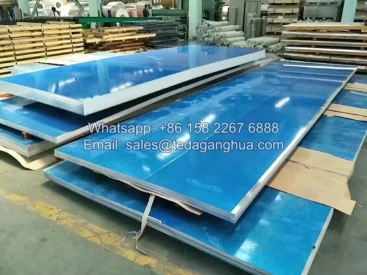
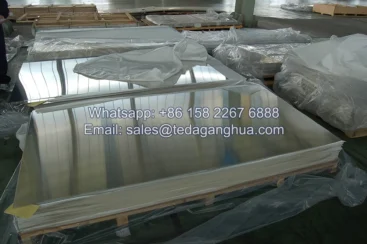
5. Aluminum Tank Safety: Two Potential Benefits and Two Important Limitations
Lower tank weight can create meaningful operational benefits, but safety performance must be evaluated as a complete vehicle and tank-system problem. Aluminum’s material properties also introduce limitations that cannot be ignored. [アルミニウム製タンクとスチール製タンクの重量比較 等しい厚さと強度]
5.1 Potential Benefit: Vehicle Mass and Handling
The tank assembly can represent a substantial portion of a transport vehicle’s mass. Reducing tank tare weight may reduce the vehicle’s unladen mass or allow additional payload within the legally permitted gross vehicle weight.
Where the removed mass is located relatively high on the vehicle, reducing it may also lower the combined center of gravity. This can be beneficial for rollover stability and handling. しかし, the actual result depends on the position of the removed mass, cargo loading, suspension, axle loads, and vehicle geometry.
同様に, lower vehicle mass can reduce the kinetic energy that the braking system must manage at a given speed. It does not guarantee a shorter stopping distance, because braking performance also depends on tire grip, brake capacity, road conditions, 負荷分散, and control systems.
5.2 Potential Benefit: Ductility and Energy Absorption
Many 5xxx aluminum alloys have useful ductility and can undergo plastic deformation. Under suitable design conditions, controlled deformation can absorb energy during an impact.
しかし, elongation values from tensile tests do not directly predict crashworthiness. Impact performance depends on alloy and temper, strain rate, コンポーネントの形状, 溶接の詳細, boundary conditions, and the complete structural load path.
Aluminum’s elastic modulus is approximately 69 GPa, compared with approximately 200 GPa for carbon steel. Aluminum structures therefore generally have lower elastic stiffness for the same geometry. Tank designers must account for this difference rather than transferring a steel design without modification.
5.3 制限: Fire and Elevated-Temperature Strength
Aluminum alloys have a melting range that is substantially lower than the melting point of common structural steels. Pure aluminum melts at approximately 660°C, while aluminum alloys generally have alloy-dependent melting ranges. さらに重要なことは, aluminum loses mechanical strength significantly as temperature increases, well before melting occurs.
In a fire scenario, this behavior can affect the structural integrity of an aluminum tank. Fire protection, thermal insulation, pressure-relief arrangements, tank positioning, and emergency-response requirements must be evaluated under the applicable transport regulations and design standards.
Good corrosion resistance does not mean fire resistance. A tank material that performs well in a wet or marine environment may still require specific protection against elevated-temperature exposure.
5.4 制限: Fatigue and Welded Details
Aluminum alloys generally do not exhibit a clearly defined fatigue endurance limit in conventional S-N testing. Fatigue damage can accumulate under repeated cyclic loading, even when the nominal stress is below the static yield strength.
Transport tanks may experience road vibration, liquid sloshing, acceleration and braking loads, pressure fluctuations, and repeated filling and emptying. Weld toes, nozzle connections, support attachments, baffle joints, and geometric discontinuities can become important fatigue locations.
Three design and fabrication actions are particularly important:
- Design for fatigue: Evaluate the expected loading spectrum and required service life instead of checking static strength alone.
- 溶接状態のプロパティを使用する: Work-hardened tempers such as H32 and H34 can lose strength in the heat-affected zone. The parent-plate strength should not automatically be assigned to the welded joint.
- Control weld geometry and quality: Avoid unacceptable lack of penetration, undercut, poor alignment, and fatigue-sensitive joint configurations. Inspection and acceptance criteria should be specified in the fabrication documents.
6. Tank Component Material Selection: One Alloy Temper Does Not Fit Every Part
A complete tank contains components with different structural and fabrication requirements. The cylindrical shell may need a balance of strength and weldability, while heads and baffles may require greater formability. Heated cargo can introduce a different temperature requirement from ambient-temperature service.
| Tank Component | 考えられる材料の方向 | Main Design Consideration |
|---|---|---|
| Cylindrical shell | 5083-H111 or another approved temper | 強さ, 溶接性, shell stability, そして疲労 |
| Tank heads | 5083-H111 or O, subject to forming and design requirements | 成形性, final thickness, ジョイントデザイン, そして封印 |
| Baffles | 5083-O or another approved formable temper | Liquid sloshing, impact loading, 形にする, and weld fatigue |
| 隔壁 | 5083-O or another approved grade and temper | Compartment separation, pressure loads, and structural integrity |
| Manhole covers | A suitable formable alloy and temper | 形にする, 封印, 締め付け, and operating loads |
| Local reinforcement and connections | Design-approved 5083 or other compatible material | Stress concentration, weld properties, and attachment loads |
| Heated cargo tank | 5454 or another material approved for the service | Sustained metal temperature, strength retention, and sensitization risk |
The table provides possible material directions, not a universal bill of materials. Actual alloy, 気性, and thickness must be established by the tank designer under the applicable construction code.
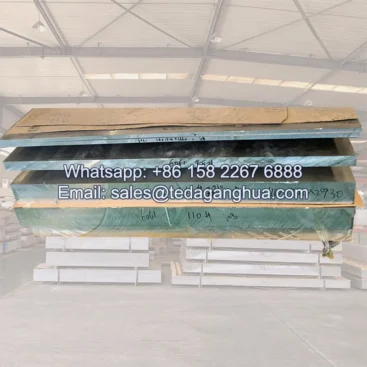
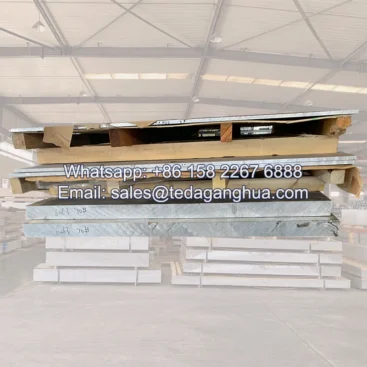
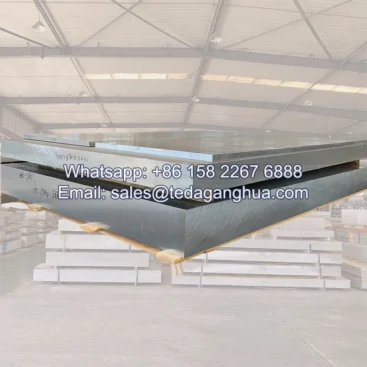
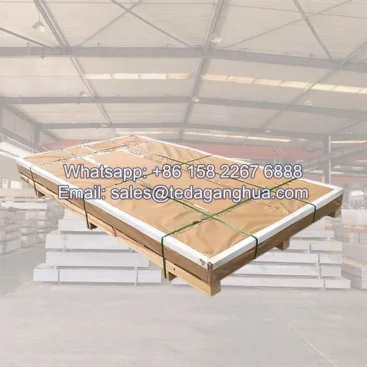
Plate width can also affect fabrication efficiency. Wider plates may reduce the number of longitudinal or circumferential joints, depending on tank geometry and forming equipment. Fewer joints can reduce welding work and the number of locations requiring inspection, but plate width must remain compatible with forming capability, transport dimensions, and manufacturing controls.
7. Aluminum Tank Welding: The Critical Manufacturing Stage
Aluminum tank performance depends heavily on welding procedure qualification, 関節の準備, welder competence, そして検査. Aluminum has different thermal and surface characteristics from carbon steel, and these differences affect distortion, fusion, および欠陥管理.
7.1 Three Important Differences Between Aluminum and Steel Welding
| 材質の特性 | Potential Welding Effect | Process Consideration |
|---|---|---|
| High thermal conductivity and thermal expansion | Heat transfer and distortion can be significant | Qualified sequencing, balanced welding, suitable restraint, and dimensional control |
| Heat-affected-zone strength reduction | The joint may have lower strength than the parent plate | Use applicable welded-condition design properties |
| Stable aluminum oxide film | Poor preparation can contribute to lack of fusion or inclusions | Follow approved cleaning, 取り扱い, and joint-preparation procedures |
7.2 Filler Metal Selection
Common filler-metal options for 5083 welding include ER5183 and ER5356, アプリケーションに応じて, joint requirements, and qualified welding procedure. ER5183 is often selected where higher weld-metal strength is required, while ER5356 is used in many general-purpose aluminum welding applications.
のために 5454, filler selection should be based on the applicable material combination and welding procedure. ER5554 may be considered for certain 5454 アプリケーション, but it should not be treated as an automatic choice for every joint.
フィラーメタル, シールドガス, 関節の準備, 入熱, and welding parameters must be confirmed through the qualified WPS and the filler-metal manufacturer’s technical information. Aluminum filler wire should be stored and handled properly to reduce moisture-related porosity and contamination.
7.3 Inspection and Testing
Tank inspection should be established before production rather than left to informal workshop practice. Depending on the tank design and governing rules, the inspection plan may include:
- Visual examination of welds and finished surfaces.
- Penetrant testing for suitable surface-breaking discontinuities.
- Radiographic or other qualified volumetric examination where required.
- Leak testing and pressure testing according to the applicable design and regulatory requirements.
- Dimensional inspection and verification of material traceability.
The required test method, examination extent, 合格基準, and documentation should be clearly stated in the manufacturing specification and purchase contract. A test method should not be selected merely because it is commonly used by another manufacturer.
8. Chemical Compatibility: Aluminum Is Not Resistant to Every Cargo
Aluminum alloys offer useful corrosion resistance in many environments, but their suitability depends on the cargo composition, concentration, 温度, 不純物, 水分, and cleaning procedure. A tank designed for one fuel or chemical should not automatically be approved for a different product.
| Cargo or Service Condition | 潜在的な懸念 | Evaluation Required |
|---|---|---|
| Gasoline, diesel, and selected organic products | Compatibility can be affected by water, 添加剤, および汚染物質 | Confirm the exact product specification and operating conditions |
| Strong alkaline solutions such as sodium hydroxide | Aluminum can be attacked rapidly in strongly alkaline environments | Do not assume suitability; obtain a specific compatibility assessment |
| Certain inorganic acids | Corrosion behavior varies with concentration and temperature | Evaluate each chemical and operating condition individually |
| Chlorides and standing water | Localized pitting and corrosion deposits may develop | Control water accumulation, 排水, and cleaning |
| Contact with steel or stainless steel in a wet environment | Galvanic corrosion may occur | Consider electrical isolation, 適切なコーティング, 排水, そしてジョイントデザイン |
| Steam cleaning and chemical washing | 温度, 残留応力, and cleaning chemistry may increase corrosion or SCC concerns | Establish an approved cleaning procedure and temperature limits |
A proper compatibility assessment should consider five factors together: cargo identity, concentration, 温度, 不純物, and cleaning method. Describing the cargo only as diesel, 燃料, or chemical is not enough for a reliable material decision.
9. Standards and Compliance: Material Certification Is Not Tank Certification
Aluminum tank procurement involves several different levels of technical compliance. A material certificate verifies the supplied product against its specified material requirements. It does not automatically prove that the completed tank, its welds, 継手, safety devices, and transport configuration comply with the applicable regulations.
| Compliance Level | Relevant Standard or Framework | 主な目的 |
|---|---|---|
| 材料 | ASTM B209, で 485 シリーズ, or other specified product standards | 化学組成, 機械的特性, 寸法, and product requirements |
| Pressure-purpose material | で 14286 該当する場合 | Requirements for suitable aluminum semi-finished products for pressure equipment |
| Tank design and construction | Applicable tank construction standards, such as EN 13094 for relevant metal gravity-discharge tanks | Tank design, 工事, and related technical requirements within the standard’s scope |
| Transport regulations | ADR and applicable national dangerous-goods regulations | Transport requirements, tank approval, 装置, 検査, and safety obligations |
| 検査書類 | で 10204, including Type 3.1 where specified | Inspection documents and traceability of supplied material |
The important distinction is that material compliance and tank compliance are separate matters. An ASTM B209 certificate can demonstrate that a plate meets the specified material requirements, but it does not establish that the finished tank’s structural design, 溶接, 継手, fire protection, or transport approval is compliant.
ご注文の前に, buyers should confirm the exact standards and editions required by the tank designer, certification body, destination market, and transport authority.
10. Twelve Items to Include in an Aluminum Tank Plate Purchase Specification
A clear purchasing specification reduces the risk of receiving material that meets a general alloy description but does not match the actual tank design. The following items should be reviewed before ordering.
| いいえ. | 仕様項目 | Purchasing Requirement |
|---|---|---|
| 1 | 合金と焼き戻し | Specify the complete designation, such as 5083-H111 or 5454-H32 |
| 2 | 製品規格 | Specify ASTM B209, で 485, or another approved standard and edition |
| 3 | Maximum service temperature | State maximum sustained metal temperature and any heating or cleaning cycles |
| 4 | Cargo and chemical exposure | Identify cargo, concentration, 不純物, 水分, and cleaning chemicals |
| 5 | Thickness and tolerance | Specify nominal thickness and the applicable tolerance range |
| 6 | 機械的性質 | Define tensile strength, 降伏強さ, 伸長, and test direction where required |
| 7 | Surface and dimensional quality | Specify flatness, 表面状態, エッジ品質, and acceptable defects |
| 8 | 追加検査 | State whether ultrasonic testing or other supplementary inspection is required |
| 9 | Welding compatibility | Confirm approved filler metal and relevant WPS requirements with the fabricator |
| 10 | Weld inspection | Define required PT, RT, leak testing, pressure testing, と合格基準 |
| 11 | 材質証明書 | Specify EN 10204 タイプ 3.1 or other required documentation and heat traceability |
| 12 | 梱包と取り扱い | Require suitable surface protection, 湿気防止, and safe lifting arrangements |
Among these items, maximum service temperature deserves particular attention. It can influence the choice between 5083 そして 5454 and should be defined before the material order is finalized.
11. 泰達江華: Aluminum Plate Supply for Tank and Transport Equipment Manufacturers
For tank manufacturers, transport equipment producers, と調達マネージャー, selecting aluminum plate is only the first step. The supplied alloy, 気性, 厚さ, 寸法, 機械的特性, and inspection documents must all match the approved production specification.
泰達江華は金属輸出事業に従事して以来、 2006, supporting international buyers with aluminum sheet and plate sourcing for industrial manufacturing. Buyers can discuss requirements for 5083, 5454, 5754, 6061, and other specified aluminum grades, including temper, 厚さ, プレート寸法, 量, および重要な文書.
For tank and transport equipment projects, procurement teams can provide the intended application, maximum service temperature, cargo environment, required alloy and temper, プレート寸法, および適用される製品規格. This information helps clarify the material specification before quotation and order confirmation.
Teda Ganghua also supports discussions about cutting, レベリング, 寸法要件, パッケージング, and mill test documentation according to the agreed order specification. Material supply should be coordinated with the tank manufacturer’s approved design and welding requirements.
泰達江華を探索する アルミシート製品 for alloy and plate sourcing options. For a project inquiry, provide the required grade, 気性, 厚さ, 幅, 長さ, 量, 行き先, and inspection-document requirements so the material can be evaluated against your purchasing specification.
12. よくある質問
Q1. 選ぶべきか 5083 または 5454 for an aluminum tank truck?
あ: The decision should begin with maximum sustained metal temperature, cargo compatibility, 必要な強度, および適用される規制. 5083 is a common candidate for many ambient-temperature welded tank applications. 5454 is often evaluated for selected elevated-temperature service. Neither alloy should be selected based on temperature alone.
第2四半期. Why is approximately 65°C important for 5083?
あ: It is commonly used as a conservative screening reference for long-term sensitization concerns in high-magnesium 5xxx alloys. Actual sensitization depends on temperature, 露出時間, 構成, 微細構造, and stress. It is not an immediate or universal failure threshold.
Q3. なぜですか 5083 generally not the first choice for a heated asphalt tank?
あ: Heated asphalt service can involve prolonged elevated metal temperatures. These conditions require careful evaluation of sensitization, 腐食, 応力腐食割れ, および機械的特性. 5454 is commonly considered for such applications, subject to design-code and service approval.
Q4. は 5454 よりも強い 5083?
あ: In commonly compared work-hardened tempers, 5083 generally has higher strength. 例えば, the representative minimum yield strengths used in this article are 215 MPa for 5083-H32 and 180 MPa for 5454-H32. Actual specified values depend on product standard and thickness.
Q5. Is an aluminum tank 66% lighter than a steel tank?
あ: 約 66% is the theoretical reduction for equal-thickness plates using typical aluminum and carbon-steel densities. It is not a guaranteed reduction for the complete tank. A simplified equal-yield-strength comparison between 5083-H32 and Q345-class steel gives approximately 46% under the assumptions shown in this article.
Q6. Does a lighter aluminum tank automatically improve rollover stability?
あ: 自動的ではありません. Reducing mass located high on the vehicle can help lower the combined center of gravity, but the result depends on tank geometry, 読み込み中, suspension, axle loads, and vehicle configuration. The complete vehicle must be assessed.
Q7. Is aluminum suitable for fire-exposed tank service?
あ: Aluminum loses strength significantly as temperature rises and has a much lower melting range than common structural steels. Fire protection, 絶縁, pressure relief, tank layout, and applicable dangerous-goods regulations must be considered.
Q8. Why must aluminum tank welds be checked separately from the parent plate?
あ: Welding can reduce the strength of work-hardened aluminum in the heat-affected zone. The design must use the applicable welded-condition properties and account for fatigue-sensitive weld details rather than assuming the parent-plate strength remains unchanged.
Q9. Can aluminum tanks be cleaned with steam?
あ: Steam cleaning should follow an approved procedure. 温度, exposure time, 残留応力, 塩化物汚染, and cleaning chemicals can affect corrosion and stress corrosion cracking risks. The tank manufacturer should establish suitable limits.
Q10. Is aluminum always more corrosion-resistant than steel?
あ: いいえ. Aluminum performs well in many environments but can be attacked by strong alkaline solutions and certain chemicals. 塩化物, standing water, ガルバニック接触, and cleaning agents can also create corrosion risks. Compatibility must be assessed for the exact cargo and operating conditions.
Q11. Why should tank manufacturers not simply reduce aluminum plate thickness?
あ: Tank design may be controlled by stiffness, 座屈, 倦怠感, minimum fabrication thickness, or regulatory requirements rather than nominal yield strength. Reducing thickness without checking these conditions can increase deformation and fatigue risk.
Q12. What is the most important information to provide when purchasing aluminum tank plate?
あ: 合金と焼き戻しを提供します, maximum sustained metal temperature, cargo and cleaning environment, 厚さ, 寸法, 製品規格, 機械的特性の要件, 量, and inspection-document requirements. The tank designer should confirm the material specification before procurement.
13. Technical Notes and Data Limitations
- The representative mechanical-property figures for 5083-O, 5083-H32, 5454-○, 5454-H32, and 5454-H34 are illustrative reference values associated with ASTM B209M-14 data. Actual minimum values vary by thickness range, 製品形態, and applicable standard edition. The purchase specification and current governing standard must control.
- The magnesium range of 2.4–3.0% for 5454 is a typical composition range. The exact chemical limits must be checked against the specified product standard.
- 5083 is commonly designated AlMg4.5Mn0.7 in European alloy nomenclature. Chemical composition acceptance must be based on the relevant standard rather than a shorthand alloy description.
- The density value of approximately 2.66 g/cm³ is used for the aluminum weight calculations. Actual density varies slightly with alloy composition. The carbon-steel reference density is 7.85 g/cm3.
- The 65°C sensitization reference and approximately 200°C elevated-temperature discussion for 5454 are screening-level technical references, not universal operating limits or design allowables. Material suitability must be evaluated against actual temperature history, ストレス, 環境, および適用される規制.
- の 66% そして 46% weight-reduction figures are theoretical calculations. The first assumes equal dimensions and thickness. The second assumes a simplified equal nominal tensile membrane-yield capacity using the selected reference strengths. Neither represents a guaranteed complete-tank weight reduction.
- Typical tank component thicknesses and alloy choices are industry examples, not mandatory standard values. Final thickness and material selection require engineering calculations and regulatory verification.
- Safety benefits relating to center of gravity, 取り扱い, braking, and impact energy are qualitative engineering considerations. Actual vehicle performance depends on complete vehicle design, 負荷分散, road conditions, and operating configuration.
重要なポイント: Aluminum can substantially reduce tank tare weight, but the material advantage must be balanced against strength, 剛性, 倦怠感, 溶接, fire exposure, and corrosion requirements. Equal-thickness calculations indicate approximately 66% plate-weight reduction, while the simplified 5083-H32 versus Q345-class equal-yield-strength example indicates approximately 46%. 素材選びに, 5083 そして 5454 should be evaluated according to the maximum sustained metal temperature, cargo environment, 必要な機械的特性, and applicable tank regulations. A lighter tank is valuable only when its complete design remains safe, 耐久性のある, and compliant.