Perbandingan Berat Tangki Aluminium lwn Keluli Ketebalan dan Kekuatan Sama
Aluminum tanks can be significantly lighter than steel tanks, but the actual weight reduction depends on how the materials are compared. Two calculations are particularly useful during preliminary tank design: equal thickness dan equal strength. The first compares aluminum and steel plates with identical dimensions. The second adjusts plate thickness according to a simplified strength relationship before comparing their weights.
Using typical densities of 2.65 g/cm³ for aluminum and 7.85 g/cm³ untuk keluli karbon, an aluminum plate with the same thickness and surface area weighs approximately 66% less. In a simplified yield-strength comparison between 5083-H116 aluminum and S235 structural steel, the aluminum plate needs to be approximately 9.3% thicker to reach the same nominal yield capacity per unit width. Even after this thickness adjustment, the aluminum plate remains approximately 63% lighter.
These are two useful engineering reference calculations, not guaranteed weight reductions for a completed tank. Real tank design must also consider stiffness, melengkung, weld-zone properties, keletihan, kakisan, rekaan, dan kod reka bentuk yang berkenaan.
1. Equal Thickness: The First Aluminum Weight Advantage
Equal-thickness comparison is the simplest way to understand why aluminum is attractive for lightweight tank construction. If aluminum and steel plates have the same length, lebar, dan ketebalan, their weights are determined primarily by their densities.
The typical density values used for this preliminary comparison are:
| bahan | Typical Density | Relative Density |
|---|---|---|
| Aloi aluminium | 2.65 g/cm³ | 1.00 |
| Carbon steel | 7.85 g/cm³ | 2.96 |
Carbon steel is therefore approximately 2.96 times as dense as aluminum using these reference values. For plates with identical dimensions, the aluminum plate weighs only about 33.8% as much as the steel plate.
1.1 Equal-Thickness Weight Formula
The theoretical plate-weight formula is:
Plate Weight
Berat = Panjang × Lebar × Tebal × Ketumpatan
Use consistent units throughout the calculation
For a plate with an area of 1 m² and a thickness of 3 mm, the theoretical weight can be calculated directly using density in kg/m³ and thickness in meters.
aluminium:
1 × 0.003 × 2,650 = 7.95 kg
Carbon steel:
1 × 0.003 × 7,850 = 23.55 kg
Equal-thickness result
A 3 mm aluminum plate weighs approximately 7.95 kg/m², berbanding dengan 23.55 kg/m² for a 3 mm carbon steel plate. The aluminum plate is approximately 66.2% lighter, saving 15.60 kg setiap meter persegi.
1.2 Equal-Thickness Comparison at Different Plate Gauges
The following table shows the theoretical weight difference for several common plate thicknesses. It assumes a flat plate with an area of 1 m² and does not include coatings, weld metal, pengukuh, or fabrication allowances.
| Ketebalan | Aluminum Weight | Steel Weight | Weight Saved | Reduction |
|---|---|---|---|---|
| 2 mm | 5.30 kg/m² | 15.70 kg/m² | 10.40 kg/m² | 66.2% |
| 3 mm | 7.95 kg/m² | 23.55 kg/m² | 15.60 kg/m² | 66.2% |
| 4 mm | 10.60 kg/m² | 31.40 kg/m² | 20.80 kg/m² | 66.2% |
| 5 mm | 13.25 kg/m² | 39.25 kg/m² | 26.00 kg/m² | 66.2% |
| 6 mm | 15.90 kg/m² | 47.10 kg/m² | 31.20 kg/m² | 66.2% |
The percentage reduction remains almost constant because the two materials are compared at identical dimensions and the calculation is controlled by density. This is a material-weight comparison, not proof that an aluminum tank can use the same wall thickness as a steel tank.
2. Equal Strength: The More Useful Engineering Comparison
Equal thickness is useful for understanding density, but tank designers cannot select wall thickness based on density alone. Aluminum and steel have different mechanical properties. If the design objective is to achieve the same nominal yield capacity, the required plate thickness must be adjusted according to the selected material strengths.
For a simplified comparison under the same tensile membrane load per unit width, the nominal yield capacity of a flat plate is proportional to its yield strength multiplied by its thickness.
Simplified Equal-Strength Relationship
hlmy,Al × tAl = σy,Keluli × tKeluli
σy = selected yield strength; t = plate thickness
This relationship is a simplified membrane-yield comparison. It does not account for buckling, membongkok, keletihan, weld efficiency, tekanan sisa, or code-specific allowable stresses.
2.1 Contoh: 5083-H116 Aluminum vs S235 Steel
Consider a preliminary comparison using the following representative minimum yield-strength values:
| Parameter | 5083-H116 Aluminum | S235 Steel |
|---|---|---|
| Typical density used | 2.65 g/cm³ | 7.85 g/cm³ |
| Reference yield strength | 215 MPA | 235 MPA |
| Modulus elastik | lebih kurang 70 GPA | lebih kurang 200 GPA |
The 215 MPa value is a representative specified minimum for 5083-H116 plate within applicable thickness ranges. The S235 value is a nominal reference for common thickness ranges; the actual specified minimum depends on the applicable product standard and thickness. These figures are used here for illustration, not as universal design allowables.
2.2 Calculate the Required Aluminum Thickness
Assume the reference steel plate is 3 mm tebal. Its simplified yield capacity per unit width is proportional to:
Steel reference:
235 × 3 = 705 MPa·mm
For 5083-H116 aluminum, the thickness required to match this nominal yield capacity is:
Aluminum required thickness:
t = 705 / 215 = 3.28 mm
The aluminum plate is therefore approximately 9.3% thicker than the steel plate in this simplified comparison.
Equal-strength thickness result
To match the simplified nominal yield capacity of a 3 mm S235 steel plate, the calculated 5083-H116 aluminum thickness is approximately 3.28 mm. This is a theoretical comparison; the final selected commercial thickness and code design thickness may be different.
2.3 Compare the Weight After Thickness Adjustment
The next step is to calculate the weight of the two plates using their different thicknesses.
Plat keluli:
1 × 0.003 × 7,850 = 23.55 kg/m²
Plat aluminium:
1 × 0.00328 × 2,650 ≈ 8.69 kg/m²
The weight reduction is:
(23.55 − 8.69) / 23.55 × 100% ≈ 63.1%
Equal-strength result
After increasing the aluminum thickness by approximately 9.3%, the theoretical plate weight is still about 63.1% lower than the steel reference. The aluminum plate saves approximately 14.86 kg/m² in this simplified comparison.
3. The Two Weight-Reduction Numbers Compared
The two calculations answer different questions. Equal thickness isolates the density advantage, while equal strength introduces a simplified adjustment for the difference in yield strength.
| Perbandingan | Equal Thickness | Equal Nominal Yield Capacity |
|---|---|---|
| Steel reference thickness | 3.00 mm | 3.00 mm |
| Ketebalan aluminium | 3.00 mm | lebih kurang 3.28 mm |
| Steel weight | 23.55 kg/m² | 23.55 kg/m² |
| Aluminum weight | 7.95 kg/m² | lebih kurang 8.69 kg/m² |
| Pengurangan berat badan | 66.2% | lebih kurang 63.1% |
The key message is that aluminum’s weight advantage does not disappear when its thickness is increased to compensate for the lower reference yield strength. Walau bagaimanapun, this comparison addresses only a simplified tensile membrane-yield condition. A real tank may require a different thickness because other structural limits control the design.
4. Why Equal Strength Does Not Mean Equal Tank Performance
A tank is not simply a flat plate carrying uniform tensile stress. It is a three-dimensional structure exposed to internal pressure, external loads, local bending, getaran, liquid movement, thermal changes, and fabrication-related stresses. Matching nominal yield capacity is only one part of the design process.
4.1 Elastic Modulus and Structural Stiffness
Aluminum has an elastic modulus of approximately 70 GPA, compared with approximately 200 GPa for carbon steel. This means aluminum is only about one-third as stiff as steel for the same cross-sectional geometry under elastic loading.
For a simple plate or beam, stiffness depends on both the elastic modulus and the geometry. In bending, plate thickness has a particularly strong influence because the flexural rigidity of an ideal isotropic plate is proportional to the cube of its thickness:
Simplified Plate Flexural Rigidity
D = Et³ / [12(1 − ν²)]
E = elastic modulus; t = thickness; ν = Poisson’s ratio
Akibatnya, an aluminum tank designed only by matching yield strength may still have greater deformation than the steel reference. Designers may need additional thickness, pengukuh, formed geometry, or other structural measures to satisfy deflection and stability requirements.
4.2 Buckling Under External Pressure or Vacuum
Thin tank shells can be sensitive to external pressure, vacuum conditions, handling loads, and local compressive stress. Buckling resistance depends on shell diameter, Ketebalan dinding, unsupported length, geometric imperfections, boundary conditions, and material stiffness.
Atas sebab ini, a wall thickness calculated from a simple yield-strength ratio may not be adequate for an aluminum tank exposed to vacuum or significant external pressure. Shell stability must be checked separately under the governing design code.
4.3 Welded-Zone Strength
Welding can change the mechanical properties around an aluminum joint. For 5xxx work-hardened alloys such as 5083-H116, the welded region may have lower strength than the parent plate. For heat-treatable alloys such as 6061-T6, the heat-affected zone can also experience substantial strength reduction.
The design should therefore use the applicable welded-joint strength rules and material properties required by the governing standard. Parent-plate minimum yield strength should not be applied indiscriminately to every part of a welded tank.
4.4 Fatigue and Repeated Loading
Tank structures may experience pressure cycles, road vibration, liquid sloshing, thermal cycling, and repeated filling and emptying. Aluminum alloys generally do not have a clearly defined fatigue limit in conventional S-N testing. The required fatigue life must therefore be assessed using suitable material or welded-detail fatigue data and the expected loading spectrum.
Increasing plate thickness can reduce some nominal stress components, but it does not automatically remove stress concentrations at weld toes, nozzles, baffle connections, or supports.
5. Why the Actual Tank Weight Reduction May Differ
The theoretical plate calculations show the material-level advantage. The completed tank may achieve a different reduction because the shell, heads, menyokong, pengukuh, baffles, mounting points, and accessories do not all respond to the same loads.
| Tank Component | Main Design Factors | Effect on Weight Reduction |
|---|---|---|
| Cylindrical shell | Internal pressure, diameter, ketebalan, kekakuan, melengkung | May retain a substantial material-density advantage, but thickness is code-controlled |
| Tank heads and end plates | Bentuk, kaedah membentuk, tekanan, local stress | Formed geometry can influence material efficiency |
| Stiffeners and supports | Pesongan, getaran, kekangan, attachment loads | Additional structural material may be required |
| Baffles | Sloshing, liquid impact, weld fatigue | Geometry and attachment design affect total mass |
| Nozzles and connections | Local reinforcement, piping loads, butiran kimpalan | Local requirements can limit the reduction |
| Mounting system | Vehicle acceleration, jarak sokongan, beban dinamik | The complete assembly must be assessed, not just the tank shell |
A lightweight tank project should therefore compare complete designs with equivalent capacity, operating pressure, syarat perkhidmatan, safety requirements, and required service life. Comparing only the shell plate weight can overstate the reduction achieved by the finished product.
6. Which Aluminum Alloy Should Be Considered for Tank Weight Reduction?
Aluminum alloy selection should be based on the tank’s operating environment and fabrication requirements rather than density alone. Different alloy families offer different combinations of strength, Kebolehbaburan, rintangan kakisan, dan kebolehkalasan.
| Aloi Aluminium | Ciri-ciri Umum | Tank Application Considerations |
|---|---|---|
| 5083 | High-strength Al-Mg alloy with good weldability and marine corrosion resistance in suitable environments | A major candidate for welded tanks, struktur marin, and transport equipment |
| 5454 | Al-Mg alloy used in selected pressure and transport applications | Worth evaluating for suitable elevated-temperature tank applications under the applicable code |
| 5754 | Good formability and weldability with moderate strength | Used in selected fabricated tanks and automotive components |
| 6061 | Heat-treatable alloy with useful strength in specified tempers | Weld heat-affected-zone strength must be considered carefully |
| 6082 | Structural alloy available in different product forms and tempers | Evaluate welded properties, membentuk keperluan, and design-code acceptance |
For welded tank structures, 5083 is frequently considered because of its established fabrication applications. Walau bagaimanapun, the correct temper and product specification must be selected according to the intended service. For marine plate applications, buyers may need to specify a suitable corrosion-tested temper and the relevant product standard rather than ordering only by alloy number.
7. How to Turn Material Weight Savings into a Real Tank Design
A successful aluminum conversion should begin with the operating requirements and the existing tank design. The objective is not simply to replace steel with aluminum at a fixed thickness. It is to redesign the structure while maintaining the required safety, hayat perkhidmatan, dan prestasi.
7.1 Establish the Design Conditions
Before comparing materials, define the following information:
- Tank capacity, geometri, and intended installation position.
- Maximum and minimum operating pressure, including vacuum conditions.
- Liquid density, chemical compatibility, and operating temperature.
- Static loads, transport acceleration, getaran, and sloshing conditions.
- Expected pressure cycles and required fatigue design life.
- Applicable pressure-vessel or structural design code.
- Required inspection, ujian, dan syarat penyelenggaraan.
7.2 Calculate the Steel Reference Weight
Calculate the weight of the existing or proposed steel tank using its actual component dimensions. Include shell plates, heads, pengukuh, menyokong, nozzles, baffles, and other permanent structural components.
7.3 Develop an Aluminum Structural Design
Select an appropriate alloy and temper, then determine the required thickness for each component. Check static strength, kekakuan, melengkung, welded-zone properties, keletihan, kakisan, and fabrication requirements separately.
7.4 Compare the Complete Assembly
Compare the total calculated aluminum tank mass with the steel reference mass. Use the same capacity, operating conditions, kehidupan reka bentuk, and functional requirements for both alternatives.
Complete Tank Weight Reduction Formula
Pengurangan Berat (%) = (Steel Tank Weight − Aluminum Tank Weight) / Steel Tank Weight × 100%
Use the total structural assembly weight for both designs, not only the flat-plate material weight.
8. Procurement Checklist for Aluminum Tank Plate
Once the preliminary design confirms that aluminum is a suitable material, procurement specifications should provide enough information to ensure that the supplied plate matches the engineering requirements.
| Specification Item | Maklumat untuk Disahkan |
|---|---|
| Aloi dan perangai | Exact grade and temper, such as 5083-H116 or 5083-H321 where suitable |
| Ketebalan | Design thickness, ordered thickness, and applicable tolerance |
| Dimensi | Plate width, panjang, kuantiti, dan keperluan pemotongan |
| Standard produk | ASTM yang berkenaan, Dalam, or other approved material specification |
| Sifat mekanikal | Kekuatan tegangan, kekuatan hasil, pemanjangan, dan keperluan bergantung kepada ketebalan |
| Welding compatibility | Approved filler metal, prosedur kimpalan, and joint requirements |
| Keadaan permukaan | Kualiti permukaan, kerataan, dan had kecacatan yang boleh diterima |
| Dokumen pemeriksaan | Sijil Ujian Kilang, kebolehkesanan haba atau lot, and additional inspection records |
| Keperluan pemprosesan | Memotong, meratakan, penyediaan tepi, and other required services |
Procurement teams should avoid selecting a thinner aluminum plate solely because its calculated weight is lower. The final thickness must be supported by the approved design and the requirements of the governing construction standard.
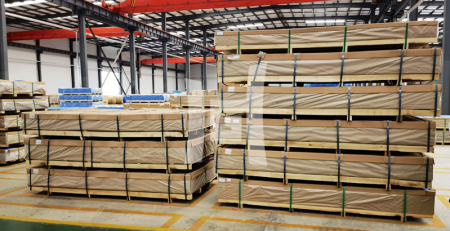
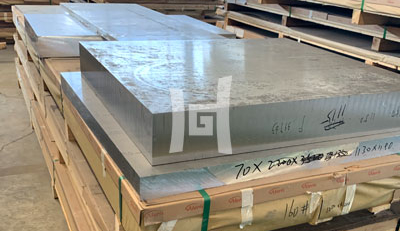
9. Teda Ganghua: Aluminum Sheet Supply for Lightweight Tank Projects
For tank manufacturers, transport equipment producers, pressure-vessel fabricators, and industrial procurement managers, reducing structural weight requires both suitable material selection and reliable supply specifications. Aloi itu, temperatur, ketebalan, dimensi, and mechanical properties must match the design conditions.
Teda Ganghua telah terlibat dalam perniagaan eksport logam sejak 2006, supporting international buyers with aluminum sheet and plate sourcing for industrial manufacturing. Procurement teams can discuss project requirements for alloys such as 5083, 5454, 5754, 6061, and other approved grades, including the required temper, julat ketebalan, dimensi plat, kuantiti, dan dokumentasi bahan.
For lightweight tank projects, buyers can provide the existing steel plate specification, target tank weight, required capacity, persekitaran operasi, and proposed aluminum grade. This information helps establish a more meaningful material comparison and clarify the product requirements before ordering.
Terokai Teda Ganghua produk kepingan aluminium for available alloy and dimension options, customized processing discussions, dan dokumentasi bahan. Final plate thickness, reka bentuk struktur, and fatigue verification should be confirmed by the responsible engineer under the applicable design code.
10. Soalan yang sering ditanya
S1. How much lighter is aluminum than steel at the same thickness?
A: Using typical densities of 2.65 g/cm³ for aluminum and 7.85 g/cm³ untuk keluli karbon, an aluminum plate with the same dimensions weighs approximately 66.2% less. Actual values vary slightly with alloy composition and steel grade.
S2. How much lighter is aluminum when equal strength is considered?
A: In the simplified example comparing 5083-H116 aluminum at 215 MPa yield strength with S235 steel at 235 MPA, the calculated aluminum thickness is approximately 9.3% greater. Despite this increase, the aluminum plate is still approximately 63.1% lighter per square meter. This comparison is based on nominal tensile membrane-yield capacity, not complete tank design.
S3. Can a 3 mm aluminum plate replace a 3 mm steel plate in a tank?
A: Tidak secara automatik. Equal thickness produces a large weight reduction, but aluminum and steel have different yield strengths, kekakuan, buckling behavior, and welded-zone properties. The required thickness must be determined by the actual tank design and governing code.
S4. Why does aluminum sometimes require a thicker plate than steel?
A: Aluminum generally has a lower elastic modulus and may have a lower yield strength than the selected steel grade. Additional thickness or structural reinforcement may be needed to satisfy strength, kekakuan, pesongan, and stability requirements.
S5. Adalah 5083 aluminum suitable for lightweight tanks?
A: 5083 is widely used in welded marine and tank structures because of its useful strength, kebolehkalasan, and corrosion resistance in suitable environments. Perangai yang betul, ketebalan, and product standard depend on the tank’s design conditions and applicable code.
Q6. Does increasing aluminum plate thickness reduce the weight advantage?
A: Ya, increasing thickness raises plate weight. Walau bagaimanapun, because aluminum is much less dense than steel, a moderate thickness increase may still leave a substantial weight advantage. The equal-strength example in this article illustrates this effect.
Q7. Does the equal-strength calculation include weld strength?
A: Tidak. The simplified calculation compares nominal parent-plate yield capacity. Welded tank design must account for the applicable heat-affected-zone properties, joint efficiency or detail rules, fatigue requirements, and construction-code provisions.
Q8. How should buyers specify aluminum plate for tank manufacturing?
A: Nyatakan aloi, temperatur, standard produk, ketebalan, lebar, panjang, sifat mekanikal, keperluan permukaan, kuantiti, dan dokumentasi pemeriksaan. The design code, prosedur kimpalan, and service environment should also be communicated when they affect material acceptance.
11. Technical Notes
- The density values of 2.65 g/cm³ for aluminum and 7.85 g/cm³ for carbon steel are typical reference values used for preliminary calculations. Actual material density varies by alloy and composition.
- The 5083-H116 yield strength of 215 MPa is a representative minimum value for specified plate thickness ranges under applicable product specifications. Mechanical-property limits must be checked against the actual standard, bentuk produk, ketebalan, orientasi, dan perangai.
- The S235 yield-strength value of 235 MPa is a nominal reference. The specified minimum yield strength for structural steel can vary with product standard and thickness.
- The equal-strength calculation assumes the same nominal tensile membrane load per unit width and uses yield strength multiplied by plate thickness. It is not a substitute for code-based design using allowable stresses or resistance factors.
- The calculation does not account for the reduction in local strength around welded joints, melengkung, membongkok, keletihan, kepekatan tekanan, kakisan, fabrication tolerances, or structural reinforcements.
- For pressure vessels and regulated tanks, the governing design code determines acceptable materials, design stresses, thickness calculations, joint requirements, pemeriksaan, dan ujian.
- Actual tank weight reduction should be calculated from the complete assembly, including shell, heads, menyokong, pengukuh, baffles, nozzles, and permanent accessories.
Bawa pulang kunci: Equal thickness demonstrates aluminum’s density advantage: a typical aluminum plate can be approximately 66.2% lighter than a steel plate of the same dimensions. Equal nominal yield capacity gives a more engineering-oriented comparison: in the illustrated 5083-H116 versus S235 example, the aluminum plate requires approximately 9.3% more thickness but remains approximately 63.1% lighter. These two figures explain the material-level opportunity, while the final tank weight depends on stiffness, melengkung, weld strength, keletihan, and code-based structural design.