5083 против 5454 Таблица веса и температуры алюминиевой цистерны
Aluminum alloy plates can reduce the tare weight of tank trucks and transport equipment, but lightweight construction does not automatically mean safer operation. The real engineering challenge is to select the correct alloy and temper, calculate the required wall thickness, control welding quality, and verify performance under actual operating conditions. For many welded tank applications, 5083 и 5454 aluminum alloys are important candidates, but their different magnesium contents and mechanical properties make them suitable for different service conditions.
Two figures help explain the weight advantage. At equal thickness, aluminum plate can be approximately 66% lighter than carbon steel plate. In a simplified equal-yield-strength comparison between 5083-H32 and Q345-class structural steel, the calculated weight reduction is approximately 46%. Neither figure represents a guaranteed reduction for a complete tank, because stiffness, коробление, усталость, weld strength, minimum fabrication thickness, and regulatory requirements also influence the final design.
The material selection decision must also consider temperature. 5083 offers higher strength in common work-hardened tempers, пока 5454 is often considered for elevated-temperature applications. Однако, 65°C should be treated as an important sensitization screening reference for 5083, not as a universal pass-or-fail temperature. Actual suitability depends on exposure time, микроструктура, стресс, среда, and the applicable tank design requirements.
1. Aluminum Tank Trucks: Four Engineering Judgments Before Material Selection
Before replacing a steel tank with an aluminum design, procurement managers and tank manufacturers should distinguish the benefits of lower material density from the structural and operational requirements of the complete vehicle.
| Engineering Question | Ключевое соображение |
|---|---|
| How much weight can be saved? | Примерно 66% at equal plate thickness and around 46% in one simplified equal-yield-strength example |
| Should the tank use 5083 или 5454? | Consider maximum sustained metal temperature, продолжительность воздействия, стресс, коррозионная среда, и необходимая сила |
| Does lower tare weight improve vehicle safety? | It can improve payload efficiency and vehicle dynamics, but the result depends on load distribution, center of gravity, suspension, braking, and vehicle configuration |
| What are the main design risks? | Fire exposure, усталость, welded-joint strength, коррозия, and structural stability require specific verification |
The central principle is that an aluminum tank is primarily a lighter tank, not automatically a safer tank. Its weight advantage can create operational benefits, but those benefits must be supported by appropriate structural design, процедуры изготовления, инспекция, и соответствие нормативным требованиям. [5083 против 5454 Aluminum Alloy Temperature Limits and Magnesium Content]
2. 5083 против 5454: Why Magnesium Content Matters
Оба 5083 и 5454 belong to the 5xxx aluminum-magnesium alloy family. They are non-heat-treatable alloys whose strength is obtained mainly through solid-solution strengthening and work hardening. Their different magnesium contents contribute to differences in strength and elevated-temperature behavior. [Сенсибилизация алюминиевого резервуара Образование β-фазы и риск коррозии]
| Свойство | 5083 Алюминий | 5454 Алюминий |
|---|---|---|
| Семейство сплавов | Аль-Мг-Мн | Аль-Мг-Мн |
| Magnesium content | Примерно 4,0–4,9% | 2.4–3.0% |
| Typical strength positioning | Higher strength in commonly used work-hardened tempers | Generally lower strength than comparable 5083 Утороды |
| Elevated-temperature consideration | Long-term exposure can increase sensitization concerns | Often considered for elevated-temperature tank applications |
| Типичное направление применения | Welded tanks, морские сооружения, транспортное оборудование | Selected heated tanks and transport equipment |
2.1 Почему 5083 Requires Attention Above Approximately 65°C
One important long-term consideration for high-magnesium 5xxx alloys is sensitization. Under certain time-temperature conditions, magnesium-rich beta phase can precipitate along grain boundaries. This phase is commonly described as Al3Mg2 or Mg2Al3.
When grain-boundary precipitation becomes sufficiently continuous, the alloy can become more susceptible to intergranular corrosion. If tensile stress and a suitable corrosive environment are also present, stress corrosion cracking may become a concern.
The issue is not simply that the material becomes softer. Sensitization changes the corrosion behavior of the microstructure and can create a delayed degradation risk that may not be obvious from the external appearance of a newly manufactured tank.
Approximately 65°C is often used as a conservative screening reference when discussing long-term sensitization concerns in 5083. It is not a universal temperature boundary at which every 5083 product immediately becomes sensitized. The actual response depends on:
- Actual metal temperature rather than only the cargo’s nominal temperature.
- Total exposure time and the number of heating cycles.
- Состав сплава, характер, предварительная обработка, и микроструктура.
- Applied tensile stress and residual welding stress.
- Corrosive species, влага, чистящие химикаты, и условия обслуживания.
По этой причине, a tank that carries heated cargo should not be approved merely because its normal operating temperature is slightly below or above a single reference value. The complete service profile must be evaluated.
2.2 Почему 5454 Is Considered for Heated Tank Applications
5454 contains less magnesium than 5083 and is commonly considered for selected elevated-temperature applications. Its lower magnesium content generally reduces the specific sensitization concern associated with high-magnesium 5xxx alloys.
5454 is therefore worth evaluating for heated tanks, insulated tanks, and equipment transporting hot materials such as asphalt. Technical references may discuss service temperatures approaching approximately 200°C for certain 5454 Приложения, but this figure must not be interpreted as a universal allowable design temperature.
Actual acceptance depends on the product specification, характер, sustained metal temperature, требования к механическим свойствам, коррозионная среда, детали изготовления, and the applicable construction and transport regulations. A material supplier’s general temperature statement cannot replace engineering approval.
2.3 The Strength Trade-Off Between 5083 и 5454
The lower magnesium content of 5454 is accompanied by a strength trade-off in commonly compared tempers. The following figures are representative values for preliminary comparison. Exact guaranteed properties depend on the governing product standard, диапазон толщины, и материальное состояние.
| Механическое свойство | 5083-О | 5083-H32 | 5454-О | 5454-H32 | 5454-Н34 |
|---|---|---|---|---|---|
| Предел прочности (МПа) | 275–350 | 305–385 | 215–285 | 250–305 | 270–325 |
| Minimum yield strength (МПа) | 125 | 215 | 85 | 180 | 200 |
| Representative minimum elongation | 16% | Check applicable specification | 16–18% | Check applicable specification | Check applicable specification |
In this illustrative comparison, 5454-H32 has a minimum yield strength of 180 МПа, по сравнению с 215 MPa for 5083-H32. This is a difference of approximately 16%. If the design requires the same nominal strength, the lower-strength material may require additional thickness or a different structural arrangement.
Однако, material selection should not be based on yield strength alone. Формируемость, weld-zone performance, усталость, устойчивость к коррозии, and elevated-temperature properties must also be considered.
3. Temperature Selection: A Practical Screening Guide
For tank manufacturers, the maximum sustained metal temperature is one of the most important inputs when comparing 5083 и 5454. Cargo temperature alone may not represent the actual condition of the tank wall. Изоляция, solar heating, steam coils, cleaning cycles, and ambient conditions can all influence the temperature experienced by the material.
| Service Condition | Material Evaluation | Important Checks |
|---|---|---|
| Ambient-temperature fuels and suitable chemicals | 5083 may be a candidate | Совместимость, water contamination, чистящие химикаты, and applicable transport rules |
| Длительная эксплуатация при температуре около или выше 65°C. | Evaluate sensitization risk; сравнивать 5454 and other approved materials | Time-temperature history, стресс, коррозионная среда, and material test requirements |
| Heated asphalt or other hot cargo | 5454 is commonly worth evaluating | Maximum metal temperature, изоляция, heating system, weld properties, and code approval |
| Steam cleaning or repeated thermal cycling | Requires a separate material and process assessment | Peak temperature, продолжительность воздействия, cleaning chemistry, остаточное напряжение, and SCC risk |
Three practical principles help prevent material-selection errors:
- For ambient-temperature fuel and suitable chemical service, 5083 can be evaluated where its strength and corrosion performance meet the design requirements.
- For heated cargo, insulated tanks, or steam-heated service, сравнивать 5454 and other code-approved options rather than assuming that 5083 is suitable.
- For intermediate temperatures or intermittent heating, assess the complete temperature history. A brief temperature peak and continuous long-term exposure are not equivalent conditions.
The temperature guide is a preliminary screening tool, not a material approval chart. Final alloy selection must be supported by engineering evaluation and applicable regulations.
4. How Much Weight Can an Aluminum Tank Save?
Two calculation methods are commonly used to explain the weight advantage of aluminum: equal thickness and equal nominal strength. They produce different results because they answer different engineering questions.
4.1 Equal Thickness: Примерно 66% Снижение веса
Алюминий имеет плотность около 2.66 г/см³, while carbon steel has a typical density of approximately 7.85 г/см³. If both plates have the same dimensions and thickness, their theoretical weights can be calculated as follows.
Aluminum plate at 5 толщина мм:
5 × 2.66 "=" 13.30 кг/м²
Steel plate at 5 толщина мм:
5 × 7.85 "=" 39.25 кг/м²
Снижение веса:
(39.25 − 13.30) / 39.25 × 100% ≈ 66.1%
Equal-thickness result
А 5 mm aluminum plate weighs approximately 13.30 кг/м², по сравнению с 39.25 kg/m² for a 5 mm steel plate. The theoretical material-weight reduction is approximately 66%.
This is the source of the common statement that aluminum tanks can be approximately two-thirds lighter than steel tanks. Однако, equal thickness does not mean equal structural performance. The calculation does not compensate for differences in strength, жесткость, сопротивление изгибу, or welded-joint properties.
4.2 Equal Nominal Strength: Примерно 46% Снижение веса
A more engineering-oriented comparison adjusts the plate thickness according to the selected materials’ nominal yield strengths. Consider an illustrative comparison between 5083-H32 aluminum and Q345-class structural steel.
Representative reference yield strengths:
- 5083-H32 алюминий: примерно 215 МПа.
- Q345-class structural steel: примерно 345 MPa for the selected reference condition.
For a simplified tensile membrane-yield comparison, the required thickness ratio is:
Thickness Ratio
345 / 215 ≈ 1.60
The simplified aluminum thickness is approximately 1.6 times the steel reference thickness.
If the steel plate is 5 толщина мм, the calculated aluminum thickness is approximately 8 мм.
Aluminum plate at 8 мм:
8 × 2.66 "=" 21.28 кг/м²
Steel plate at 5 мм:
5 × 7.85 "=" 39.25 кг/м²
Снижение веса:
(39.25 − 21.28) / 39.25 × 100% ≈ 45.8%
Equal-strength result
In this simplified comparison, an 8 mm 5083-H32 aluminum plate weighs approximately 21.28 кг/м², по сравнению с 39.25 kg/m² for a 5 mm Q345-class steel plate. The theoretical weight reduction is approximately 46%.
This is an illustrative calculation based on nominal yield strength multiplied by plate thickness. It is not a complete code-based design calculation. Actual allowable stresses, material thickness ranges, стандарты продукции, joint efficiencies, welded-zone properties, and structural stability may change the required thickness.
4.3 Why the Tank Shell Is Not Always Controlled by Strength
Tank wall thickness is not necessarily determined by tensile yield strength. In many transport tank structures, жесткость, local stability, усталость, fabrication limits, and minimum regulatory thickness can be equally or more important.
- Stiffness and stability: The shell must resist denting, деформация, external pressure, and possible vacuum conditions.
- Fatigue life: Repeated road vibration, liquid sloshing, filling cycles, and welded details can control the design.
- Требования к изготовлению: Plate thickness must be suitable for forming, сварка, умение обращаться, and dimensional control.
По этой причине, common tank-shell thicknesses such as 5–6 mm should be treated as examples of industry practice, not universal requirements. A plate that satisfies a simplified strength calculation may still be unsuitable for the actual tank design. [Руководство по проектированию пределов усталости алюминиевых резервуаров и циклических нагрузок]
5. Aluminum Tank Safety: Two Potential Benefits and Two Important Limitations
Lower tank weight can create meaningful operational benefits, but safety performance must be evaluated as a complete vehicle and tank-system problem. Aluminum’s material properties also introduce limitations that cannot be ignored. [Сравнение веса алюминиевого и стального бака, одинаковая толщина и прочность]
5.1 Potential Benefit: Vehicle Mass and Handling
The tank assembly can represent a substantial portion of a transport vehicle’s mass. Reducing tank tare weight may reduce the vehicle’s unladen mass or allow additional payload within the legally permitted gross vehicle weight.
Where the removed mass is located relatively high on the vehicle, reducing it may also lower the combined center of gravity. This can be beneficial for rollover stability and handling. Однако, the actual result depends on the position of the removed mass, cargo loading, suspension, axle loads, and vehicle geometry.
Сходным образом, lower vehicle mass can reduce the kinetic energy that the braking system must manage at a given speed. It does not guarantee a shorter stopping distance, because braking performance also depends on tire grip, brake capacity, road conditions, распределение нагрузки, and control systems.
5.2 Potential Benefit: Ductility and Energy Absorption
Many 5xxx aluminum alloys have useful ductility and can undergo plastic deformation. Under suitable design conditions, controlled deformation can absorb energy during an impact.
Однако, elongation values from tensile tests do not directly predict crashworthiness. Impact performance depends on alloy and temper, strain rate, геометрия компонента, детали сварки, boundary conditions, and the complete structural load path.
Aluminum’s elastic modulus is approximately 69 ГПа, по сравнению с примерно 200 GPa for carbon steel. Aluminum structures therefore generally have lower elastic stiffness for the same geometry. Tank designers must account for this difference rather than transferring a steel design without modification.
5.3 Ограничение: Fire and Elevated-Temperature Strength
Aluminum alloys have a melting range that is substantially lower than the melting point of common structural steels. Pure aluminum melts at approximately 660°C, while aluminum alloys generally have alloy-dependent melting ranges. Что еще более важно, aluminum loses mechanical strength significantly as temperature increases, well before melting occurs.
In a fire scenario, this behavior can affect the structural integrity of an aluminum tank. Fire protection, thermal insulation, pressure-relief arrangements, tank positioning, and emergency-response requirements must be evaluated under the applicable transport regulations and design standards.
Good corrosion resistance does not mean fire resistance. A tank material that performs well in a wet or marine environment may still require specific protection against elevated-temperature exposure.
5.4 Ограничение: Fatigue and Welded Details
Aluminum alloys generally do not exhibit a clearly defined fatigue endurance limit in conventional S-N testing. Fatigue damage can accumulate under repeated cyclic loading, even when the nominal stress is below the static yield strength.
Transport tanks may experience road vibration, liquid sloshing, acceleration and braking loads, pressure fluctuations, and repeated filling and emptying. Weld toes, nozzle connections, support attachments, baffle joints, and geometric discontinuities can become important fatigue locations.
Three design and fabrication actions are particularly important:
- Design for fatigue: Evaluate the expected loading spectrum and required service life instead of checking static strength alone.
- Использовать свойства состояния сварки: Work-hardened tempers such as H32 and H34 can lose strength in the heat-affected zone. The parent-plate strength should not automatically be assigned to the welded joint.
- Control weld geometry and quality: Avoid unacceptable lack of penetration, undercut, poor alignment, and fatigue-sensitive joint configurations. Inspection and acceptance criteria should be specified in the fabrication documents.
6. Tank Component Material Selection: One Alloy Temper Does Not Fit Every Part
A complete tank contains components with different structural and fabrication requirements. The cylindrical shell may need a balance of strength and weldability, while heads and baffles may require greater formability. Heated cargo can introduce a different temperature requirement from ambient-temperature service.
| Tank Component | Возможное направление материала | Main Design Consideration |
|---|---|---|
| Cylindrical shell | 5083-H111 or another approved temper | Сила, свариваемость, shell stability, и усталость |
| Tank heads | 5083-H111 or O, subject to forming and design requirements | Формируемость, final thickness, совместный проект, и герметизация |
| Baffles | 5083-O or another approved formable temper | Liquid sloshing, impact loading, формирование, and weld fatigue |
| Переборки | 5083-O or another approved grade and temper | Compartment separation, pressure loads, and structural integrity |
| Manhole covers | A suitable formable alloy and temper | Формирование, уплотнение, крепление, and operating loads |
| Local reinforcement and connections | Design-approved 5083 or other compatible material | Stress concentration, weld properties, and attachment loads |
| Heated cargo tank | 5454 or another material approved for the service | Sustained metal temperature, strength retention, and sensitization risk |
The table provides possible material directions, not a universal bill of materials. Actual alloy, характер, and thickness must be established by the tank designer under the applicable construction code.
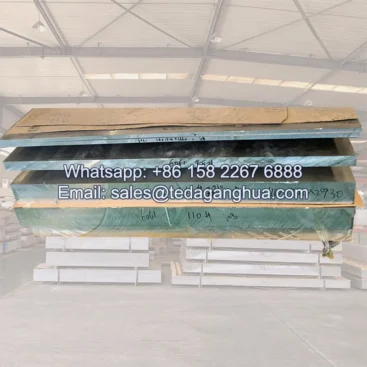
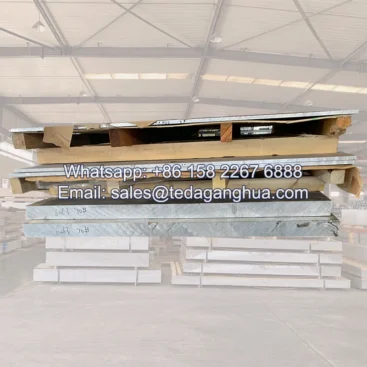
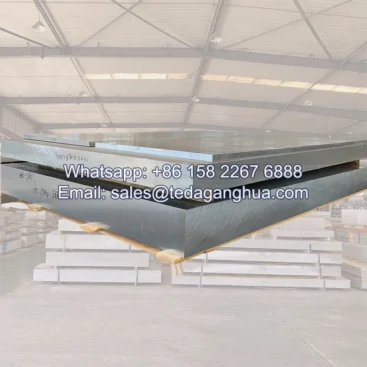
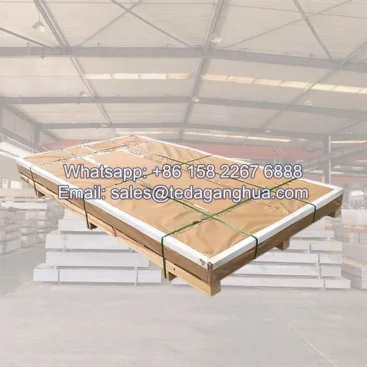
Plate width can also affect fabrication efficiency. Wider plates may reduce the number of longitudinal or circumferential joints, depending on tank geometry and forming equipment. Fewer joints can reduce welding work and the number of locations requiring inspection, but plate width must remain compatible with forming capability, transport dimensions, and manufacturing controls.
7. Aluminum Tank Welding: The Critical Manufacturing Stage
Aluminum tank performance depends heavily on welding procedure qualification, совместная подготовка, welder competence, и осмотр. Aluminum has different thermal and surface characteristics from carbon steel, and these differences affect distortion, fusion, и контроль дефектов.
7.1 Three Important Differences Between Aluminum and Steel Welding
| Характеристика материала | Potential Welding Effect | Process Consideration |
|---|---|---|
| High thermal conductivity and thermal expansion | Heat transfer and distortion can be significant | Qualified sequencing, balanced welding, suitable restraint, and dimensional control |
| Heat-affected-zone strength reduction | The joint may have lower strength than the parent plate | Use applicable welded-condition design properties |
| Stable aluminum oxide film | Poor preparation can contribute to lack of fusion or inclusions | Follow approved cleaning, умение обращаться, and joint-preparation procedures |
7.2 Filler Metal Selection
Common filler-metal options for 5083 welding include ER5183 and ER5356, в зависимости от приложения, joint requirements, and qualified welding procedure. ER5183 is often selected where higher weld-metal strength is required, while ER5356 is used in many general-purpose aluminum welding applications.
Для 5454, filler selection should be based on the applicable material combination and welding procedure. ER5554 may be considered for certain 5454 Приложения, but it should not be treated as an automatic choice for every joint.
Присадочный металл, защитный газ, совместная подготовка, тепловложение, and welding parameters must be confirmed through the qualified WPS and the filler-metal manufacturer’s technical information. Aluminum filler wire should be stored and handled properly to reduce moisture-related porosity and contamination.
7.3 Inspection and Testing
Tank inspection should be established before production rather than left to informal workshop practice. Depending on the tank design and governing rules, the inspection plan may include:
- Visual examination of welds and finished surfaces.
- Penetrant testing for suitable surface-breaking discontinuities.
- Radiographic or other qualified volumetric examination where required.
- Leak testing and pressure testing according to the applicable design and regulatory requirements.
- Dimensional inspection and verification of material traceability.
The required test method, examination extent, критерии приемки, and documentation should be clearly stated in the manufacturing specification and purchase contract. A test method should not be selected merely because it is commonly used by another manufacturer.
8. Chemical Compatibility: Aluminum Is Not Resistant to Every Cargo
Aluminum alloys offer useful corrosion resistance in many environments, but their suitability depends on the cargo composition, concentration, температура, примеси, влага, and cleaning procedure. A tank designed for one fuel or chemical should not automatically be approved for a different product.
| Cargo or Service Condition | Потенциальная проблема | Evaluation Required |
|---|---|---|
| Gasoline, diesel, and selected organic products | Compatibility can be affected by water, additives, и загрязняющие вещества | Confirm the exact product specification and operating conditions |
| Strong alkaline solutions such as sodium hydroxide | Aluminum can be attacked rapidly in strongly alkaline environments | Do not assume suitability; obtain a specific compatibility assessment |
| Certain inorganic acids | Corrosion behavior varies with concentration and temperature | Evaluate each chemical and operating condition individually |
| Chlorides and standing water | Localized pitting and corrosion deposits may develop | Control water accumulation, дренаж, and cleaning |
| Contact with steel or stainless steel in a wet environment | Galvanic corrosion may occur | Consider electrical isolation, подходящие покрытия, дренаж, и совместный дизайн |
| Steam cleaning and chemical washing | Температура, остаточное напряжение, and cleaning chemistry may increase corrosion or SCC concerns | Establish an approved cleaning procedure and temperature limits |
A proper compatibility assessment should consider five factors together: cargo identity, concentration, температура, примеси, and cleaning method. Describing the cargo only as diesel, топливо, or chemical is not enough for a reliable material decision.
9. Standards and Compliance: Material Certification Is Not Tank Certification
Aluminum tank procurement involves several different levels of technical compliance. A material certificate verifies the supplied product against its specified material requirements. It does not automatically prove that the completed tank, its welds, арматура, safety devices, and transport configuration comply with the applicable regulations.
| Compliance Level | Relevant Standard or Framework | Основная цель |
|---|---|---|
| Материал | АСТМ Б209, В 485 ряд, or other specified product standards | Химический состав, механические свойства, размеры, and product requirements |
| Pressure-purpose material | В 14286 где это применимо | Requirements for suitable aluminum semi-finished products for pressure equipment |
| Tank design and construction | Applicable tank construction standards, such as EN 13094 for relevant metal gravity-discharge tanks | Tank design, строительство, and related technical requirements within the standard’s scope |
| Transport regulations | ADR and applicable national dangerous-goods regulations | Transport requirements, tank approval, оборудование, инспекция, and safety obligations |
| Инспекционная документация | В 10204, including Type 3.1 where specified | Inspection documents and traceability of supplied material |
The important distinction is that material compliance and tank compliance are separate matters. An ASTM B209 certificate can demonstrate that a plate meets the specified material requirements, but it does not establish that the finished tank’s structural design, сварка, арматура, fire protection, or transport approval is compliant.
Прежде чем разместить заказ, buyers should confirm the exact standards and editions required by the tank designer, certification body, destination market, and transport authority.
10. Twelve Items to Include in an Aluminum Tank Plate Purchase Specification
A clear purchasing specification reduces the risk of receiving material that meets a general alloy description but does not match the actual tank design. The following items should be reviewed before ordering.
| Нет. | Спецификация Пункт | Purchasing Requirement |
|---|---|---|
| 1 | Сплав и отпуск | Specify the complete designation, such as 5083-H111 or 5454-H32 |
| 2 | Стандарт продукта | Specify ASTM B209, В 485, or another approved standard and edition |
| 3 | Maximum service temperature | State maximum sustained metal temperature and any heating or cleaning cycles |
| 4 | Cargo and chemical exposure | Identify cargo, concentration, примеси, влага, and cleaning chemicals |
| 5 | Thickness and tolerance | Specify nominal thickness and the applicable tolerance range |
| 6 | Механические свойства | Define tensile strength, предел текучести, удлинение, and test direction where required |
| 7 | Surface and dimensional quality | Specify flatness, состояние поверхности, качество кромки, and acceptable defects |
| 8 | Дополнительный осмотр | State whether ultrasonic testing or other supplementary inspection is required |
| 9 | Welding compatibility | Confirm approved filler metal and relevant WPS requirements with the fabricator |
| 10 | Weld inspection | Define required PT, RT, leak testing, pressure testing, и критерии приемки |
| 11 | Сертификат материала | Specify EN 10204 Тип 3.1 or other required documentation and heat traceability |
| 12 | Упаковка и обработка | Require suitable surface protection, защита от влаги, and safe lifting arrangements |
Among these items, maximum service temperature deserves particular attention. It can influence the choice between 5083 и 5454 and should be defined before the material order is finalized.
11. Теда Ганхуа: Aluminum Plate Supply for Tank and Transport Equipment Manufacturers
For tank manufacturers, transport equipment producers, и менеджеры по закупкам, selecting aluminum plate is only the first step. The supplied alloy, характер, толщина, размеры, механические свойства, and inspection documents must all match the approved production specification.
Теда Ганхуа занимается экспортом металлов с тех пор. 2006, supporting international buyers with aluminum sheet and plate sourcing for industrial manufacturing. Buyers can discuss requirements for 5083, 5454, 5754, 6061, and other specified aluminum grades, including temper, толщина, размеры пластины, количество, и материальная документация.
For tank and transport equipment projects, procurement teams can provide the intended application, maximum service temperature, cargo environment, required alloy and temper, размеры пластины, и применимый стандарт продукции. This information helps clarify the material specification before quotation and order confirmation.
Teda Ganghua also supports discussions about cutting, выравнивание, требования к размерам, упаковка, and mill test documentation according to the agreed order specification. Material supply should be coordinated with the tank manufacturer’s approved design and welding requirements.
Исследуйте Теда Ганхуа изделия из алюминиевого листа for alloy and plate sourcing options. For a project inquiry, provide the required grade, характер, толщина, ширина, длина, количество, место назначения, and inspection-document requirements so the material can be evaluated against your purchasing specification.
12. Часто задаваемые вопросы
1 квартал. Должен ли я выбрать 5083 или 5454 for an aluminum tank truck?
А: The decision should begin with maximum sustained metal temperature, cargo compatibility, требуемая прочность, и применимые правила. 5083 is a common candidate for many ambient-temperature welded tank applications. 5454 is often evaluated for selected elevated-temperature service. Neither alloy should be selected based on temperature alone.
2 квартал. Why is approximately 65°C important for 5083?
А: It is commonly used as a conservative screening reference for long-term sensitization concerns in high-magnesium 5xxx alloys. Actual sensitization depends on temperature, продолжительность воздействия, композиция, микроструктура, and stress. It is not an immediate or universal failure threshold.
Q3. Почему 5083 generally not the first choice for a heated asphalt tank?
А: Heated asphalt service can involve prolonged elevated metal temperatures. These conditions require careful evaluation of sensitization, коррозия, коррозионное растрескивание под напряжением, и механические свойства. 5454 is commonly considered for such applications, subject to design-code and service approval.
Q4. Является 5454 сильнее, чем 5083?
А: In commonly compared work-hardened tempers, 5083 generally has higher strength. Например, the representative minimum yield strengths used in this article are 215 MPa for 5083-H32 and 180 MPa for 5454-H32. Actual specified values depend on product standard and thickness.
Q5. Is an aluminum tank 66% lighter than a steel tank?
А: Примерно 66% is the theoretical reduction for equal-thickness plates using typical aluminum and carbon-steel densities. It is not a guaranteed reduction for the complete tank. A simplified equal-yield-strength comparison between 5083-H32 and Q345-class steel gives approximately 46% under the assumptions shown in this article.
Q6. Does a lighter aluminum tank automatically improve rollover stability?
А: Не автоматически. Reducing mass located high on the vehicle can help lower the combined center of gravity, but the result depends on tank geometry, загрузка, suspension, axle loads, and vehicle configuration. The complete vehicle must be assessed.
Q7. Is aluminum suitable for fire-exposed tank service?
А: Aluminum loses strength significantly as temperature rises and has a much lower melting range than common structural steels. Fire protection, изоляция, pressure relief, tank layout, and applicable dangerous-goods regulations must be considered.
Q8. Why must aluminum tank welds be checked separately from the parent plate?
А: Welding can reduce the strength of work-hardened aluminum in the heat-affected zone. The design must use the applicable welded-condition properties and account for fatigue-sensitive weld details rather than assuming the parent-plate strength remains unchanged.
Q9. Can aluminum tanks be cleaned with steam?
А: Steam cleaning should follow an approved procedure. Температура, exposure time, остаточное напряжение, загрязнение хлоридами, and cleaning chemicals can affect corrosion and stress corrosion cracking risks. The tank manufacturer should establish suitable limits.
Q10. Is aluminum always more corrosion-resistant than steel?
А: Нет. Aluminum performs well in many environments but can be attacked by strong alkaline solutions and certain chemicals. Хлориды, standing water, гальванический контакт, and cleaning agents can also create corrosion risks. Compatibility must be assessed for the exact cargo and operating conditions.
Q11. Why should tank manufacturers not simply reduce aluminum plate thickness?
А: Tank design may be controlled by stiffness, коробление, усталость, minimum fabrication thickness, or regulatory requirements rather than nominal yield strength. Reducing thickness without checking these conditions can increase deformation and fatigue risk.
Q12. What is the most important information to provide when purchasing aluminum tank plate?
А: Обеспечить сплав и закалку, maximum sustained metal temperature, cargo and cleaning environment, толщина, размеры, стандарт продукта, требования к механическим свойствам, количество, and inspection-document requirements. The tank designer should confirm the material specification before procurement.
13. Technical Notes and Data Limitations
- The representative mechanical-property figures for 5083-O, 5083-H32, 5454-О, 5454-H32, and 5454-H34 are illustrative reference values associated with ASTM B209M-14 data. Actual minimum values vary by thickness range, форма продукта, and applicable standard edition. The purchase specification and current governing standard must control.
- The magnesium range of 2.4–3.0% for 5454 is a typical composition range. The exact chemical limits must be checked against the specified product standard.
- 5083 is commonly designated AlMg4.5Mn0.7 in European alloy nomenclature. Chemical composition acceptance must be based on the relevant standard rather than a shorthand alloy description.
- The density value of approximately 2.66 g/cm³ is used for the aluminum weight calculations. Actual density varies slightly with alloy composition. The carbon-steel reference density is 7.85 г/см³.
- The 65°C sensitization reference and approximately 200°C elevated-temperature discussion for 5454 are screening-level technical references, not universal operating limits or design allowables. Material suitability must be evaluated against actual temperature history, стресс, среда, и применимые правила.
- The 66% и 46% weight-reduction figures are theoretical calculations. The first assumes equal dimensions and thickness. The second assumes a simplified equal nominal tensile membrane-yield capacity using the selected reference strengths. Neither represents a guaranteed complete-tank weight reduction.
- Typical tank component thicknesses and alloy choices are industry examples, not mandatory standard values. Final thickness and material selection require engineering calculations and regulatory verification.
- Safety benefits relating to center of gravity, умение обращаться, braking, and impact energy are qualitative engineering considerations. Actual vehicle performance depends on complete vehicle design, распределение нагрузки, road conditions, and operating configuration.
Ключевой вывод: Aluminum can substantially reduce tank tare weight, but the material advantage must be balanced against strength, жесткость, усталость, сварка, fire exposure, and corrosion requirements. Equal-thickness calculations indicate approximately 66% plate-weight reduction, while the simplified 5083-H32 versus Q345-class equal-yield-strength example indicates approximately 46%. По выбору материала, 5083 и 5454 should be evaluated according to the maximum sustained metal temperature, cargo environment, необходимые механические свойства, and applicable tank regulations. A lighter tank is valuable only when its complete design remains safe, прочный, and compliant.