- Description
- Inquiry
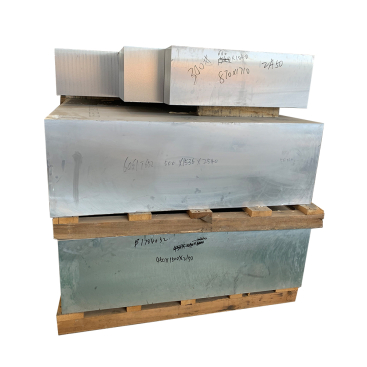
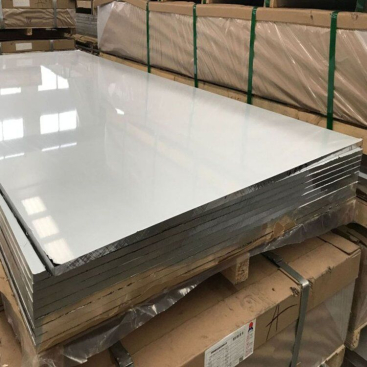
3003 aluminum sheet has become a widely used material in general manufacturing because it offers a practical balance of strength, corrosion resistance, formability, weldability, and material availability. It is not designed to deliver the highest performance in every individual category. Instead, its value comes from providing reliable performance across many common industrial applications without requiring expensive alloying elements or complicated processing conditions. For manufacturers producing formed components, heat exchanger parts, kitchen equipment, and general sheet metal products, this balance makes 3003 a dependable starting point for material selection.
1. Why 3003 Became a Standard Choice for Aluminum Sheet
The popularity of 3003 is closely related to its manganese-based alloy design. Compared with commercially pure aluminum, manganese contributes to improved strength while maintaining useful corrosion resistance and forming characteristics. This combination makes the alloy suitable for applications where manufacturers need more strength than pure aluminum can provide but do not require the specialized properties of higher-alloy materials.
Another important advantage is its versatility. The material can be processed through common manufacturing operations, including bending, drawing, cutting, and welding, provided that the selected temper and fabrication method are appropriate. Its broad industrial use also supports relatively accessible sourcing and a mature supply chain.
3003 is not necessarily the strongest, most corrosion-resistant, or easiest material in every situation. Its advantage is that it performs adequately across several important requirements at the same time, making material selection and production planning more straightforward.
2. Four Practical Advantages That Make 3003 a Reliable Choice
The position of this alloy can be understood through four practical characteristics. Each one addresses a common concern in industrial material purchasing and fabrication.
| Evaluation Dimension | Performance of 3003 | Practical Value |
|---|---|---|
| Strength | Higher strength than commercially pure aluminum | Suitable for many general-purpose formed components and fabricated products. |
| Corrosion Resistance | Generally good resistance in atmospheric and freshwater environments | Useful for equipment and components exposed to ordinary service environments. |
| Formability and Weldability | Suitable for bending, drawing, and common welding processes | Supports a wide range of fabrication operations when temper and design are considered. |
| Cost and Availability | Does not depend on expensive alloying additions and has broad commercial availability | Offers convenient sourcing and practical procurement options for common applications. |
3. Strength: More Than Pure Aluminum Without Overengineering
Commercially pure aluminum offers useful characteristics, but its relatively limited strength can restrict its application in products that require greater resistance to deformation. The addition of manganese gives 3003 improved strength while retaining the general advantages associated with aluminum materials.
This makes it suitable for many general-purpose components, including formed housings, equipment panels, heat exchanger parts, and kitchen products. Manufacturers can obtain a practical balance between material strength and fabrication requirements without moving immediately to a more specialized alloy.
However, suitable strength always depends on the component design, temper, thickness, loading conditions, and forming process. For load-bearing structures or applications with demanding mechanical requirements, engineers should verify the actual material properties rather than assume that a general-purpose alloy is sufficient.
4. Corrosion Resistance: Understanding the Meaning of Rust-Resistant Aluminum
3003 is commonly associated with the term rust-resistant aluminum because it offers good corrosion resistance in ordinary atmospheric conditions and freshwater environments. Aluminum naturally develops a thin protective oxide film on its surface, which helps limit further corrosion under suitable service conditions.
Nevertheless, the term rust-resistant aluminum should not be interpreted as meaning that the material is resistant to every corrosive environment. Its performance in acidic or alkaline solutions, seawater, chemical processing environments, and chloride-rich conditions requires separate evaluation.
The description refers to good corrosion resistance in atmospheric and freshwater environments. It does not establish universal resistance to acids, alkalis, or seawater. If the material is used outside its suitable service environment, the issue is an incorrect application choice rather than necessarily a material defect.
For outdoor equipment, buyers should also consider drainage, surface contamination, contact with dissimilar metals, protective coatings, and maintenance conditions. In marine or chemical applications, corrosion compatibility should be reviewed before confirming the alloy.
5. Formability and Weldability: Suitable for Everyday Manufacturing
One of the reasons manufacturers repeatedly choose 3003 is its practical processing performance. The material can be used in bending, drawing, stamping, and other sheet metal fabrication operations. Its forming behavior makes it useful for products with curved surfaces, shaped sections, and formed enclosures.
Bending and Forming
The alloy is suitable for many bending applications, but the achievable bend radius depends on temper, thickness, tooling, and bending direction. Softer tempers generally provide greater forming flexibility, while harder conditions may require more careful process design.
Deep Drawing
3003 can also be used in drawing operations when the material condition and component geometry are properly selected. Deep drawing performance depends on factors such as lubrication, tooling clearance, blank-holder pressure, and forming depth. Buyers should communicate the actual forming requirements instead of specifying only the alloy designation.
Welding
The alloy is generally weldable using suitable aluminum welding procedures. The welding method, filler selection, joint preparation, oxide removal, and heat input should be determined according to the component design and service requirements. Welding may also change the local mechanical condition, so critical components require appropriate joint evaluation.
6. Cost and Availability: Why It Makes Commercial Sense
Material selection is not determined by technical performance alone. Procurement teams must also consider availability, production continuity, processing costs, and the complexity of maintaining inventory.
3003 benefits from a mature commercial supply chain and does not rely on expensive alloying elements to achieve its general-purpose performance. Its broad application base encourages regular production and distribution, making it a practical material for manufacturers with recurring purchasing requirements.
For companies producing multiple types of formed aluminum components, using a widely available alloy can simplify sourcing and reduce the need to manage too many specialized material categories. However, the final purchasing decision should still account for the complete manufacturing cost, including forming efficiency, welding, finishing, and material utilization.
7. Typical Applications of 3003 Aluminum Sheet
The combination of strength, formability, and corrosion resistance allows this material to serve different manufacturing sectors. Its applications are generally associated with products that require practical fabrication performance rather than extreme mechanical or chemical resistance.
| Industry | Typical Products | Main Material Requirement |
|---|---|---|
| Heat Exchange | Heat exchanger components and formed parts | Formability and suitable corrosion performance |
| Kitchen Equipment | Utensils, containers, and equipment panels | Forming performance and everyday corrosion resistance |
| General Manufacturing | Housings, covers, and fabricated components | Balanced strength and processing flexibility |
| Building Applications | Interior panels and decorative components | Formability, appearance, and service-environment suitability |
8. When 3003 Is Not the Right Material
A widely used alloy is not automatically suitable for every project. The practical value of 3003 comes from knowing where its performance is appropriate and where a different material should be considered.
- High-strength requirements: Consider alternative alloy families when the component requires substantially higher mechanical performance.
- Marine exposure: Do not assume that good atmospheric corrosion resistance guarantees suitability for continuous seawater exposure.
- Strong chemical environments: Evaluate chemical compatibility when products contact acidic, alkaline, or industrial processing solutions.
- Strict forming requirements: Confirm temper, thickness, tooling, and forming conditions before committing to production.
- Specialized structural applications: Verify design loads, applicable standards, and engineering requirements before material approval.
In other words, choosing a more specialized alloy is not necessarily better. The correct decision is to select a material whose properties match the actual service conditions without introducing unnecessary material or processing costs.
9. What Buyers Should Confirm Before Ordering
A complete purchasing specification helps suppliers provide material that matches the intended manufacturing process. Before ordering, buyers should confirm the following information:
- Alloy designation and applicable material standard.
- Temper and required forming condition.
- Thickness, width, and sheet length.
- Surface finish and any coating requirements.
- Dimensional tolerances and flatness requirements.
- Cutting, bending, drawing, or welding requirements.
- Material test certificates and inspection documentation.
10. 3003 Aluminum Sheet Supply from Teda Ganghua
Teda Ganghua Metal is a Tianjin TEDA-based metal stockist with 20 years of stockist experience, supporting international customers with aluminum and steel material sourcing. The company works with buyers across general manufacturing, equipment fabrication, construction, and other industrial applications.
For customers sourcing 3003 material, Teda Ganghua can assist with confirming alloy designation, temper, dimensions, surface condition, and processing requirements. The team can also discuss cutting and other customized fabrication needs according to the project specification.
Buyers looking for aluminum sheet can provide their required dimensions, material condition, application, and delivery requirements for supply coordination. Material test certificates, relevant inspection records, and third-party inspection arrangements can be discussed before shipment. Customers are welcome to inspect the materials before delivery.
Frequently Asked Questions
1. Why is 3003 one of the most widely used aluminum sheet alloys?
It offers a practical balance of strength, corrosion resistance, formability, weldability, and availability. This makes it suitable for many general manufacturing and fabrication applications.
2. What does rust-resistant aluminum mean for 3003?
It generally refers to good corrosion resistance in atmospheric and freshwater environments. It does not mean that the material is universally resistant to seawater, acids, or alkaline chemicals.
3. Can 3003 aluminum sheet be bent and deep drawn?
Yes. It is suitable for many bending and drawing operations. Actual performance depends on temper, thickness, component geometry, tooling, and processing conditions.
4. Is 3003 aluminum suitable for welding?
Yes. It is generally weldable using appropriate aluminum welding procedures. Filler selection, joint preparation, heat input, and service requirements should be evaluated for each application.
5. Is 3003 always better than other aluminum alloys?
No. Its advantage is its balanced performance and broad availability, not maximum performance in every category. The appropriate alloy depends on strength requirements, corrosion exposure, forming operations, and the final application.
Related products
-
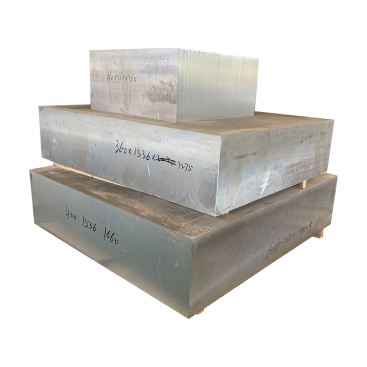
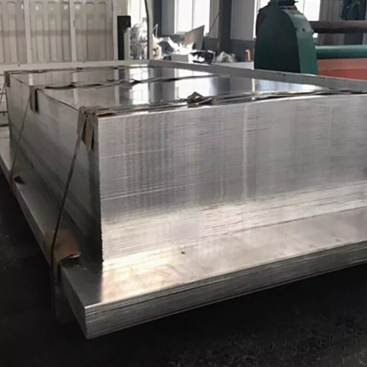 Aluminum Sheets, 3000 Series Aluminum Sheet
3003 Aluminum Sheet
3003 Aluminum Sheet is a general-purpose alloy known for its moderate strength, good workability, and excellent corrosion resistance. It is commonly rolled and extruded, but not typically forged. As…
-
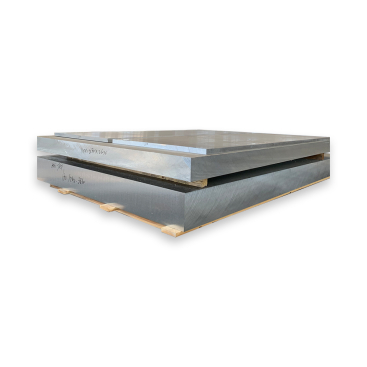
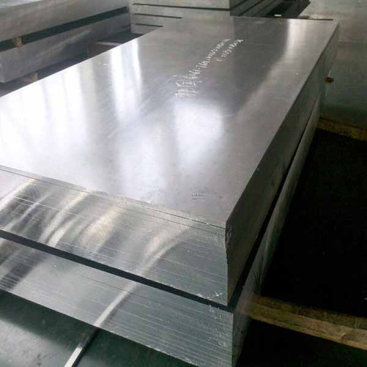 2000 Series Aluminum Sheet, Aluminum Sheets
2A12 Aluminum Sheet
Specs:
Alloy: 2024, 2A12
Temper: O, T3, T4, T351, T851, H112
Thickness: 0.5mm–300mm
Width: 500–2650mm
Length: 500–12000mm
Standards: GB/T3880, AMS 4035, AMS 4037, QQ-A-250/4, AMS 4040, AMS 4041, BMS…
-
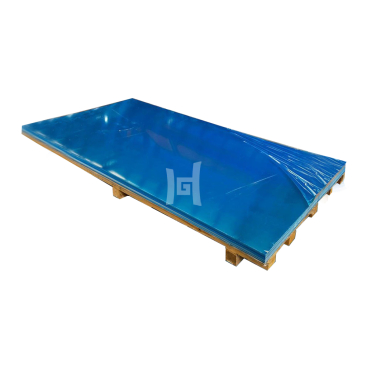
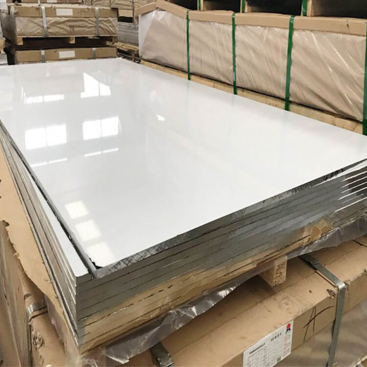 5000 Series Aluminum Sheet, Aluminum Sheets, Marine Grade Aluminum Sheet
5052 Marine Grade Aluminum Sheet Plate
5052 marine grade aluminum, part of the Al-Mg alloy series, is widely used in shipbuilding due to its excellent corrosion resistance and medium strength—qualities essential for materials constantly exposed…
-
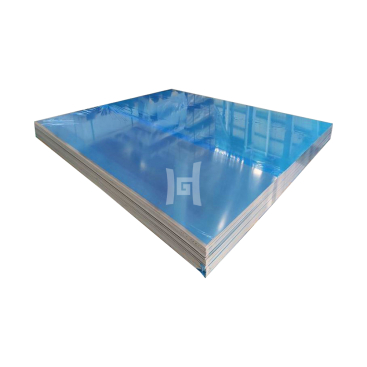
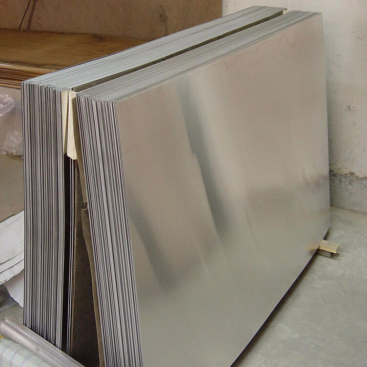 Aluminum Sheets, 5000 Series Aluminum Sheet, Marine Grade Aluminum Sheet
5059 Aluminum Sheet
5059 aluminum sheet is a high-strength, corrosion-resistant alloy primarily made with magnesium. It gains strength through strain hardening rather than heat treatment and is commonly welded using MIG or…
-
 1000 Series Aluminum Sheet, Aluminum Sheets, Pure Aluminum Sheet
1060 Aluminum Plate
1060 Aluminum Alloy – Overview and Applications
Teda Ganghua Metal supplies 1060 aluminum alloy, a high-purity grade with an aluminum content of at least 99.6%. This alloy offers excellent weldability,…