- Description
- Inquiry
When buyers search for 3003 aluminum sheet metal, they are often looking beyond the material itself. They may be planning enclosures, covers, panels, brackets, or other fabricated components. In this context, “sheet metal” describes a manufacturing process rather than a specific aluminum product. The alloy designation identifies the material family, but the temper determines how the sheet behaves during bending, forming, welding, and riveting. Selecting the right temper is therefore essential before production begins.
Sheet Metal Work Starts with the Temper
A material specification that only states the alloy is incomplete for many fabrication jobs. Two sheets with the same 3003 designation can respond differently on a press brake or during forming when supplied in different tempers. A softer condition generally offers greater forming flexibility, while a harder condition may require more careful tooling and process adjustment.
For sheet metal buyers, the practical question is not simply which alloy to purchase. It is which delivery condition can meet the required geometry, production method, and finished-part performance.
Three Fabrication Requirements That Depend on Temper
| Fabrication requirement | Relationship with temper | Production consideration |
|---|---|---|
| Bending radius | Harder tempers generally require a larger minimum bend radius. | Confirm the temper before selecting tooling and defining the bend geometry. |
| Springback | H14-type material can show noticeable springback, while O temper has very little springback in comparison. | Allow for temper-related differences when setting bend angles and checking finished dimensions. |
| Welding and riveting | The material condition affects how the joint area responds to heat, pressure, and local deformation. | Review filler selection, joint design, heat input, and deformation control for the actual fabrication process. |
Bending: The Same Alloy Does Not Mean the Same Bendability
Bending performance depends on more than the alloy number. Temper, sheet thickness, bend direction, tooling condition, and part geometry all influence the result. As the temper becomes harder, the material generally has less flexibility for tight-radius forming. A bend that works well with an annealed sheet should not automatically be transferred to a harder condition.
Before ordering, fabricators should provide the intended bend direction, geometry, and forming method. The material supplier can then help assess whether the requested temper is suitable or whether a softer condition should be considered.
Springback: Plan for the Material After the Press Brake
Springback occurs when the sheet partially returns toward its original shape after the bending force is removed. Its effect is important when parts need consistent angles, tight dimensional control, or repeatable assembly fit. H14-type material can exhibit noticeable springback, whereas O-temper material generally shows much less.
This difference can require changes to press-brake settings, overbending strategy, tooling, and inspection procedures. Avoid assuming that a forming program developed for one temper will produce the same result with another temper. The actual production batch should be tested before a large fabrication run.
Welding and Riveting: Joint Design Matters
Welding and riveting introduce local heat, pressure, and deformation. These effects can influence joint appearance, dimensional stability, and the condition of the surrounding material. For welded parts, filler compatibility, joint preparation, heat input, and distortion control need to be considered together. For riveted assemblies, hole quality, edge distance, fastener selection, and local material deformation are important.
Temper should therefore be included in the fabrication review rather than treated as a purchasing detail. If a component combines bending with welding or riveting, the full manufacturing sequence should be evaluated before the material condition is finalized.
What Buyers Should Specify Before Ordering
Alloy and temper: State the required 3003 grade and delivery condition, not just the alloy designation.
Part geometry: Share drawings showing bends, holes, flanges, and finished dimensions.
Fabrication sequence: Identify whether the sheet will be bent, punched, welded, riveted, or processed through several steps.
Surface requirements: Clarify whether the surface is functional, visible, coated, or intended for further finishing.
Inspection criteria: Agree on dimensional checks and acceptable appearance before production.
How Teda Ganghua Supports Fabrication-Oriented Purchasing
Teda Ganghua Metal supplies aluminum materials to buyers who need to connect material selection with downstream processing. As a steel and aluminum stockist based in Tianjin TEDA, the company draws on 20 years of stockist experience to support material inquiries involving alloy, temper, dimensions, and delivery requirements.
For fabrication projects, buyers can share drawings and processing details so the material specification can be reviewed before ordering. Available support can include cutting and other agreed processing services, material documentation, and coordination of inspection requirements. Material Test Certificates can be provided where applicable, and third-party inspection can be arranged according to the agreed order requirements. Customers are welcome to inspect the materials before delivery.
For related specifications and available materials, visit Teda Ganghua’s aluminum sheet products category. When requesting a quotation, include the intended temper and fabrication details so the proposed material can be evaluated against the actual production process.
Frequently Asked Questions
1. Is 3003 aluminum suitable for sheet metal fabrication?
Yes. It is used for formed components and general sheet metal applications. The suitable temper depends on the required bending, forming, joining, and finished-part requirements.
2. Should I choose O temper or H14 for bending?
O temper is generally more suitable when substantial forming flexibility is required. H14 is a harder condition and may need a more generous bend design and adjustments to the forming process. The final choice should be based on the part geometry and fabrication trials.
3. Does changing the temper affect springback?
Yes. Different tempers can produce different springback behavior. A bending setup developed for O temper should not be assumed to work identically with H14 material.
4. Can 3003 aluminum sheet be welded and riveted?
It can be used in welded and riveted assemblies, but joint design and process parameters need to match the material and temper. Filler compatibility, heat input, fastener selection, and deformation control should be reviewed.
5. What information should I send when requesting a quotation?
Provide the alloy and temper, thickness and sheet dimensions, drawings, required surface condition, fabrication sequence, and inspection requirements. These details help the supplier assess whether the material is suitable for the intended component.
Related products
-
 5000 Series Aluminum Sheet, Aluminum Sheets, Marine Grade Aluminum Sheet
5059 Aluminum Sheet
5059 aluminum sheet is a high-strength, corrosion-resistant alloy primarily made with magnesium. It gains strength through strain hardening rather than heat treatment and is commonly welded using MIG or…
-
 1000 Series Aluminum Sheet, Aluminum Sheets, Pure Aluminum Sheet
1070 Aluminum Sheet
1070 Aluminum Sheet is the second most widely used metal in the world today. lt is a versatile metal that can be cast into any form. This lightweight metal…
-
 3000 Series Aluminum Sheet, Aluminum Sheets
3003 Aluminum Sheet
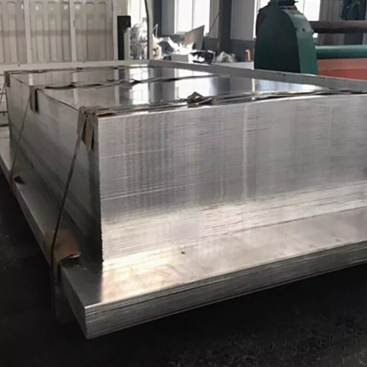
3003 Aluminum Sheet is a general-purpose alloy known for its moderate strength, good workability, and excellent corrosion resistance. It is commonly rolled and extruded, but not typically forged. As…
-
 Aluminum Sheets, 5000 Series Aluminum Sheet, Marine Grade Aluminum Sheet
5083 Aluminum Sheet
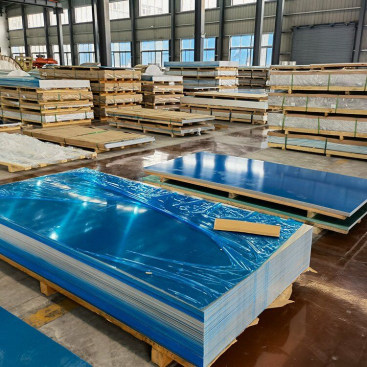
Various Tempers of 5083 Marine Grade Aluminum Plate
5083-H116 and 5083-H321 aluminum plates offer superior corrosion resistance, making them more suitable for marine underwater environments compared to H111 and H112… -
 5000 Series Aluminum Sheet, Aluminum Sheets, Marine Grade Aluminum Sheet
5383 Aluminum Sheet
When it comes to shipbuilding, 5083 aluminum plate is a widely used material due to its high strength, corrosion resistance, excellent formability, and welding performance. It’s commonly applied in…