- Description
- Inquiry
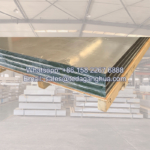
When purchasing 3003 H14 aluminum sheet, buyers are selecting more than an alloy designation. H14 describes a specific work-hardened condition that directly affects stiffness, bending behavior, machining stability, and response to heat. Unlike tempers that involve additional thermal treatment, H14 achieves its condition through strain hardening alone. This makes it suitable for components that need to remain relatively firm and maintain their shape, but do not require deep forming.
How to Read the H14 Temper Designation
The H14 designation belongs to the H temper system used for strain-hardened aluminum alloys. Each part of the code describes how the material reaches its final condition:
H — The material is strain hardened through mechanical working.
1 — The material is strain hardened only, without additional supplementary thermal treatment to obtain the temper.
4 — The material is in the half-hard condition within this temper classification.
In practical terms, H14 means the sheet gains its firmness through cold working. It is not simply a different product name for 3003 aluminum. It identifies a mechanical condition that fabricators should consider when choosing forming methods and planning subsequent operations.
Three Practical Consequences of H14
| Consequence | What happens | Production implication |
|---|---|---|
| Noticeable springback | After bending, the sheet can partially return toward its original angle. | The press-brake setup and tooling may need compensation to achieve the target angle. |
| Higher residual stress | Cold working leaves internal stresses in the material. | Large-area material removal may release stress and cause distortion. |
| Softening after heating | Welding or other elevated-temperature operations can reduce the strain-hardened strength. | Review the joining sequence and the required properties of the finished component. |
Springback: A Stiffer Sheet Needs Bend Compensation
H14 is firmer than an annealed condition, so it generally shows more springback after forming. The angle achieved under the press brake is not necessarily the final angle after the load is released. If the production setup ignores this behavior, finished parts may fall outside the required dimensional or assembly tolerances.
Fabricators should test the actual material batch and adjust the bending program, tooling, and overbend strategy as necessary. The bend direction, part geometry, and tooling condition should also be considered. A process developed for O-temper material should not be transferred directly to H14 without verification.
Residual Stress: Consider the Effect of Large-Area Machining
Strain hardening can leave residual stresses within the sheet. When a large amount of material is removed from one side or from selected areas, the internal stress balance may change. The result can be bending, warping, or dimensional movement during machining.
For components that require extensive milling, pocketing, or asymmetric cutting, buyers should discuss the machining sequence before selecting the temper. Trial machining and dimensional checks can help identify potential movement before full production. Where machining stability is critical, the material condition and processing route should be evaluated together.
Heating: Welding Can Reduce the Work-Hardened Condition
The firmness of H14 comes from cold work, not from a permanent heat-treatment strengthening mechanism. When the material is exposed to welding heat or other elevated-temperature operations, the affected area can lose part of its strain-hardened strength. The heat-affected region may therefore behave differently from the unaffected sheet.
This matters when a component needs consistent stiffness across its full structure. Welding sequence, heat input, joint design, and post-weld requirements should be reviewed during the design stage. If the finished part depends on the original work-hardened condition, the effect of subsequent heating must be considered rather than assumed to be negligible.
Where H14 Is a Practical Choice
H14 is often worth considering for parts that need a relatively firm, self-supporting sheet and do not require deep drawing or severe forming. Typical design considerations include covers, panels, formed housings, partitions, and general fabricated components. The suitability of the temper still depends on the actual shape, joining method, and dimensional requirements.
Consider H14 when: the component needs stiffness and shape retention, with limited or moderate forming.
Review another temper when: the part requires tight-radius bending, deep forming, extensive machining, or significant welding heat.
Confirm before ordering: the intended fabrication sequence and the properties required after all processing steps.
What to Confirm When Buying 3003 H14 Aluminum Sheet
A clear purchase specification helps prevent problems between material supply and fabrication. Buyers should confirm the alloy and temper, sheet dimensions, surface requirements, intended application, and any additional processing. If the sheet will be bent, machined, or welded, drawings and process details are useful for reviewing suitability before production.
Teda Ganghua Metal supports aluminum material inquiries with stockist experience based in Tianjin TEDA. With 20 years of stockist experience, the company works with buyers to review alloy, temper, dimensions, and delivery requirements. Cutting and other agreed processing services can be discussed according to project needs. Material Test Certificates and third-party inspection can be coordinated where applicable and agreed for the order. Customers are welcome to inspect the materials before delivery.
For related specifications and available materials, visit the aluminum sheet products category. When requesting a quotation, include the intended fabrication method so the material condition can be considered in relation to the finished component.
Frequently Asked Questions
1. What does H14 mean in 3003 aluminum sheet?
H indicates a strain-hardened temper, the first digit 1 means strain hardened only, and the second digit 4 identifies the half-hard condition.
2. Is H14 suitable for tight-radius bending?
It may be less suitable than a softer temper for tight-radius bends. The actual result depends on sheet dimensions, bend direction, tooling, and part geometry. Fabrication trials are recommended for critical bends.
3. Why does H14 aluminum spring back after bending?
The strain-hardened material partially recovers after the bending force is removed. Fabricators may need to compensate through tooling adjustments and a verified bending setup.
4. Can machining distort H14 aluminum sheet?
It can. Residual stresses from cold working may be released when substantial material is removed, potentially causing dimensional movement. Machining sequence and inspection should be planned accordingly.
5. Does welding affect the condition of H14?
Yes. Welding heat can reduce the work-hardened strength in and around the heat-affected area. Joint design, heat input, and finished-part requirements should be reviewed before production.
Related products
-
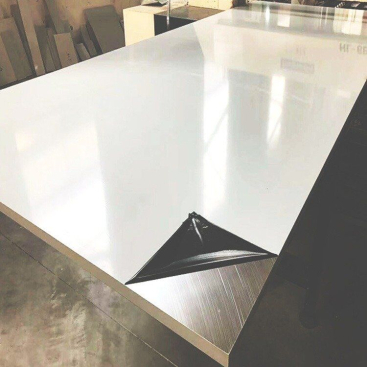 3000 Series Aluminum Sheet, Aluminum Sheets
3A21 Aluminum Sheet
Why Choose Teda Ganghua 3A21 Aluminium?
Teda Ganghua supplies high-quality 3A21 aluminium sheet and plate in various sizes and tempers (O, T3, T4, T6, H111, H112, H116). Our hot-selling 3A21… -
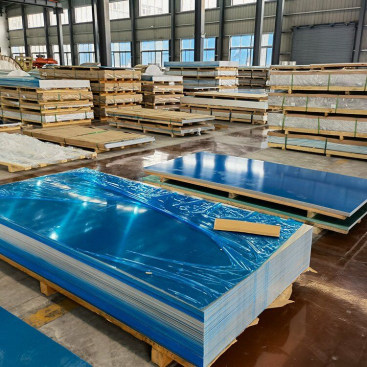 5000 Series Aluminum Sheet, Aluminum Sheets, Marine Grade Aluminum Sheet
5083 Aluminum Sheet
Various Tempers of 5083 Marine Grade Aluminum Plate
5083-H116 and 5083-H321 aluminum plates offer superior corrosion resistance, making them more suitable for marine underwater environments compared to H111 and H112… -
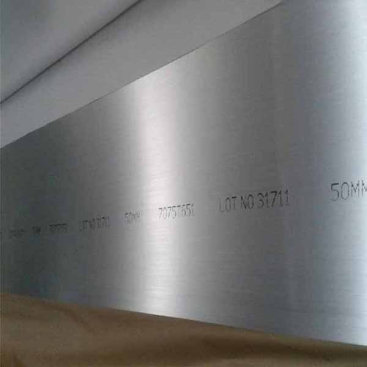 Aluminum Sheets, 2000 Series Aluminum Sheet
2219 Aluminum Alloy Sheets
Aluminum Alloy 2219 is a copper-reinforced, age-hardenable alloy known for its high structural strength and suitability for high-temperature applications. It supports various metalworking processes like machining, forming, and heat…
-
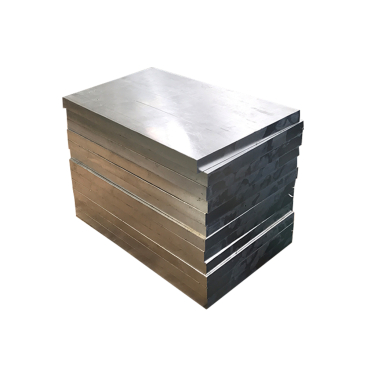 Aluminum Sheets, 2000 Series Aluminum Sheet
2024 Aluminium Sheet
2024 aluminum sheet offers good corrosion resistance and strengthens at subzero temperatures but weakens at 200–250°C. It forms well when annealed or quenched and responds well to heat treatment,…
-
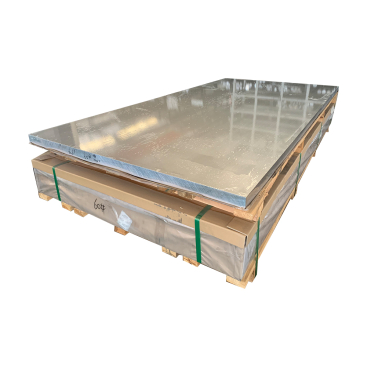
 1000 Series Aluminum Sheet, Aluminum Sheets, Pure Aluminum Sheet
1070 Aluminum Sheet
1070 Aluminum Sheet is the second most widely used metal in the world today. lt is a versatile metal that can be cast into any form. This lightweight metal…