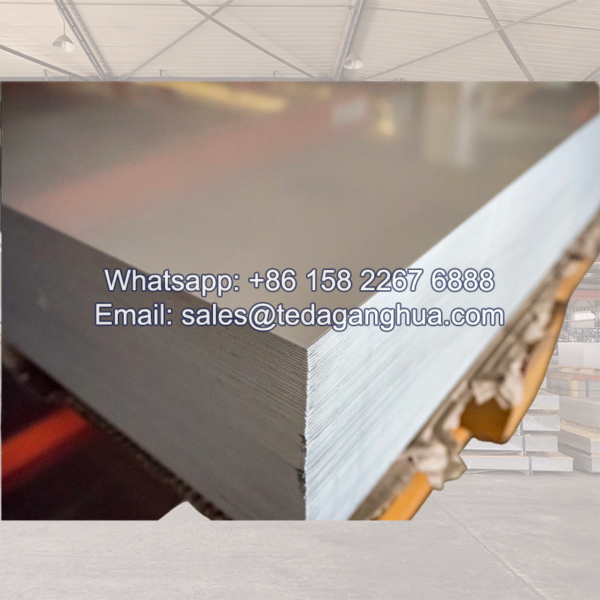
- Description
- Inquiry
When buyers choose 3003 O temper aluminum sheet, they are prioritizing formability over stiffness. O temper is the annealed condition of the material, making it particularly suitable for deep drawing, spinning, and complex bending. Its softness allows the sheet to accommodate substantial deformation, but that same characteristic makes it easier to dent, scratch, or lose its shape during handling. O temper is therefore both the most capable condition for demanding forming operations and one of the most vulnerable conditions during storage and transportation.
What Makes O Temper Different?
O indicates an annealed condition. Compared with strain-hardened tempers, the material is softer and generally offers greater forming flexibility. This makes it a practical starting point for components that need to be drawn, spun, or shaped into complex profiles.
However, softness also means lower resistance to deformation under handling loads. A sheet that forms easily in a press may also develop dents when stacked incorrectly or scratched when dragged across another surface. Buyers should evaluate both manufacturing requirements and material protection before placing an order.
The Four Sides of 3003 O Temper Aluminum Sheet
| Characteristic | Material behavior | Practical implication |
|---|---|---|
| Excellent formability | The annealed condition supports deep drawing, spinning, and complex bending. | A strong starting choice for parts with demanding forming requirements. |
| Lower stiffness | The softer sheet has less resistance to bending and shape change under external loads. | Large flat panels may sag or deform without suitable support. |
| Surface vulnerability | The soft surface is more susceptible to scratches, dents, and pressure marks. | Protective film, separators, careful stacking, and suitable packaging matter. |
| Work hardening during forming | The material can become harder as it undergoes plastic deformation. | Consider the forming sequence and leave appropriate design and process allowances. |
Formability: Why O Temper Is the Starting Point for Deep Drawing
Deep drawing requires sheet material to flow into a die cavity while maintaining continuity and avoiding defects such as tearing or excessive thinning. A softer annealed condition generally provides greater capacity for plastic deformation than a harder strain-hardened condition. This is why O temper is commonly considered when a component has a deep or complex drawn shape.
Spinning and complex bending also benefit from the material’s softness. The sheet can be shaped progressively around tooling or formed into curved profiles with less resistance than harder tempers. The actual result still depends on tooling design, lubrication, blank geometry, forming sequence, and the material’s verified properties.
For demanding parts, buyers should share drawings and forming details before ordering. A material designation alone cannot guarantee that every geometry can be produced without trials or process adjustments.
Lower Stiffness: The Trade-Off for a Softer Condition
The same softness that helps during forming can become a disadvantage when the material is used as a large unsupported flat panel. O-temper sheet has lower resistance to bending and shape change than a harder temper of the same alloy. During handling, storage, or installation, a wide sheet may flex more easily and can develop permanent deformation if it is not adequately supported.
For covers, panels, and structural-looking flat components, buyers should consider the finished geometry rather than judging the material only by its formability. Reinforcement, ribs, supports, formed edges, or a different temper may be necessary if the finished part must retain a flat and rigid shape.
Surface Protection: Soft Material Needs Careful Handling
Surface damage is an important purchasing concern for annealed sheet. Scratches can occur when sheets slide against one another, while pressure from uneven stacking or handling equipment may leave visible dents. Even when the material remains suitable for further processing, surface defects can create problems for parts with exposed or decorative faces.
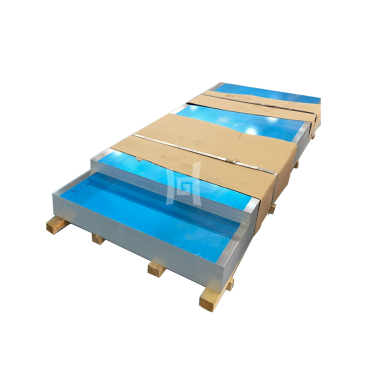
Buyers should state whether the material requires a protective film, interleaving paper, separators, or other packaging measures. Handling instructions should also be clear: avoid dragging sheets across each other, use clean contact surfaces, and support the material properly during lifting and movement. If the finished component has a visible surface, agree on acceptable surface conditions before shipment.
Work Hardening: The Material Changes During Forming
O temper describes the supplied condition, not a promise that the material will remain equally soft throughout fabrication. As the sheet undergoes plastic deformation during drawing, spinning, or bending, it can work harden. The formed areas may therefore become harder and less capable of further deformation than the original flat sheet.
This matters when a part requires several forming stages. The sequence should account for the changing material condition, especially where later operations involve additional tight bends or substantial deformation. Designers and fabricators should allow for process trials and suitable margins rather than assuming the original softness remains unchanged after forming.
When O Temper Is the Right Choice
Choose O temper when: the part requires deep drawing, spinning, or complex forming and needs a soft starting condition.
Review the design carefully when: the finished product includes large unsupported flat areas or must retain high stiffness.
Strengthen handling protection when: surface appearance matters and the material is vulnerable to scratches, dents, or pressure marks.
Plan the forming sequence when: several deformation stages may cause work hardening before the part is complete.
The central trade-off is straightforward: O temper exchanges strength and stiffness for forming capability. For demanding deep-drawn components, it is often the logical condition to start with. The finished design must then account for the material’s lower stiffness and its changing behavior during fabrication.
What to Confirm When Purchasing 3003 O Temper Aluminum Sheet
A clear inquiry should identify the alloy and O temper, sheet thickness, width, length, dimensional tolerances, surface requirements, and applicable product standard. Buyers should also explain whether the material will be deep drawn, spun, bent, or processed through multiple forming stages. Drawings and details about the finished part help suppliers assess the material requirements more accurately.
Teda Ganghua Metal supports aluminum sheet purchasing with stockist experience based in Tianjin TEDA. With 20 years of stockist experience, the company works with buyers to confirm alloy, temper, dimensions, surface condition, packaging, and delivery requirements. Cutting and other agreed processing services can be discussed according to project needs.
Material Test Certificates can be provided where applicable, and third-party inspection can be coordinated according to agreed order requirements. For soft annealed material, buyers can also confirm protective packaging and handling arrangements before shipment. Customers are welcome to inspect the materials before delivery.
For related specifications and available aluminum sheet products, contact Teda Ganghua with the required dimensions, temper, and forming application. Sharing the production details early helps align material selection with the actual manufacturing process.
Frequently Asked Questions
1. What does O temper mean in 3003 aluminum sheet?
O temper indicates an annealed condition. The material is relatively soft and is commonly selected when high formability is required.
2. Is O temper suitable for deep drawing?
Yes. Its soft condition makes it a common starting choice for deep drawing and other demanding forming operations. Tooling, geometry, and process conditions still need to be evaluated.
3. Why can O-temper sheet deform during handling?
Its lower stiffness means it is more easily bent or dented by external loads. Proper support, careful lifting, separators, and suitable packaging help reduce handling damage.
4. Does 3003 O temper become harder during forming?
It can. Plastic deformation during drawing, spinning, or bending causes work hardening, so the formed areas may become harder than the original sheet.
5. Is O temper suitable for large flat panels?
It can be used when the design provides adequate support, but its lower stiffness may make large unsupported panels prone to sagging or deformation. The finished geometry and required rigidity should guide temper selection.
Related products
-
 Aluminum Sheets, 2000 Series Aluminum Sheet
2A12 Aluminum Sheet
Specs:
Alloy: 2024, 2A12
Temper: O, T3, T4, T351, T851, H112
Thickness: 0.5mm–300mm
Width: 500–2650mm
Length: 500–12000mm
Standards: GB/T3880, AMS 4035, AMS 4037, QQ-A-250/4, AMS 4040, AMS 4041, BMS…
-
 5000 Series Aluminum Sheet, Aluminum Sheets, Marine Grade Aluminum Sheet
5086 Aluminum Sheet
5086 aluminum sheet, a typical 5000 series Al-Mg alloy, is widely used in shipbuilding for hulls, decks, and operating tables due to its excellent corrosion resistance, good weldability, and…
-
 2000 Series Aluminum Sheet, Aluminum Sheets
2124 Aluminum Sheet
2124 aluminum sheet is a high-strength aluminum alloy known for its good performance at low temperatures and high electrical conductivity. While its inherent corrosion resistance is relatively poor, this…
-
 1000 Series Aluminum Sheet, Aluminum Sheets, Pure Aluminum Sheet
1060 Aluminum Plate
1060 Aluminum Alloy – Overview and Applications
Teda Ganghua Metal supplies 1060 aluminum alloy, a high-purity grade with an aluminum content of at least 99.6%. This alloy offers excellent weldability,…