T6 Aluminum Strength: Thickness and Product Form Differences
When purchasing T6 aluminum alloy, buyers may find two different tensile strength or yield strength values for materials carrying the same alloy and temper designation. This does not necessarily indicate a quality problem or incorrect heat treatment. In many cases, the difference comes from product thickness, manufacturing form, and the mechanical property requirements specified by the applicable material standard.
A thin aluminum sheet and a thick aluminum plate may both be identified as 6061-T6, but their guaranteed mechanical properties are not necessarily identical. Extruded profiles, bars, and other product forms can also have different minimum strength requirements. Understanding these distinctions is essential when selecting aluminum for structural components, machining parts, equipment frames, and load-bearing applications.
The key purchasing principle is simple: an alloy designation identifies the material composition, while the temper and product specification determine the applicable mechanical property requirements. A strength value should never be evaluated without checking its corresponding thickness range, product form, test direction, and standard.
1. Why Does the Same T6 Temper Have Different Strength Values?
T6 is a heat-treatment temper designation. For heat-treatable aluminum alloys, it generally indicates solution heat treatment followed by artificial aging to obtain a stable condition. The treatment promotes precipitation hardening and increases strength compared with softer conditions such as O or T4.
However, T6 does not represent one universal tensile strength or yield strength value. The achievable and guaranteed properties depend on several additional factors:
| Influencing factor | Why it matters |
|---|---|
| Product thickness | Cooling rates and heat-treatment uniformity can change with section thickness. |
| Product form | Sheet, plate, extrusion, bar, and forging have different manufacturing histories and applicable requirements. |
| Alloy composition | Different alloying systems produce different precipitation-hardening responses. |
| Quenching conditions | Cooling rate influences the supersaturated solid solution available for subsequent aging. |
| Applicable standard | Different standards may specify different minimum values, thickness limits, and testing requirements. |
| Test direction | Longitudinal, transverse, and short-transverse properties may differ. |
Therefore, when two technical datasheets show different values for the same T6 alloy, the first step should be to compare their product specifications rather than immediately assuming that one material has been incorrectly processed.
2. Thickness Is One of the Main Reasons for Strength Differences
Thickness affects the thermal behavior of aluminum during solution heat treatment and quenching. Thin and thick sections do not necessarily experience identical temperature histories or cooling rates.
2.1 Why Thin and Thick Materials Behave Differently
During solution heat treatment, alloying elements are dissolved into the aluminum matrix at an elevated temperature. The material must then be quenched rapidly enough to retain the required supersaturated solid solution.
Thin products generally allow heat to be removed relatively quickly. Thick sections have a larger thermal mass and may experience different cooling conditions between their surfaces and interior regions. If cooling is insufficient for the particular alloy and section, precipitation during cooling can reduce the amount of solute available for subsequent age hardening.
This is one reason why minimum strength requirements may decrease as the specified thickness increases. The exact relationship depends on the alloy, heat-treatment process, product form, and governing standard.
2.2 Why Thickness-Based Strength Tables Are Necessary
Material standards commonly divide products into thickness ranges and assign mechanical property requirements to each range. This prevents manufacturers and buyers from applying the strength requirement of a thin product to a much thicker section.
For example, an aluminum plate that is several dozen millimeters thick should not automatically be evaluated using the minimum yield strength specified for a thin sheet of the same alloy and temper.
Important distinction: A reduction in specified minimum strength for a thicker product does not automatically mean that the material is defective. It may simply reflect the applicable standard’s thickness-dependent acceptance requirements.
3. Different Product Forms Have Different T6 Strength Requirements
Another important reason for apparently conflicting mechanical property values is the difference between sheet, plate, extrusion, bar, and forging products.
Although these products may share the same alloy designation, their manufacturing processes are different. Rolling, extrusion, forging, and subsequent heat treatment create different grain structures, deformation histories, and cooling conditions.
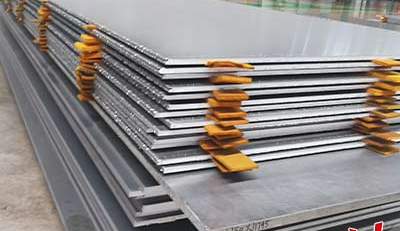
3.1 Sheet and Plate
Aluminum sheet and plate are generally produced through rolling processes. Their properties are influenced by rolling reduction, solution heat treatment, quenching, aging, and product thickness.
For example, ASTM B209 covers aluminum and aluminum-alloy sheet and plate products. Its mechanical property requirements are organized according to alloy, temper, and applicable dimensional ranges.
In some specifications, stress-relieved plate tempers such as T651 are used instead of conventional T6. The additional stretching operation is intended to reduce residual stresses, which is particularly important for thick plate machining and dimensional stability.
3.2 Extruded Profiles
Extruded aluminum is produced by forcing a heated billet through a die to create a specific cross-sectional shape. The extrusion process creates directional grain flow and different wall thicknesses within one profile.
During quenching, different sections of a complex extrusion may cool at different rates. Thin walls, thick sections, corners, and hollow areas can therefore have different responses to heat treatment.
Standards such as ASTM B221 and EN 755-2 address mechanical properties for relevant extruded products. Their requirements should not be directly substituted for sheet and plate requirements.
3.3 Bars, Rods, and Forgings
Bars and rods are manufactured through processes that differ from sheet rolling and profile extrusion. Forgings also undergo substantial plastic deformation that affects their internal structure and directional properties.
Consequently, even when the same alloy and T6 temper are specified, their minimum tensile strength, yield strength, and elongation requirements may differ.
| Product form | Typical manufacturing process | Common specification reference |
|---|---|---|
| Sheet and plate | Hot rolling, cold rolling, heat treatment | ASTM B209 |
| Extruded profiles | Billet heating, extrusion, quenching, aging | ASTM B221 / EN 755-2 |
| Bars and rods | Rolling, extrusion, or drawing | ASTM B211 |
| Forgings | Open-die or closed-die forging and heat treatment | ASTM B247 |
The specification listed above is a general product-form reference. The actual standard and revision should always be confirmed against the purchase order and material certificate.
4. Example: Why 6061-T6 Strength Values Change with Product Form and Thickness
6061 is a widely used heat-treatable aluminum alloy for structural components, machinery, transportation equipment, and general engineering applications. Its T6 condition is obtained through solution heat treatment and artificial aging.
However, a 6061-T6 sheet, a 6061-T651 thick plate, and a 6061-T6 extrusion should not be assumed to have identical mechanical property requirements.
The following table illustrates representative specification-based differences. These figures are examples for explaining how product form and thickness affect reported properties, not a universal replacement for the applicable standard.
| Product | Temper | Thickness / section | Representative minimum yield strength |
|---|---|---|---|
| 6061 sheet | T6 | 0.5–6.3 mm | 241 MPa |
| 6061 plate | T6 / T651 as specified | Above sheet range | Check the applicable thickness category |
| 6061 extrusion | T6 | Up to 5 mm wall thickness | 240 MPa |
| 6061 extrusion | T6 | Above 5 to 25 mm wall thickness | 240 MPa |
Data interpretation: The sheet example refers to a particular 6061-T6 sheet specification, while the extrusion examples illustrate a separate EN 755-2 property classification. They should not be combined into one universal strength table. The plate value must be taken from the relevant thickness category and product specification.
It is also important to distinguish between tensile strength (Rm) and yield strength (Rp0.2). A material may meet its specified tensile strength while failing to meet the required yield strength, or vice versa. Both values should be checked when they are relevant to the design.
5. T6 and T651: Why the Temper Suffix Also Matters
One common procurement mistake is treating T6 and T651 as completely interchangeable. Both are associated with solution heat treatment and artificial aging, but T651 includes an additional stress-relieving stretching operation for relevant wrought products.
This distinction is particularly important for thick aluminum plates used in CNC machining, precision equipment, molds, and structural components.
5.1 What Does T651 Add?
After solution heat treatment and quenching, residual stresses may remain inside the material. These stresses can cause distortion when a large amount of material is removed during machining.
The controlled stretching operation used for T651 helps reduce these residual stresses before artificial aging. This improves dimensional stability during subsequent machining operations.
However, T651 does not mean that every mechanical property is automatically higher than T6. Its main distinction is the stress-relieved condition. The applicable minimum strength requirements still depend on alloy, product form, thickness, and specification.
5.2 When Should Buyers Specify T651?
T651 is frequently considered when purchasing thick aluminum plate for applications involving:
- Large CNC-machined components.
- Precision machine bases and structural frames.
- Mold plates and tooling components.
- Parts requiring dimensional stability after extensive material removal.
- Components with strict flatness and machining tolerance requirements.
For applications where residual stress and machining distortion are important, specifying only 6061-T6 may leave an important manufacturing requirement undefined.
6. Why Different Standards Can Show Different T6 Strength Values
Even when alloy, temper, and product dimensions appear similar, different standards may establish different mechanical property limits. This is because each specification has its own scope, test methods, dimensional classifications, and acceptance requirements.

6.1 ASTM and EN Specifications
ASTM B209 addresses aluminum sheet and plate, while ASTM B221 covers extruded bars, rods, wires, profiles, and tubes. European specifications such as EN 485-2 and EN 755-2 establish mechanical property requirements for their respective product categories.
These documents should be interpreted within their own product and dimensional classifications. A value taken from an extrusion datasheet should not automatically be used to assess a rolled plate.
6.2 Minimum Values Versus Typical Values
Another common source of confusion is the difference between minimum guaranteed properties and typical reference values.
A technical brochure may report a typical tensile strength of a certain value based on representative production results. A material standard, however, may specify a minimum tensile strength that must be achieved for acceptance.
These numbers serve different purposes. Typical properties are useful for preliminary engineering estimates, while specified minimum properties are used for compliance and acceptance.
| Property data type | Meaning | Procurement application |
|---|---|---|
| Minimum specified value | Required lower limit under the applicable specification. | Material acceptance and compliance. |
| Typical value | Representative value based on normal production or testing. | Preliminary design and comparison. |
| Actual test result | Measured value from a particular test specimen. | Verification of the supplied batch. |
| Design allowable | Value established using applicable design rules and safety considerations. | Structural calculations and engineering design. |
Buyers should avoid comparing a typical value from one supplier with a minimum guaranteed value from another supplier without first confirming the basis of comparison.
7. How to Read a T6 Aluminum Mill Test Certificate Correctly
A mill test certificate provides important information about the supplied material. However, simply finding the words T6 and 6061 on the certificate is not enough to confirm that the product meets the intended application requirements.
Purchasing and quality inspection teams should review the following items:
T6 aluminum certificate verification checklist
- Alloy designation and chemical composition.
- Complete temper designation, including T6 or T651.
- Product form: sheet, plate, extrusion, bar, or forging.
- Actual thickness or relevant section dimensions.
- Applicable ASTM, EN, or other agreed specification.
- Minimum tensile strength requirement.
- Minimum yield strength requirement.
- Elongation requirement and specimen basis.
- Test direction and specimen location where specified.
- Heat or lot identification and traceability.
For critical structural applications, the mechanical test results should be compared directly with the applicable acceptance table. If the certificate does not clearly identify the product category or thickness range, clarification should be obtained before material approval.
8. How Teda Ganghua Helps Buyers Select the Right Aluminum Specifications
For international aluminum procurement, selecting the correct material requires more than confirming an alloy number and temper. Product form, thickness, mechanical property requirements, dimensional tolerance, and processing conditions must all match the intended application.
Teda Ganghua has 20 years of metal supply and processing experience, with export business dating back to 2006. The company supports overseas procurement teams with aluminum material selection, specification confirmation, dimensional requirements, and customized supply coordination.
For buyers sourcing aluminum sheet and plate, the technical team can help review key inquiry details, including:
- Alloy and temper, such as 6061-T6 or other required conditions.
- Thickness, width, length, and dimensional tolerances.
- Required tensile strength, yield strength, and elongation.
- Applicable ASTM or EN product specifications.
- Surface condition and subsequent machining or finishing requirements.
- Mill test certificate and batch traceability requirements.
Customers looking for aluminum sheet can contact Teda Ganghua to discuss suitable alloy grades, temper conditions, thickness ranges, and project-specific requirements.
For thick plate machining projects, it is particularly important to confirm whether T6 or T651 is required. For structural applications, the specified minimum mechanical properties should be checked against the exact product form and thickness category before an order is placed.
By confirming these technical details at the inquiry stage, buyers can reduce specification misunderstandings, avoid inappropriate material substitutions, and improve consistency between the ordered product and the final engineering application.
9. Frequently Asked Questions
Q1. Does T6 mean that all aluminum products have the same tensile strength?
No. T6 identifies a heat-treatment condition, not a universal mechanical strength value. Tensile strength and yield strength depend on the alloy, product form, thickness, manufacturing process, and applicable material specification.
Q2. Why does thicker 6061-T6 aluminum sometimes have lower specified strength?
Thicker sections have different thermal behavior during solution heat treatment and quenching. Cooling conditions can affect precipitation behavior and the final mechanical properties. Material standards therefore establish different minimum strength requirements for different thickness ranges where necessary.
Q3. Is 6061-T6 the same as 6061-T651?
No. Both are artificially aged conditions following solution heat treatment, but T651 includes controlled stretching to reduce residual stress. T651 is commonly considered for thick plates that will undergo extensive machining and require improved dimensional stability.
Q4. Can the strength of aluminum sheet be compared directly with aluminum extrusion?
Not without checking the applicable specifications. Sheet and extrusion products have different manufacturing histories and may be governed by different mechanical property tables. Their thickness definitions, test directions, and acceptance requirements must also be considered.
Q5. Which strength value should buyers use when ordering T6 aluminum?
Buyers should use the minimum mechanical properties specified for the exact alloy, temper, product form, and thickness category in the agreed material standard. Typical datasheet values should not replace guaranteed acceptance requirements. The mill test certificate should be checked against the purchase specification before approval.